
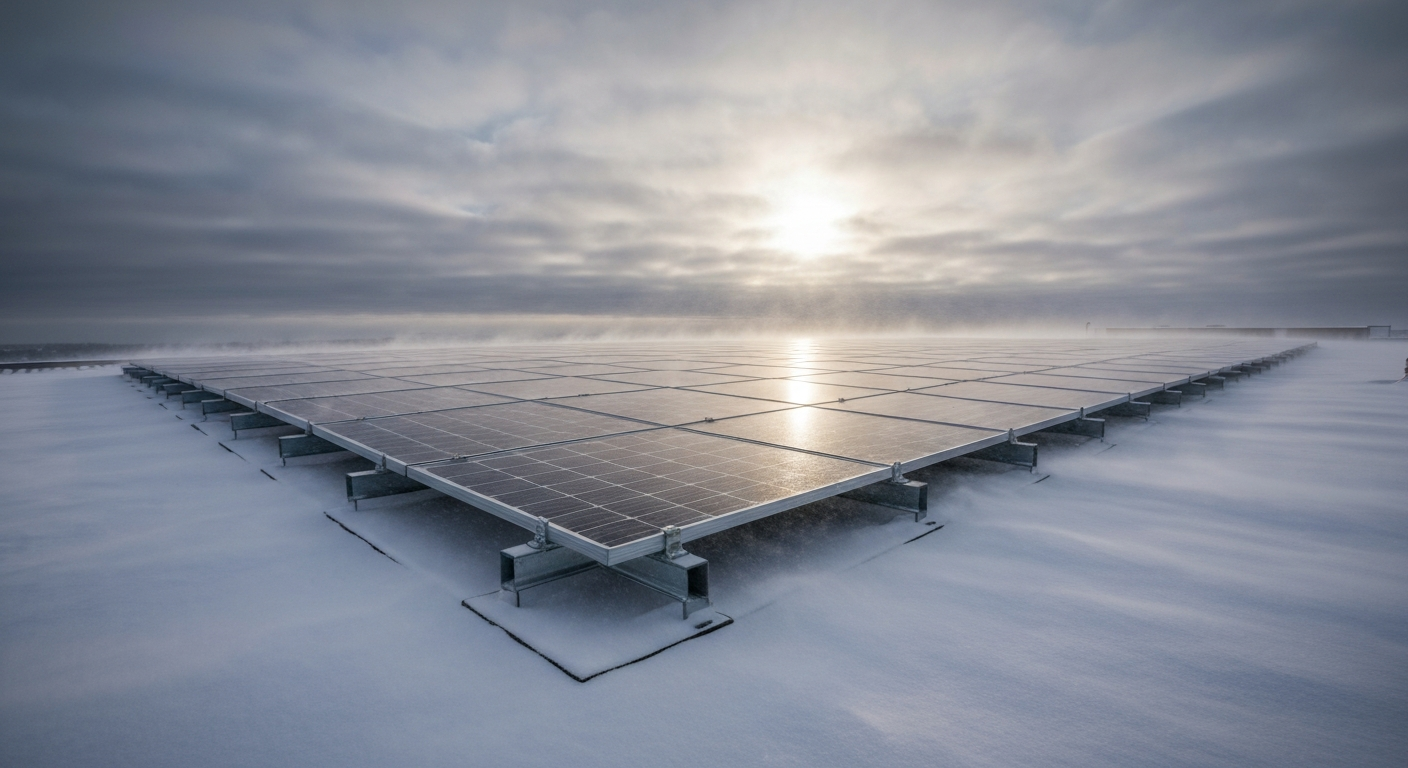
Designing for Wind & Snow Loads on Rooftop Solar Arrays
Need to renew your Electrician license? Pick your state and browse state-approved Electrician CE courses — complete your continuing education hours online, with instant reporting.
Designing for Wind & Snow Loads on Rooftop Solar Arrays
Properly calculating for solar wind and snow loads is a critical, non-negotiable step for ensuring the safety, longevity, and code compliance of any rooftop photovoltaic (PV) installation. For the master electrician and journeyman electrician alike, understanding these forces is paramount to preventing structural failure. The primary guidance comes from ASCE 7 standards, which define how to determine environmental pressures like wind uplift and heavy snow load requirements. These calculations result in a required design pressure, measured in pounds per square foot (psf), that the entire assembly—from the panel to the solar racking systems and down to the roof structure—must withstand. A failure to accurately assess the structural load not only risks catastrophic damage to the array and building but also poses significant liability. This analysis is a core component of professional electrician training and is essential for designing resilient, durable solar energy systems.
The Critical Role of Structural Integrity in Solar Installations
As a licensed electrical professional, whether a residential electrician or one focused on large commercial projects, your responsibility extends beyond wiring and connections. The structural integrity of a rooftop solar array is just as important as its electrical safety. A system that cannot withstand predictable environmental forces is a failure waiting to happen. The dead load of the panels and racking is only part of the equation. Environmental forces such as wind and snow place significant stress on the mounting hardware and the roof: snow acts as a roof live load, while wind creates pressure and uplift that must be calculated per wind-load procedures. A poorly designed system can lead to panels being ripped from the roof, damage to the roofing membrane, water intrusion, or in the worst-case scenario, a localized roof collapse. Understanding the principles of structural load is therefore fundamental to any solar project.
Understanding the Governing Standards: ASCE 7 and the NEC
Two key documents inform safe solar installations: ASCE 7 is the primary standard for determining structural design loads (wind, snow, etc.), while the National Electrical Code (NEC) (NFPA 70) governs electrical safety and installation requirements. The NEC does not set building structural load requirements — those are determined by building codes and structural standards such as ASCE 7 and the adopted building code.
- ASCE 7 Standards: The American Society of Civil Engineers’ “Minimum Design Loads for Buildings and Other Structures” (ASCE 7) is the primary standard used by engineers to determine environmental loads. The latest version, ASCE 7-22, provides updated methodologies for wind load calculation and snow load requirements, and for the first time, includes provisions for tornado loads. Adherence to ASCE 7 ensures the array is designed to handle location-specific weather extremes.
- National Electrical Code (NEC): While the NEC (NFPA 70) primarily focuses on electrical safety, its scope covers installation, grounding, and secure mounting required for safe electrical operation. Article 690, which covers solar systems, and standards referenced by the NEC are critical for electrical compliance. For example, UL 2703 is the standard for mounting systems and associated bonding/grounding devices. UL 2703 evaluates bonding/grounding performance, certain mechanical tests, and fire classification of rooftop PV assemblies; however, a UL 2703 listing does not by itself certify a racking system’s suitability for the site-specific wind and snow loads or the adequacy of roof-attachment details — those require project-specific structural analysis and manufacturer/engineer verification.
Calculating Wind Loads: Beyond the Basics
Wind doesn’t just push against panels; it creates complex aerodynamic forces, including powerful wind uplift, which acts to pull the array off the roof. Calculating these forces accurately using ASCE 7 standards is a multi-step process that considers several key variables.
- Determine Basic Wind Speed: Using the hazard maps provided by ASCE (or the ASCE Hazard Tool), find the basic design wind speed for the project’s specific location. These maps and parameters were updated in ASCE 7-22 and related code adoptions in some regions.
- Identify the Wind Exposure Category: The terrain surrounding the building dramatically affects wind behavior. ASCE defines several categories:
- Exposure B: Urban and suburban areas with numerous closely spaced obstructions.
- Exposure C: Open terrain with scattered obstructions, such as flat, open country.
- Exposure D: Flat, unobstructed areas like coastlines or salt flats, representing the most severe exposure.
- Factor in Roof Zone and Tilt Angle: Wind forces are not uniform across a roof. They are highest at corners and edges. ASCE 7 divides the roof into zones with different pressure coefficients. Furthermore, the solar panel tilt angle significantly impacts wind loads. A steeper tilt can catch more wind, acting like a sail and increasing both drag and uplift forces.
- Calculate Final Design Pressure: Combining these factors—wind speed, exposure, roof zone, building height, and pressure coefficients—yields the final design wind pressure in pounds per square foot (psf) that the array and its attachments must resist.
Managing Snow Load Requirements on Rooftop Arrays
In colder climates, the accumulated weight of snow can be the dominant structural load on a solar array. Snow density and resulting loads vary widely with temperature, moisture content, compaction, and layering. Designers should begin with the ASCE 7 ground-snow maps and apply the standard’s procedures for roof snow, drifts, and unbalanced loads. For context, one foot of very light, dry snow may only impose on the order of a few psf (for example, roughly ~3 psf for one foot of very light snow in some guidance), while one foot of wet, heavy snow can be on the order of ~20+ psf; ice and refrozen layers are significantly heavier. Several factors can concentrate the load on rooftop arrays:
- Snow Drifting: Solar arrays act as obstructions, causing snow to drift and accumulate, especially against tilted panels. This creates unbalanced loads that must be accounted for.
- Sliding Snow: Snow sliding off a slick panel surface can accumulate on lower panels or roof sections, creating a concentrated load.
- Solar Panel Tilt Angle: A steeper tilt can help shed snow more effectively, but this must be balanced against the increased wind loads that a higher tilt creates.
For electricians working in high-altitude regions, like those detailed in our guide to wiring Colorado mountain homes, understanding heavy snow load requirements is non-negotiable. The final design must ensure the roof load capacity is sufficient to handle the combined dead load of the array and the worst-case live load from snow as determined by a structural engineer or the authority having jurisdiction (AHJ).
Choosing the Right Mounting System: Ballasted vs. Mechanically Attached
The choice of solar racking systems is critical for transferring wind and snow loads safely to the building structure. The two primary types are ballasted solar racking and mechanically attached systems.
- Mechanically Attached Systems: These systems are physically anchored to the roof’s structural members (rafters or trusses) with bolts or screws. This creates a continuous load path, directly transferring uplift and shear forces from the panels, through the racking, and into the building frame. This method offers high resistance to wind uplift and is generally lighter in added dead load, but it requires roof penetrations that must be expertly waterproofed and documented.
- Ballasted Solar Racking: Used on flat or low-slope roofs, these systems use heavy materials like concrete blocks to hold the array in place through gravity. The main advantage is the lack of roof penetrations, which can speed up installation and simplify some warranty concerns. However, ballasted systems add additional dead load to the roof; ballast requirements depend on site wind pressures, panel tilt, and system layout and commonly range across several psf (practical examples in the field show ballast and total added dead loads commonly from roughly 2–10+ psf depending on the design). A thorough structural analysis is required to ensure the roof load capacity is not exceeded. In some cases, a hybrid approach using some mechanical attachments may be needed to prevent shifting.
Properly accounting for these forces is a hallmark of an expert master electrician or journeyman electrician. Build safer, more durable solar systems. Explore our structural design lessons. Our online electrical courses provide the in-depth electrician training needed to master these complex topics.
Key Takeaways for Electrical Professionals
- Always Verify Roof Load Capacity: Before any work begins, confirm the existing roof structure can support the added dead load of the array plus the maximum live loads from wind and snow as determined by ASCE 7 procedures and local code requirements.
- Use the Latest ASCE 7 Standards: Base all wind load calculation and snow load analysis on the version of ASCE 7 adopted by the local authority having jurisdiction (AHJ).
- Ensure a Continuous Load Path: For mechanically attached systems, verify that all connections are sound from the panel clamp down to the structural member and that attachment details are documented and, where required, engineered.
- Specify UL 2703 Components (with limits): Use UL 2703-listed racking and bonding components where applicable for bonding/grounding and roof-assembly fire classification, but do not assume UL 2703 listing alone demonstrates suitability for site-specific wind/snow loads or roof-attachment adequacy — obtain manufacturer load tables and engineering verification as required by the AHJ.
- Document Everything: Keep detailed records of all calculations, design specifications, product listings, and components used. This is crucial for inspections and liability.
Frequently Asked Questions (FAQ)
- What are ASCE 7 standards and why are they important for solar wind and snow loads?
- ASCE 7 standards are published by the American Society of Civil Engineers and provide the definitive methodology for calculating minimum design loads (including wind, snow, and seismic forces) on buildings and other structures. They are critical for solar installations to ensure the structural load is properly calculated so the array can withstand local environmental conditions safely.
- How do I perform a wind load calculation for a specific project?
- A proper wind load calculation involves determining the site’s basic wind speed, wind exposure category (e.g., B, C, or D), and building height, then using pressure coefficients from ASCE 7 that account for roof zone and panel tilt to find the final design pressure in psf. It is often performed by a qualified structural engineer, and many AHJs require engineered calculations or stamped drawings for rooftop PV installations.
- What is the difference between ballasted solar racking and mechanically attached systems?
- Mechanically attached systems are physically bolted to the roof structure, providing resistance to uplift via a continuous load path. Ballasted solar racking uses weight (like concrete blocks) to hold the array down and avoids roof penetrations but adds additional weight to the roof; ballast requirements depend on design and site conditions.
- Does the National Electrical Code (NEC) cover structural load?
- The National Electrical Code (NEC) primarily focuses on electrical safety and installation (wiring methods, overcurrent protection, grounding, disconnects, rapid shutdown, etc.). It requires PV equipment to be installed and bonded correctly (see Article 690) and references listed products (e.g., UL 2703) for bonding and mounting devices. However, structural load requirements and verification of roof attachment and capacity are addressed by building codes and structural standards (ASCE 7 and the adopted IBC/IRC), not the NEC.
- Where can a journeyman electrician find electrician training on these topics?
- A journeyman electrician can find advanced electrician training through specialized workshops, manufacturer certification programs, and providers of online electrical courses that focus on solar installation and design, which often cover structural considerations and code compliance with ASCE 7 and the NEC. For site-specific structural questions, coordinate with a licensed structural engineer.
Need to renew your Electrician license? Pick your state and browse state-approved Electrician CE courses — complete your continuing education hours online, with instant reporting.
Continuing Education by State
Select your state to view board-approved continuing education courses and requirements:

Disclaimer: The information provided in this educational content has been prepared with care to reflect current regulatory requirements for continuing education. However, licensing rules and regulations can vary by state and are subject to change. While we strive for accuracy, ExpertCE cannot guarantee that all details are complete or up to date at the time of reading. For the most current and authoritative information, always refer directly to your state’s official licensing board or regulatory agency.
NEC®, NFPA 70E®, NFPA 70®, and National Electrical Code® are registered trademarks of the National Fire Protection Association® (NFPA®)
You may also like
Colorado Electrical Licensing Requirements and Reciprocity Guide
Standby Generators in DE: Navigating Coastal Storm Regulations
 Sign in with Google