
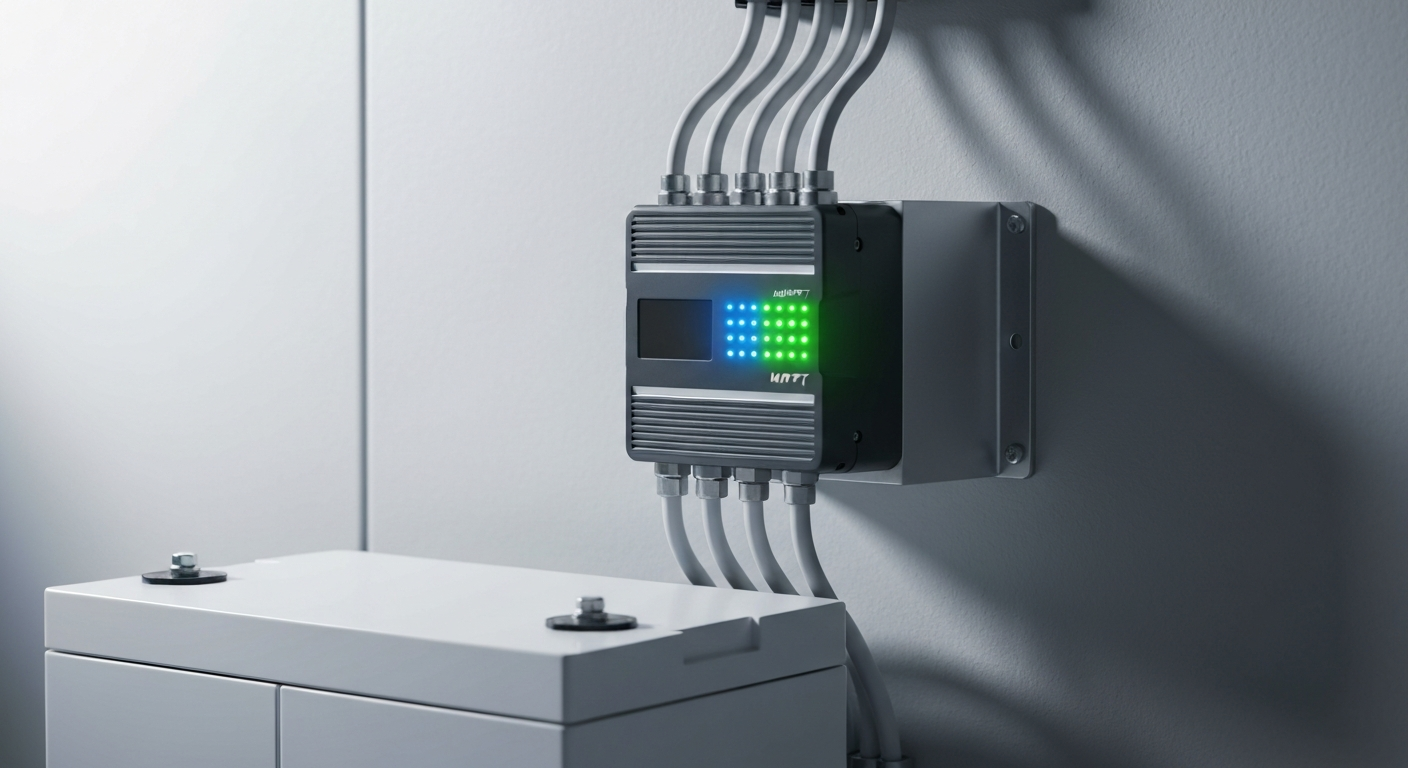
What is a Solar Charge Controller? MPPT vs. PWM Explained
What Is a Solar Charge Controller? MPPT vs. PWM Explained
A solar charge controller is a critical component in any off-grid or battery-backup photovoltaic (PV) system, acting as the intelligent regulator between the solar panels and the battery bank. Its primary function is to manage the power flowing into the batteries, ensuring they are charged efficiently and protected from overcharging, which can cause damage and significantly shorten their lifespan. The two dominant technologies are Pulse Width Modulation (PWM) and Maximum Power Point Tracking (MPPT). While PWM controllers are simpler and more affordable, MPPT controllers are advanced DC-to-DC converters that optimize power harvest by up to 30%, making them essential for larger, high-performance systems. For any professional working on a solar panel generator, understanding these technologies, along with the safety requirements outlined in National Electrical Code (NEC) Article 690, is fundamental to designing safe, reliable, and efficient solar installations.
The Fundamental Role of a Solar Charge Controller
At its core, a solar charge controller is a gatekeeper for your battery bank. Solar panels produce a variable voltage that often exceeds what a battery can safely handle; for instance, a 12V nominal panel might output 16-20 volts. The controller steps this voltage down to protect the battery. Its key functions include:
- Preventing Overcharging: Continuously delivering high voltage to a full battery can cause overheating, gassing, and irreparable damage. The controller tapers the charge or stops it completely once the battery is full.
- Blocking Reverse Current: At night, without a controller, electricity can flow from the battery back to the solar panels, slowly draining your stored energy. The controller acts as a one-way valve to prevent this.
- Preventing Over-Discharge: Many modern controllers feature a low-voltage disconnect (LVD) to protect the battery from being drained too deeply by the connected loads, which can also shorten its lifespan.
By managing these tasks, the charge controller is indispensable for the health and longevity of the entire energy storage system.
Pulse Width Modulation (PWM) Solar Charge Controllers
A Pulse Width Modulation (PWM) controller is the more traditional and simpler of the two technologies. It functions like a sophisticated switch connecting the solar array directly to the battery. As the battery charges, the controller sends a series of power “pulses” to gradually reduce the charging current. The “width” of these pulses is modulated (adjusted) to maintain a safe and constant voltage.
How PWM Technology Works
Think of a PWM controller as pulling the solar array’s voltage down to match the battery’s voltage. For this to work efficiently, the nominal voltage of the solar array must match the nominal battery voltage. For example, you would use a 12V nominal solar panel to charge a 12V battery bank. Using a higher voltage panel (like a 24V or grid-tie module) with a 12V battery and a PWM controller results in significant power loss, as the controller cannot convert the excess voltage into current. This makes them best suited for smaller, cost-sensitive low voltage systems like those in RVs, boats, or for basic lighting.
Maximum Power Point Tracking (MPPT) Solar Charge Controllers
An MPPT solar charge controller represents a significant technological leap. It is a smart DC-to-DC converter that constantly tracks the optimal operating voltage and current of the solar array to extract the absolute maximum power possible at any given moment. This process is called Maximum Power Point Tracking (MPPT).
The MPPT Advantage: More Power, More Flexibility
Unlike a PWM controller that pulls the array voltage down, an MPPT controller can accept a much higher input voltage from the solar array than the battery bank voltage. It then efficiently converts this high-voltage, low-current power into low-voltage, high-current power perfectly matched to the battery’s charging needs. This delivers a power boost of 10-30% compared to a PWM controller, especially in cold weather, low-light conditions, or when using high-voltage panels. This efficiency and flexibility are unlocking new professional paths, as seen in the growing solar career opportunities for electricians in states like Colorado.
MPPT vs. PWM: A Head-to-Head Comparison
- Efficiency: MPPT controllers are significantly more efficient (92-98%) at converting solar power, especially when the solar panel voltage is much higher than the battery voltage. PWM controllers are less efficient as they essentially discard excess voltage.
- Cost: PWM controllers are less expensive and are a budget-friendly choice for small, simple systems. MPPT controllers have a higher upfront cost but often provide a better return on investment through increased energy harvest.
- System Compatibility: PWM requires the solar panel’s nominal voltage to match the battery bank’s voltage. MPPT offers greater flexibility, allowing the use of higher-voltage (and often less expensive) grid-tie panels to charge lower-voltage battery banks, such as a 48V array charging a 24V battery bank.
- Array Sizing: With MPPT, you have more flexibility in your array sizing and can configure panels in longer series strings, which can simplify wiring.
Charge Controller Sizing: A Step-by-Step Guide for Professionals
Proper charge controller sizing is crucial for safety and performance. An undersized controller can be damaged, while an oversized one is a waste of money. As a journeyman electrician or solar installer, follow these steps:
- Determine System Voltage: First, establish the nominal system voltage of your battery bank (e.g., 12V, 24V, 48V).
- Calculate Max Current from Array: Find the solar panel’s Short-Circuit Current (Isc) from its datasheet. If you’re using multiple panels in parallel, add their Isc ratings together. Understanding the difference between a series vs parallel circuit is critical here. For safety and to comply with NEC 690.8(A), multiply this total Isc by a 1.25 safety factor to determine the maximum circuit current. The charge controller must be rated to handle this maximum current. For instance, if your array’s Isc is 20A, you need a controller rated for at least 25A (20 x 1.25).
- Calculate Max Voltage from Array: Find the panel’s Open-Circuit Voltage (Voc). If wiring panels in series, add their Voc ratings. The NEC requires you to adjust this voltage for cold temperatures, as panel voltage increases when it gets colder. Use NEC guidance for temperature correction factors (see Article 690 for module temperature correction guidance). The controller’s maximum input voltage rating MUST be higher than this temperature-corrected Voc. Exceeding this will destroy the controller.
- Select the Controller: Choose a controller that has both an amperage rating and a voltage rating that exceed your calculated values. When in doubt, always size up. The use of a voltage drop calculator is also recommended to ensure proper wire gauge for the distances involved.
When assembling the system, proper connections are key. For a guide on securing panel connections, see our article on how to wire MC4 connectors.
NEC Compliance and Safety Standards
For professional electricians, adherence to the National Electrical Code is non-negotiable. NEC Article 690 provides the framework for safe PV system installation.
Key Considerations from NEC Article 690
Article 690 covers critical safety measures that apply to all system components, including charge controllers. Key requirements involve:
- Overcurrent Protection: Circuits must be protected from overcurrents at the source.
- Disconnecting Means: A readily accessible disconnect must be installed to isolate system components.
- Rapid Shutdown: For systems on buildings, this function is required to de-energize controlled conductors for firefighter safety.
- Grounding and Ground-Fault Protection (GFDI): Proper system grounding, often involving a grounding rod or other grounding electrode(s) required by the NEC, is essential. To reduce fire hazards, NEC Article 690 requires PV source circuits that exceed 30 volts or 8 amperes to be provided with ground-fault detection/interrupter (GFDI) protection; limited exceptions apply (see Article 690 for details).
The Importance of the UL 1741 Standard
The UL 1741 standard is a critical safety certification for inverters, converters, and controllers used in distributed energy systems. A UL 1741 listing ensures the device has been rigorously tested for fire, shock, and electrical safety under both normal and fault conditions. As required by NEC 690.4(B), equipment intended for use in PV systems must be “listed” or evaluated for the application; using components certified to UL 1741 is the common way to demonstrate compliance and support passing inspections in most jurisdictions.
Advanced Charging and Battery Bank Integration
Modern charge controllers do more than just regulate voltage; they optimize battery health through sophisticated battery bank integration. Most quality controllers use a multi-stage charging process.
Three-Stage Charging is the standard for maximizing battery life:
- Bulk: The controller sends maximum safe current to the battery, bringing it to about 80-90% state of charge.
- Absorption: The voltage is held constant while the current is gradually reduced, “topping off” the battery safely.
- Float: Once fully charged, the controller applies a small “trickle” charge to keep the battery at 100% without overcharging.
Furthermore, features like temperature compensation are vital. A sensor at the battery allows the controller to adjust the charging voltage based on battery temperature, preventing damage in hot or cold environments and further extending its life. Understanding these advanced features is a key part of mastering battery-based systems. To continue your education, it’s essential to stay updated on related safety protocols, such as the latest NFPA 70e 2024 battery safety requirements.
Design efficient off-grid systems. Master charge controller selection. Explore ExpertCE’s range of online electrical courses to deepen your expertise in solar technology and code compliance.
Key Takeaways
- A solar charge controller is essential for any solar power system with batteries, protecting them from overcharging and reverse current.
- PWM controllers are affordable and simple, but are less efficient and require panel voltage to match battery voltage.
- MPPT controllers are more efficient, offer greater system design flexibility, and can harvest up to 30% more power by converting excess voltage into charging current.
- Charge controller sizing must account for the solar array’s maximum current (Isc) and temperature-corrected maximum voltage (Voc).
- Compliance with NEC Article 690 and using products certified to the UL 1741 standard are fundamental for safe and professional installations.
Primary Sources
- National Fire Protection Association (NFPA) for the National Electrical Code (NEC)
- Underwriters Laboratories (UL) for UL 1741 Standard
Frequently Asked Questions (FAQ)
What size solar charge controller do I need?
To size a solar charge controller, you need to calculate the maximum current and maximum voltage from your solar array. Calculate current by taking the array’s short-circuit current (Isc) and multiplying by 1.25. Calculate voltage by summing the open-circuit voltage (Voc) of panels in series and applying a cold-temperature correction factor from the NEC. Select a controller with ratings that exceed both of these values.
Can I use a PWM controller with a high-voltage solar array?
It is not recommended. PWM controllers work by pulling the array’s voltage down to the battery’s level. If you connect a high-voltage panel (e.g., a 36V grid-tie panel) to a 12V battery with a PWM controller, all voltage above the battery’s charging voltage is lost, resulting in extreme inefficiency. An MPPT controller is required to convert that excess voltage into usable charging current.
Is an MPPT solar charge controller always better than a PWM?
For most systems, especially medium-to-large ones or those in colder climates, MPPT is superior due to its higher efficiency and flexibility. However, for very small, simple, and cost-sensitive systems (like a single panel charging a small battery in a warm climate), a PWM controller can be a perfectly adequate and economical choice.
What does the UL 1741 standard mean for a solar charge controller?
The UL 1741 standard certifies that the controller has passed rigorous safety tests for electrical shock, fire, and other potential hazards. It ensures the product is constructed safely and will perform reliably under various conditions. For electricians, using UL 1741 listed components is a common way to demonstrate compliance and is often required by authorities having jurisdiction.
Continuing Education by State
Select your state to view board-approved continuing education courses and requirements:

Disclaimer: The information provided in this educational content has been prepared with care to reflect current regulatory requirements for continuing education. However, licensing rules and regulations can vary by state and are subject to change. While we strive for accuracy, ExpertCE cannot guarantee that all details are complete or up to date at the time of reading. For the most current and authoritative information, always refer directly to your state’s official licensing board or regulatory agency.
NEC®, NFPA 70E®, NFPA 70®, and National Electrical Code® are registered trademarks of the National Fire Protection Association® (NFPA®)
You may also like

Colorado Electrical Licensing Requirements and Reciprocity Guide

Standby Generators in DE: Navigating Coastal Storm Regulations

 Login with Google