
How to Install Cable Ties for Proper Wire Management
How to Tie Electrical Cables for Flawless Wire Management
Properly tying electrical cables is a foundational skill that separates professional-grade work from amateur installations. The correct technique involves much more than simply bundling wires; it requires a deep understanding of NEC compliance, material selection, and long-term safety. To correctly tie electrical cables, you must select the appropriate tie wrap cable ties for the specific environment and load, such as plenum-rated ties for air-handling spaces. The process includes grouping conductors into organized bundles, applying the tie with the correct tension to avoid damaging wire insulation through abrasion, and trimming the tail flush to prevent snags. This ensures every installation meets standards for securing and supporting, considers tensile strength for the load, and prevents issues like heat buildup or damage during a future cable pull through. Mastering this skill is essential for safety, serviceability, and adherence to the NEC code book.
The Critical Importance of Proper Cable Management
In the electrical trade, neatness is synonymous with safety. A well-organized installation using proper wire bundling techniques is not just about aesthetics; it is a critical component of a safe and reliable electrical system. NFPA data identify electrical distribution and lighting equipment as a leading cause of home structure fires, and NFPA analyses show that failures of wiring and cable systems are commonly associated with ignitions in residential fires. This underscores the severe risks associated with improper cable handling where nicks, abrasions, or excessive heat can lead to insulation failure and fire. A comprehensive approach to electrical cable management ensures installations are safe, serviceable, and professional.
Choosing the Right Tie Wrap Cable Ties: A Professional’s Guide
The global market for cable ties is substantial, demonstrating their widespread use. However, not all ties are created equal. Selecting the correct one is crucial for NEC compliance and system longevity.
Material and Environmental Ratings
The environment is the primary factor in determining the right material. While standard Nylon 6/6 ties are common, they are not a one-size-fits-all solution.
- Plenum-Rated Ties: For use in spaces that handle environmental air (plenums), the NEC restricts the materials used in such spaces; cable ties and other nonmetallic cable accessories used in air-handling spaces must be listed as having low smoke and heat-release properties. Compliance is typically verified through testing such as UL 2043, and NFPA guidance on air-handling spaces (e.g., NFPA 90A) references these requirements. Using non-compliant ties in plenums can violate the NEC; for practical guidance on selection see our lesson on how 2023 NEC rules affect plenum cable tie selection.
- UV-Resistant Ties: For outdoor applications, ties must be specifically rated for ultraviolet light exposure to prevent them from becoming brittle and failing.
- Specialty Polymers: In harsh industrial settings, ties made from advanced materials (for example, Nylon 12 or other specialty polymers) offer improved resistance to chemicals, moisture, and temperature extremes compared with standard nylon.
Tensile Strength and Product Listing
Tensile strength indicates the maximum load a cable tie can withstand. This is not a detail to be overlooked. You must choose a tie with a strength rating appropriate for the weight and size of the wire bundle and for whether the tie is used for bundling only or for actual support. When a tie is intended to support the weight of cables (not just to bundle them), the product must be listed and identified for that use by the manufacturer (look for markings and listing information on the package and the product data sheet).
How to Tie Electrical Cables: A Step-by-Step Process
Following a methodical process for tying cables ensures a safe, compliant, and clean installation every time. For a deeper analysis of best practices, read our guide on how electrical cables should be tied.
- Plan the Cable Pathway: Before you start bundling, map the route. Identify the structures you will use for support, whether it’s a dedicated cable tray, a surface-mounted wiremold raceway, or securing to structural members before entry into an electrical conduit.
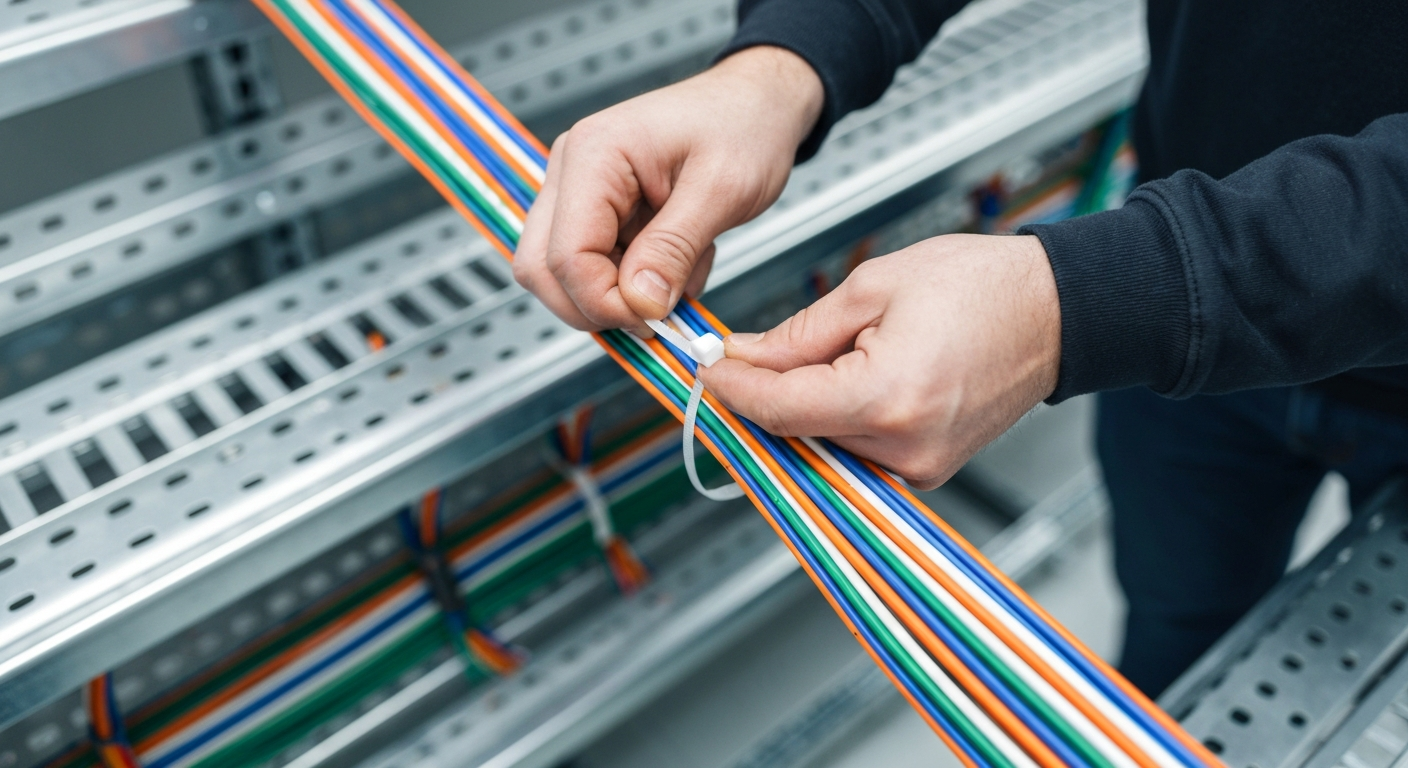
- Gather and Organize Wires: Group cables logically based on circuit, voltage, and destination. Gently comb them into a neat bundle, ensuring they lay flat and are not twisted. This step is crucial for preventing heat buildup and making future servicing easier.
- Select the Appropriate Cable Tie: Based on the environment (e.g., plenum, outdoor), bundle weight (tensile strength), and purpose (bundling vs. support), choose your listed tie. Remember to use plenum-rated ties where required by the NEC for air-handling spaces.
- Install with Proper Tension: Loop the tie around the bundle. For optimal strain relief and to avoid damaging insulation, use a calibrated installation tool that tensions the tie correctly and provides a clean, flush cut. Hand-tightening can often lead to over-tightening or inconsistent results.
- Secure and Support the Bundle: Position ties at intervals appropriate for the cable type you are installing. For example, securing requirements for MC cable are set out in NEC Article 330 and should be followed when MC is installed. When ties provide support (not merely bundling), use a product that is listed and identified for that purpose and attach it to a secure structure.
- Perform a Final Inspection: Run your hand along the bundle to check for any sharp edges from improperly cut ties. Verify that the bundles are secure but that the cables are not being pinched or deformed, which could compromise the wire’s protective insulation.
Key Considerations for Industrial Cable Management and NEC Compliance
Beyond the basic steps, several key principles ensure a robust and compliant installation, especially in demanding commercial or industrial cable management scenarios.
- Securing vs. Supporting: This is a critical distinction in the NEC code book. A tie used only to group wires (bundling) has different expectations than one used for cable securing and supporting a bundle’s weight. When a tie performs a support function, it must be a product that is listed and identified by the manufacturer for the intended load and environment; the NEC requires that listed components be installed and used in accordance with their listing.
- Avoiding Cable Pull Through Damage: When cutting the excess tail of a tie, it must be trimmed flush. Protruding sharp edges can snag on other wires during a future cable pull through, damaging insulation and creating a potential fault.
- Heat Dissipation: Large or tightly packed bundles can trap heat, which may require derating the ampacity of the conductors. Be aware of how your bundling strategy might impact thermal performance, as some methods of cable bundling can violate NEC rules.
- Vibration and Movement: In industrial environments, ensure cable bundles are secured firmly enough to resist movement from machinery vibration, which can cause chafing and abrasion over time. This is a common requirement in installations involving large raceways and cable trays.
Even with the right materials, poor technique can lead to costly and dangerous errors. To avoid common pitfalls, it is essential to understand the frequent mistakes made in the field. Learn more about the common mistakes electricians make when tying cables.
Frequently Asked Questions (FAQ)
What does the NEC say about tying electrical cables?
The National Electrical Code (NEC) provides extensive guidelines on cable securing and supporting. While it doesn’t specify how to tie a knot, it sets rules for support intervals (for example, see requirements for securing MC cable under Article 330), requires that ties and fastening devices not damage cable insulation, and mandates the use of listed fittings and identified fastening devices when serving a support function. In cable-tray applications the code requires listed fastening devices when they are used for securing or supporting cable runs.
What is the difference between a standard tie wrap and a plenum-rated cable tie?
A standard tie wrap cable tie is typically made of Nylon 6/6 and is suitable for general use in areas without special air-handling requirements. A plenum-rated tie, however, is made from a material that exhibits low smoke emission and low heat-release properties and is listed for use in air-handling spaces; such products are commonly identified by a manufacturer listing and may reference testing to standards used for plenum suitability (for example, UL 2043 is commonly used to evaluate discrete items intended for use in air-handling spaces).
How important is tensile strength when choosing cable ties?
Tensile strength is critically important. It defines the maximum load a tie can support before breaking. Choosing a tie with insufficient tensile strength for a heavy wire bundle can lead to failure, causing the bundle to sag or fall. This can put stress on connections and create a safety hazard. The strength must be matched to the weight of the cables being supported and to whether the tie will carry any of the bundle’s load (support) or only be used to keep conductors together (bundling).
Can you use zip ties to support cables in a cable tray?
Yes, but with strict conditions. Per NEC 110.3(B), listed materials must be installed and used in accordance with their listing and labeling. In cable-tray installations the NEC requires that fastening devices used to secure or support cables be listed and identified for that application; simply using an unlisted tie for support is not compliant. Unlisted ties may be used for temporary or incidental bundling where they are not performing a support function, but for securing or supporting in a cable tray you must use a listed product and follow the manufacturer’s instructions and the NEC. (For cable-tray specific fastening requirements see the cable tray article and its provisions for listed fastening devices and securement.)
Continuing Education by State
Select your state to view board-approved continuing education courses and requirements:

Disclaimer: The information provided in this educational content has been prepared with care to reflect current regulatory requirements for continuing education. However, licensing rules and regulations can vary by state and are subject to change. While we strive for accuracy, ExpertCE cannot guarantee that all details are complete or up to date at the time of reading. For the most current and authoritative information, always refer directly to your state’s official licensing board or regulatory agency.
NEC®, NFPA 70E®, NFPA 70®, and National Electrical Code® are registered trademarks of the National Fire Protection Association® (NFPA®)
You may also like
Colorado Electrical Licensing Requirements and Reciprocity Guide
Standby Generators in DE: Navigating Coastal Storm Regulations

 Login with Google