
The Future of Electrical Work: Trends to Watch in 2026
The All-Electric Revolution: Powering a Sustainable Future
The global push for decarbonization is creating a surge in electrification, placing electricians at the forefront of the climate solution. This isn’t just a trend; it’s a fundamental shift in how we generate, store, and consume energy, opening up massive opportunities in specialized fields.
Renewable Energy Integration and Energy Storage Solutions
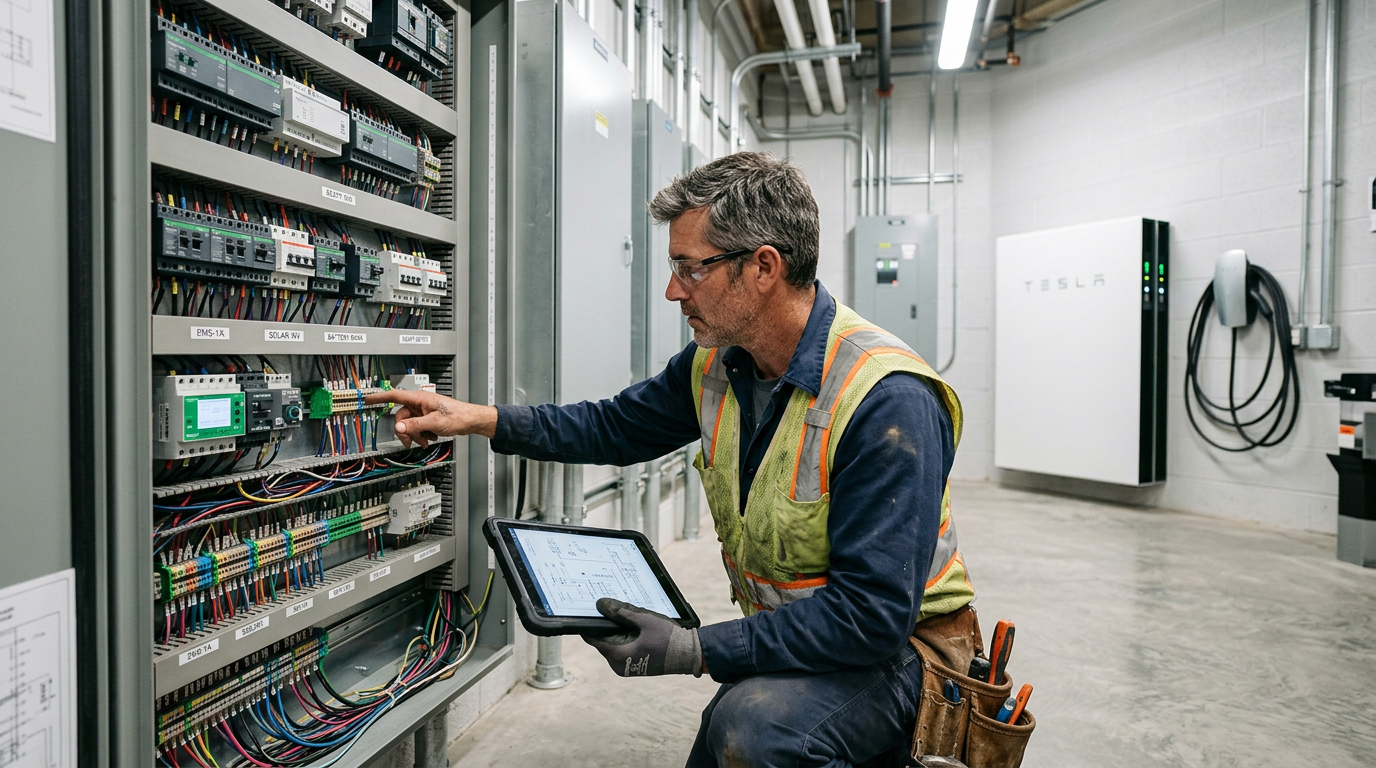
The clean energy boom is in full swing. Homeowners and businesses are rapidly adopting sustainable energy solutions, with renewable energy integration – especially solar PV systems – becoming a core service for many electrical contractors. These installations are no longer simple panel-on-a-roof jobs. They are complex systems that often include sophisticated energy storage solutions like battery backups. Electricians are now responsible for designing and installing systems that can power a home, charge a vehicle, and even feed excess energy back to the grid. This includes ensuring Energy Storage Systems (ESS) have a readily accessible disconnecting means located within sight and within 3 meters (10 feet) of the equipment, or one that is lockable in the open position if located elsewhere, as mandated by Section 706.15(B). Mastering how the 2023 NEC handles load calculations with these modern energy management systems is crucial for safe and efficient installations. Under Section 220.70, the NEC now allows load calculations to be based on the maximum ampere setpoint of the EMS rather than the sum of all connected loads, provided the system is used to limit current to a feeder or service. For more details on this, explore a deeper dive into how the 2023 NEC handles load calculations with energy management systems.
The Surge in Electric Vehicle (EV) Charging Infrastructure
As electric vehicles move from niche to mainstream, the demand for reliable charging solutions is exploding. The global electric vehicle charging infrastructure market is projected to grow from an estimated $32.26 billion in 2024 to $125.39 billion by 2030, and electricians are the ones building this critical infrastructure. This includes everything from installing Level 2 chargers in residential garages to deploying vast networks of DC fast chargers for commercial and public use. Understanding the nuances of the National Electrical Code is critical, especially as it evolves to meet new demands. For instance, the 2023 NEC expanded Section 625.54 to require GFCI protection for all receptacles used for EV charging, a major shift that enhances safety for residential and commercial users alike. To learn more, see our lesson on how 2023 NEC rules are changing EV charger installation requirements.
The Rise of the Smart Electrician: Buildings Get an IQ
The concept of a “smart building” has moved from science fiction to a rapidly growing market reality. The global smart home market is projected to reach $537.27 billion by 2030, and electricians are the ones giving these buildings their intelligence. This evolution requires a blend of traditional electrical skills and new IT knowledge.
Smart Building Technology and the Internet of Things (IoT)
Today’s electrical systems are becoming the central nervous system for buildings. Smart building technology relies on a network of sensors, controllers, and devices that all communicate via the Internet of Things (IoT) for electricians. This includes installing and integrating Building Automation Systems (BAS) that control HVAC, security, and advanced lighting. This shift means electricians must be comfortable working with low-voltage wiring, network configurations, and software interfaces, transforming them into tech integrators. As buildings become more connected, understanding new physical and network security considerations is also key. For a look at how the code is adapting, check out our resource on how the 2023 NEC addresses cybersecurity and QR codes for equipment, which highlights new features that improve access to safety information without replacing dedicated IT security protocols.
Power-Over-Ethernet (PoE) Lighting and Data-Driven Services
One of the most exciting advancements is power-over-ethernet (PoE) lighting. This technology uses standard Ethernet cables to provide both power and data to light fixtures, offering unparalleled control and energy efficiency. The market for PoE lighting is expanding rapidly as commercial buildings seek smarter, more flexible lighting solutions, with one forecast projecting it to reach $11.3 billion by 2032. This trend also opens the door for electricians to offer data-driven electrical services, using the information collected from smart systems to help clients optimize energy use, predict maintenance needs, and improve operational efficiency.
Modernizing the Grid and the Job Site
The innovation isn’t just happening inside buildings. The entire electrical grid and the way electrical work is performed are undergoing significant modernization. These changes are designed to improve efficiency, safety, and resilience.
Grid Modernization and Microgrid Installation
The nation’s power grid is aging, and significant investments are being made in grid modernization to create a more resilient and efficient “smart grid.” This involves upgrading infrastructure to better handle renewable energy sources and prevent large-scale outages. A key part of this is the rise of microgrid installation. Microgrids are localized grids that can disconnect from the main grid and operate autonomously, providing reliable power for critical facilities like hospitals, data centers, and community shelters. Electricians with the skills to install and maintain these advanced systems are in high demand.
Prefabrication in Electrical Work and Advanced Safety Protocols
Efficiency on the job site is also being transformed by prefabrication in electrical work. Assembling components like conduit racks and panelboards in a controlled factory setting reduces on-site labor, improves quality, and enhances safety. This method allows projects to be completed faster and more cost-effectively. Alongside these process improvements, there is a continued focus on advanced safety protocols. With new technologies come new risks, and a commitment to safety through ongoing training and adherence to the latest standards remains a cornerstone of the profession.
How to Stay Ahead: The Importance of Specialized Training
The common thread through all these trends is the need for continuous learning. The days of completing an apprenticeship and being set for a 40-year career are over. The future of electrical work belongs to those who commit to lifelong education.
From Electrician School to Lifelong Learning
While traditional electrician school and apprenticeships provide a vital foundation, the rapid evolution of the industry requires specialized training for electricians. Whether it’s getting certified in EV charger installation, renewable energy systems, or building automation, upskilling is no longer optional—it’s essential for career growth. Fortunately, flexible learning options like online electrical courses make it easier than ever to gain the knowledge needed to stay competitive and capitalize on these emerging opportunities.
Your Career in the Future of Electrical Work
The electrical industry is in the middle of an exciting and dynamic transformation. For skilled professionals, these changes represent a golden opportunity. The demand for electricians is projected to grow 6% from 2022 to 2032, faster than the average for all occupations, driven by everything from energy-efficient retrofitting to the build-out of new technologies. By embracing these trends and investing in the right skills, you can ensure your career is not just stable, but thriving for years to come.
Ready to power your future? Stay ahead of the curve and master the skills that are in high demand. Browse our courses today to find state-approved continuing education and specialized training designed for the modern electrician.
Continuing Education by State
Select your state to view board-approved continuing education courses and requirements:
Frequently Asked Questions
What are the fastest-growing sectors for electricians?
The fastest-growing specializations for electricians are in renewable energy systems (especially solar and energy storage), electric vehicle (EV) charging infrastructure, and smart building technology, including building automation and IoT integration.
Will automation replace electricians?
While some routine tasks may become more automated through technologies like prefabrication, the core role of the electrician is unlikely to be replaced. The complexity of installing, troubleshooting, and maintaining advanced electrical systems requires critical thinking and hands-on expertise that machines cannot replicate. In fact, the rise of automation in buildings is creating more demand for electricians skilled in these new technologies.
How important is it to learn about the National Electrical Code (NEC)?
Understanding the NEC is more critical than ever. As technologies like EV chargers, energy storage, and microgrids become more common, the NEC is constantly updated to ensure these systems are installed safely and function correctly. Continuous education on the latest code cycles is essential for compliance and professional credibility. This includes staying updated on new requirements like Section 110.3(A)(8), which addresses cybersecurity for equipment that is connected to communication networks.
Disclaimer: The information provided in this educational content has been prepared with care to reflect current regulatory requirements for continuing education. However, licensing rules and regulations can vary by state and are subject to change. While we strive for accuracy, ExpertCE cannot guarantee that all details are complete or up to date at the time of reading. For the most current and authoritative information, always refer directly to your state’s official licensing board or regulatory agency.
NEC®, NFPA 70E®, NFPA 70®, and National Electrical Code® are registered trademarks of the National Fire Protection Association® (NFPA®)
You may also like
Standby Generators in DE: Navigating Coastal Storm Regulations

Upgrading to a Master Electrician License in Delaware

 Login with Google