
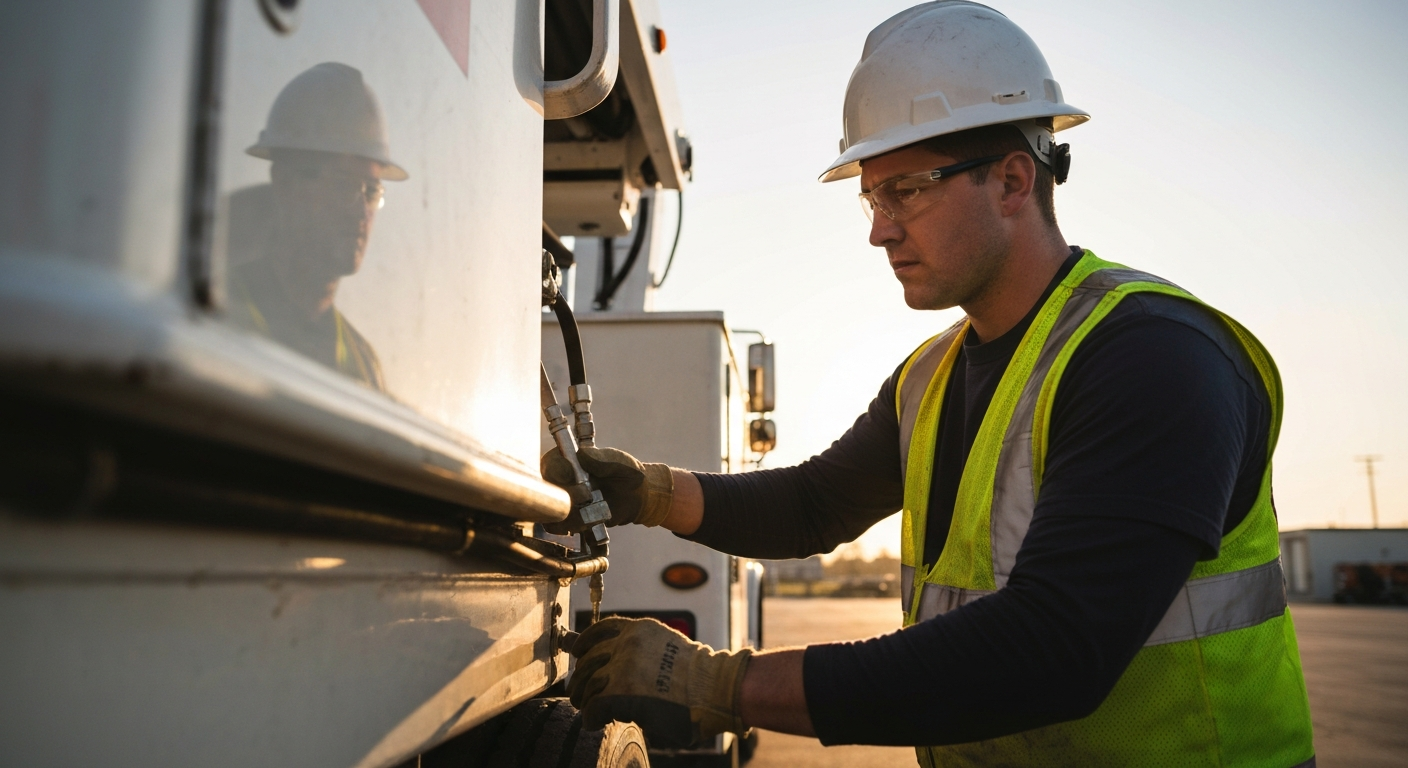
A Lineman’s Guide to Special Utility Truck Inspections
A Lineman’s Guide to Special Utility Truck Inspections
Comprehensive utility truck inspections are a non-negotiable cornerstone of safety and operational readiness in the electrical trade. For the lineman, master electrician, or journeyman electrician operating aerial lifts and digger derricks, these inspections are the first line of defense against catastrophic failure. A compliant inspection process, guided by OSHA 1910.67 and recognized consensus standards such as ANSI A92 series, typically includes daily walk-arounds, periodic mechanical checks, and thorough periodic (often annual) evaluations. Depending on manufacturer guidance and employer policy, these evaluations may include dielectric testing for insulated components, structural (boom) inspections using non-destructive testing (NDT) methods when indicated, and detailed hydraulic system inspection and maintenance. Mastering this process is not just about compliance; it’s about ensuring the safety of the crew and the public, maximizing uptime, and upholding the professional standards essential for working with high voltage equipment. Proper electrician training on these procedures is paramount for a safe and successful career.
Why Utility Truck Inspections are a Lineman’s Most Critical Task
For a lineman, a utility truck is more than a vehicle; it’s an essential, complex tool. Ignoring or rushing inspections can have dire consequences, ranging from costly downtime to life-threatening accidents. For example, on some large enforcement operations such as CVSA’s Roadcheck, out-of-service rates have been reported in the ~20% range in recent years, but those percentages vary by program, region, and year. A robust inspection program, built on industry best practices, recognized consensus standards, manufacturer requirements, and regulatory expectations, is critical for three primary reasons:
- Safety and Accident Prevention: The primary goal of any inspection is to identify and rectify potential failures before they occur. A faulty outrigger, a compromised hydraulic line, or a failed dielectric insulator can lead to catastrophic equipment failure, injury, or fatality.
- Regulatory Compliance: Federal workplace safety rules and recognized consensus standards guide inspection practices. Employers should follow OSHA requirements (for example, 1910.67 for vehicle-mounted elevating and rotating work platforms) and applicable ANSI A92 series guidance and manufacturer instructions. Compliance with OSHA and recognized standards helps avoid citations and supports safe operations.
- Operational Reliability and Cost Savings: Unexpected equipment failure leads to project delays, emergency repair costs, and a loss of productivity. A proactive inspection schedule identifies wear and tear early, allowing for planned maintenance that is far less expensive than reactive, breakdown-related repairs. Well-maintained vehicles are a top safety strategy for a reason.
The Regulatory Framework: Understanding OSHA and ANSI Standards
Two primary sources linemen consult in the U.S. are OSHA requirements and the ANSI A92 series of consensus standards. While they work in tandem, they serve different roles and are part of a broader compliance picture.
OSHA 1910.67 is a federal rule that addresses vehicle-mounted elevating and rotating work platforms and sets enforceable workplace safety obligations. OSHA inspections and enforcement focus on whether employers have met their duty to protect workers and typically look to recognized consensus standards, manufacturer instructions, and industry practice as accepted ways to meet OSHA’s performance obligations.
The ANSI A92 series provides detailed technical guidance on the design, testing, maintenance, and inspection of aerial devices. These consensus standards describe recommended inspection intervals and detailed procedures, but the exact intervals and test methods depend on the edition in force, the device manufacturer, and employer policies.
The Three Tiers of Utility Truck Inspections
A comprehensive inspection program is not a once-a-year event. It’s a continuous process broken down into three essential tiers: daily, frequent, and periodic (often annual) inspections. Each has a distinct purpose and level of detail.
Daily Walk-Around: The First Line of Defense
Before any shift, the operator must conduct a thorough walk-around inspection. This is the most frequent and arguably one of the most important checks. It is designed to catch obvious defects that could present an immediate hazard. This includes checking the vehicle chassis and frame for cracks or damage, as well as:
- Tire condition and inflation
- Fluid levels (engine oil, coolant, hydraulic fluid)
- All lights, signals, and horn
- Mirrors and windows for cleanliness and damage
- A visual check of the boom, bucket, and controls
- Confirmation that all safety equipment, including the bucket liner inspection, is in place and appears sound
- Testing of both upper and lower controls
- Verification of emergency lowering procedures functionality
Frequent Inspections
Performed by a qualified technician or other qualified person, ‘frequent inspections’ are defined in the ANSI A92 series; many organizations adopt an interval such as quarterly or a usage-based interval (for example, 150 hours), but the exact interval and procedures are determined by the standard edition, the manufacturer, and employer policy. These checks go beyond the daily visual and delve into the truck’s core systems. Key areas of focus include:
- Hydraulic system inspection: Checking for leaks in hoses and fittings, testing system pressure, and inspecting cylinders for damage or drift.
- Mechanical components: Examining wear pads, pins, cables, and leveling hardware for proper tension and condition.
- Safety systems: Verifying the function of interlocks, emergency stops, and alarms.
- Structural elements: A more detailed look at welds, bolts, and mounting hardware.
Periodic (Often Annual) Inspections: The Comprehensive Deep Dive
The most comprehensive periodic evaluation — commonly performed annually — is typically done by a qualified person experienced with aerial devices or digger derricks and often requires disassembly or close internal inspection of certain components to assess condition. This inspection validates the equipment’s structural, mechanical, and, where applicable, electrical integrity for another period of service.
A thorough periodic inspection often involves a step-by-step process:
- Structural Integrity Verification: Critical structural inspections may include NDT methods such as magnetic particle, ultrasonic, or dye-penetrant testing to find hidden cracks or stress fractures in critical welds and structural components that are not visible to the naked eye.
- Mechanical Systems Evaluation: Technicians assess wear on critical parts, check bearing torque and slew components against manufacturer specifications, and inspect all fasteners, pins, and locking devices.
- Electrical Safety and Insulation Testing: For insulated aerial devices used in higher-voltage work, dielectric or insulation testing may be performed in accordance with manufacturer and consensus standard guidance. Where performed, these tests are intended to verify insulating capability; the exact voltages and pass/fail criteria follow manufacturer instructions and recognized procedures.
- Operational and Functional Checks: Every function of the aerial device is tested through its full range of motion, including stability and outrigger function under load.
For any journeyman electrician looking to advance, understanding these inspection levels is crucial. It’s part of the broader knowledge base that separates operators from true industry professionals. Proper electrician training, including an understanding of relevant codes like the NEC working clearance requirements found in the NEC code book, enhances a lineman’s ability to operate safely around energized equipment.
Your truck is more than a vehicle; it’s a tool. Learn to inspect it all.
The Future of Inspections: Emerging Technologies
The field of utility truck inspections is evolving. Fleet management is seeing a rise in telematics and predictive maintenance analytics, which use real-time data to anticipate maintenance needs. AI-powered systems are being developed to analyze images and spot defects faster, and drones are being used for visual and thermal inspections of equipment. Staying current with these trends through ongoing education, such as online electrical courses and recognized trade certifications (for example, NCCER or manufacturer-specific programs), is essential for the modern electrical professional.
Frequently Asked Questions (FAQ)
- What is the primary standard governing utility truck inspections?
- The primary documents most employers look to are OSHA requirements (for example 1910.67 for vehicle-mounted elevating and rotating work platforms) and the ANSI A92 series of standards, which provide detailed technical guidance. Local employer policies and manufacturer instructions also play a central role.
- How often must dielectric testing be performed on an insulated bucket truck?
- ANSI guidance commonly recommends periodic dielectric testing of insulated aerial components, often performed annually. However, exact intervals and requirements are determined by the manufacturer, the edition of the applicable consensus standard, and employer policy. Tests are also performed after suspected electrical contact or damage.
- What is involved in a boom integrity test?
- A boom integrity inspection typically includes structural inspection and may include NDT methods (magnetic particle, dye-penetrant, or ultrasonic testing) when indicated to reveal hidden cracks, stress, or fatigue in critical welds and structural components.
- Can a regular mechanic perform an annual digger derrick inspection?
- Periodic inspections generally need to be conducted by a qualified person with training and familiarity with the specific aerial device or digger derrick. Employers commonly require technicians with manufacturer-specific training or recognized qualifications to perform the most rigorous periodic inspections and to interpret specialized test results.
Continuing Education by State
Select your state to view board-approved continuing education courses and requirements:

Disclaimer: The information provided in this educational content has been prepared with care to reflect current regulatory requirements for continuing education. However, licensing rules and regulations can vary by state and are subject to change. While we strive for accuracy, ExpertCE cannot guarantee that all details are complete or up to date at the time of reading. For the most current and authoritative information, always refer directly to your state’s official licensing board or regulatory agency.
NEC®, NFPA 70E®, NFPA 70®, and National Electrical Code® are registered trademarks of the National Fire Protection Association® (NFPA®)
You may also like
Colorado Electrical Licensing Requirements and Reciprocity Guide
Standby Generators in DE: Navigating Coastal Storm Regulations

 Login with Google