
NEC Code for Outdoor Receptacle Installation (NEC 406.9)
NEC Code for Outdoor Receptacle Installation: A Guide to NEC 406.9
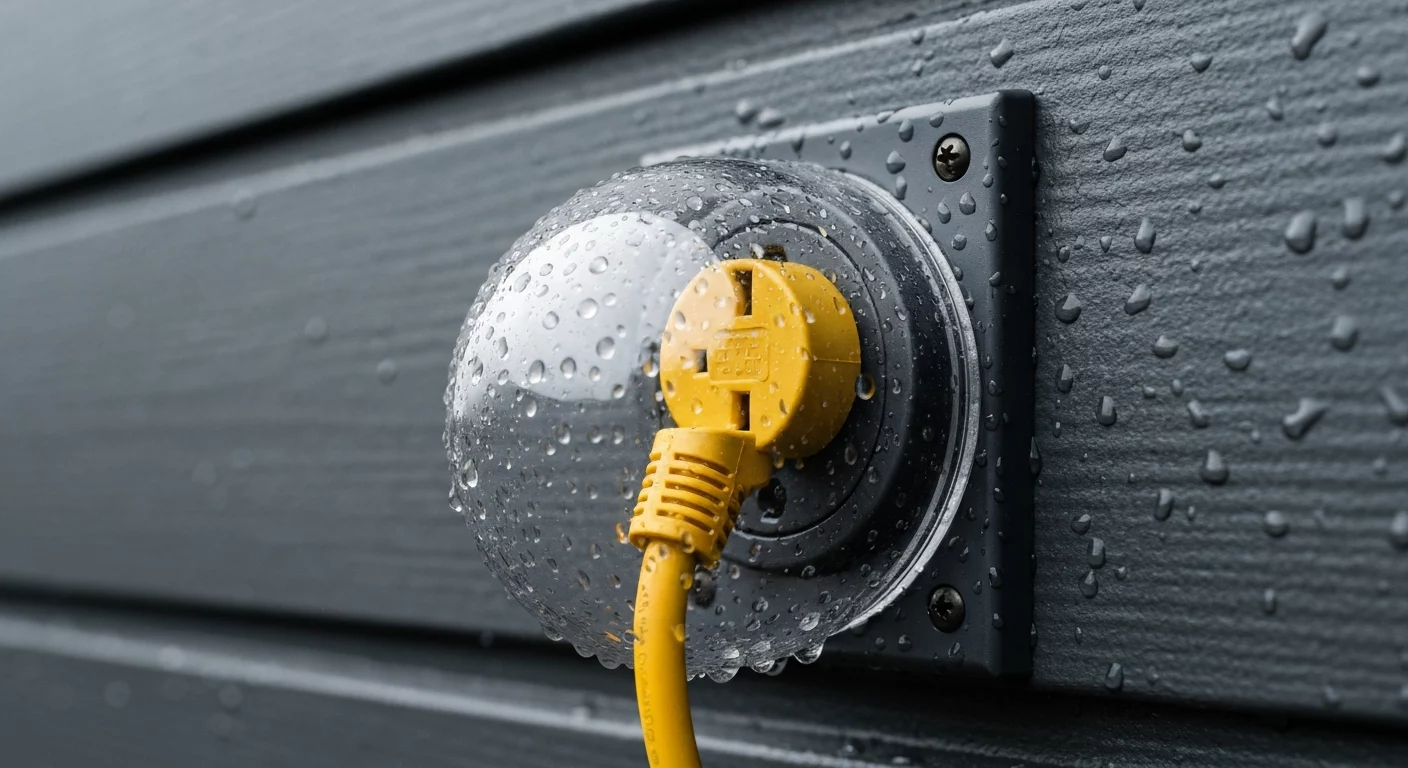
A compliant outdoor receptacle installation requires strict adherence to National Electrical Code (NEC) 406.9 to ensure safety and durability. For any 15‑ or 20 amp outlet installed in a damp or wet location, the code mandates multiple layers of protection. First, most outdoor receptacles require GFCI protection to safeguard individuals from electrical shock; NEC 210.8 requires GFCI protection for outdoor receptacles at dwelling units and 210.8(B) extends similar protection requirements to many other occupancies (limited, specific exceptions apply). Second, the device itself must be a listed weather‑resistant receptacle (manufacturers commonly mark these as “WR”); NEC specifies that 15‑ and 20‑amp, nonlocking outdoor receptacles be a listed weather‑resistant type. Finally, the entire assembly must be protected by an appropriate enclosure. For damp locations, a simple weatherproof cover is sufficient when the receptacle is covered (plug not inserted). However, for wet locations, the receptacle must be protected whether or not a plug is inserted: a weatherproof in‑use cover (often called a “bubble cover”) or another listed assembly providing weatherproof protection is required. NEC requires that an outlet box hood installed to provide that protection be listed and identified as “extra‑duty,” but other listed enclosures or assemblies that provide equivalent weatherproof protection need not specifically be labeled “extra‑duty.”
Understanding NEC 406.9: Damp vs. Wet Locations
For any journeyman electrician, a core competency is correctly interpreting environmental conditions as defined by the NEC code book. NEC 406.9 provides specific rules for installing a receptacle outdoors, and the requirements hinge on whether the location is classified as “damp” or “wet.” Misclassifying a location can lead to a failed inspection and, more importantly, a hazardous installation.
Damp Locations: NEC 406.9(A)
A damp location is an area protected from weather and not subject to saturation with water or other liquids but is still exposed to moderate degrees of moisture. Examples include covered porches, patios, and similar structures. For these areas, the NEC requires that any 15‑ and 20‑amp non‑locking receptacle must:
- Be a listed weather‑resistant (WR) receptacle.
- Be installed in a weatherproof enclosure appropriate for the location.
- Have a cover that is weatherproof when the cover is closed (the outlet box hood or cover only needs to protect the receptacle when nothing is plugged into it).
- Have GFCI protection where the NEC requires it (see NEC 210.8 for dwelling locations and NEC 210.8(B) for other occupancies).
Wet Locations: NEC 406.9(B)
A wet location is any installation that is underground, in concrete slabs, or in masonry in direct contact with the earth. It also includes locations exposed to weather without overhead protection and any areas subject to saturation with water. For these more demanding environments, the rules are more stringent. All 15‑ and 20‑amp receptacles must:
- Be a listed weather‑resistant receptacle.
- Be installed with a weatherproof in‑use cover or other listed assembly that provides weatherproof protection even when a cord is connected; this is often referred to as a “bubble cover.” For an in‑depth guide on installing the core component, see our article on general electrical receptacle installation.
- Have GFCI protection where required by NEC 210.8 and related provisions.
The Mandate for Extra‑Duty Identified Outlet Box Hoods
NEC explicitly states that an outlet box hood installed to provide weatherproof protection for a receptacle in a wet location shall be listed and identified as “extra‑duty.” That means when an outlet box hood is the weatherproofing method chosen, it must be listed and marked for extra‑duty service. However, the NEC also allows other types of listed enclosures or assemblies that provide weatherproof protection without that specific extra‑duty identification. In short: if you use an outlet box hood, it must be listed and identified as extra‑duty; if you use an alternative listed method that achieves the required protection for the wet location, the code permits that alternative without forcing the extra‑duty hood marking.
GFCI Protection: The Ultimate Safety Net
Ground‑Fault Circuit‑Interrupter, or GFCI, technology is a cornerstone of modern electrical safety. A GFCI outlet or breaker monitors the flow of current and will de‑energize the circuit within milliseconds if it detects an imbalance, preventing a potentially fatal shock. The NEC is clear: outdoor receptacles required by the Code (for example, those mandated for dwelling exteriors under NEC 210.52(E)) must have GFCI protection where NEC 210.8 requires it. Understanding correct wiring is crucial for this protection to function. For a detailed walkthrough, review our guide on how to properly wire a GFCI outlet using its line and load terminals.
Step‑by‑Step Guide to a Compliant Outdoor Receptacle Installation
Installing an outdoor outlet correctly involves several critical steps to ensure it is safe, durable, and compliant with the National Electrical Code. This process combines knowledge of enclosures, wiring, and the specific devices required.
- Plan and De‑Energize: Identify the location for the new receptacle. Turn off the corresponding circuit breaker at the panel and verify with a voltage tester that the power is off.
- Mount the Outdoor Electrical Box: Securely mount a listed weatherproof enclosure to the exterior surface. Ensure it is properly flashed and sealed with appropriate materials to prevent water intrusion behind the box.
- Run Electrical Cable or Raceway: Run an appropriate cable or raceway from the power source to the new outdoor electrical box. Examples include UF‑B for direct‑burial applications or individual conductors in a listed exterior conduit (THHN/THWN). Use the wiring method suitable for the installation and local code requirements.
- Perform the GFCI Outlet Wiring: Strip the wires and connect them to the GFCI receptacle. The incoming (supply) power wires must connect to the LINE terminals. If you are protecting other outlets downstream, you will use the LOAD terminals. If you are wiring a single outlet, the LOAD terminals may remain unused. The principles are functionally the same as wiring a standard duplex outlet—refresh your memory on duplex wiring here.
- Install the Weather‑Resistant Receptacle: The device itself must be a listed WR‑rated receptacle suitable for the location. Secure the GFCI outlet into the box and bond the device grounding conductor in accordance with Article 250.
- Install the Cover and Gasket: Use the gasket supplied with your in‑use cover (or follow the manufacturer’s instructions) to ensure a tight seal. If using an outlet box hood in a wet location, select a hood listed and identified for the intended extra‑duty use when applicable.
- Test the Installation: Close the cover, restore power at the breaker, and test the receptacle. Press the “TEST” button on the GFCI receptacle to ensure it trips, then press “RESET.” Also verify the cover closes properly with the plug installed if applicable.
Properly following these steps ensures your installation is compliant and safe. For licensed professionals, staying current on code is essential for business and liability. Ensure your outdoor electrical work is safe and compliant. See our courses.
Placement and Accessibility Rules (NEC 210.52)
Beyond the construction of the outlet assembly, the NEC also dictates where outdoor outlets must be placed. NEC 210.52(E) provides the requirements for dwelling units to ensure convenience and reduce the use of extension cords, a common source of electrical hazards.
- Front and Rear of the House: At least one receptacle is required at both the front and the back of a house; these receptacles must be readily accessible from grade and located not more than 2.0 m (about 6.5 ft) above grade.
- Balconies, Decks, and Porches: Each balcony, deck, or porch that is accessible from inside the dwelling must have at least one receptacle outlet installed within its perimeter. The outlet must not be located more than 2.0 m (about 6.5 ft) above the walking surface.
- GFCI Requirement: Per NEC 210.8(A)(3) for dwelling units, many receptacles specified by NEC 210.52 must have GFCI protection. For outdoor receptacles at other occupancies, GFCI protection is also broadly required under 210.8(B) and related provisions.
These requirements are a baseline. For a comprehensive overview of general receptacle rules, you can read more about the NEC requirements for electrical receptacles in various locations.
Prohibited Zones Around Tubs and Showers (NEC 406.9(C))
Section 406.9(C) specifies the bathtub and shower space: receptacles must not be installed inside the tub or shower or within a zone measured 900 mm (3 ft) horizontally from any outside edge of the bathtub or shower stall; additionally, the zone includes the space measured vertically from the floor to 2.5 m (8 ft) above the top of the bathtub rim or shower stall threshold. That prohibition applies where the conditions meet the definition in the NEC, which can include outdoor shower locations if they fall within the specified zone. For further detail on bathroom outlet requirements see our article on the NEC bathroom outlet code.
Primary Sources
The information in this article is based on the National Electrical Code (NFPA 70) requirements, including Article 406 for receptacles and Article 210 for branch‑circuit requirements. For direct access to the code and official guidance, see NFPA resources and the manufacturer’s listings for devices and enclosures.
Frequently Asked Questions (FAQ)
Do all outdoor outlets need to be GFCI?
Most outdoor receptacles required by the NEC do require GFCI protection. NEC 210.8(A) lists locations in dwelling units that require GFCI protection, including outdoor receptacles; NEC 210.8(B) extends protection requirements in many other occupancies. There are specific, limited exceptions for particular dedicated equipment or installations—consult the applicable code text and local amendments for details.
What is an “extra‑duty” in‑use cover and when do I need one for an outdoor receptacle installation?
An extra‑duty rated cover is a robust, listed outlet box hood intended to provide weatherproof protection while in use and to resist physical abuse. NEC specifies that an outlet box hood installed for protection of a wet‑location receptacle shall be listed and identified as “extra‑duty.” Other listed methods of providing weatherproof protection for wet locations are permitted if they are listed for that purpose; review the product listing and manufacturer instructions to confirm suitability.
Can I use a standard receptacle in an outdoor electrical box?
No. You should not use an ordinary indoor receptacle exposed to a damp or wet location. NEC 406.9 requires listed weather‑resistant receptacles for outdoor damp/wet locations; use a listed WR‑rated device designed for outdoor service.
How many outlets are required outside a house according to the NEC code book?
Per NEC 210.52(E), a dwelling unit must have at least one outdoor receptacle located at the front and one at the rear of the house, located not more than about 6.5 feet above grade. Additionally, decks, balconies, and porches accessible from the dwelling require at least one receptacle within the perimeter.
Continuing Education by State
Select your state to view board-approved continuing education courses and requirements:

Disclaimer: The information provided in this educational content has been prepared with care to reflect current regulatory requirements for continuing education. However, licensing rules and regulations can vary by state and are subject to change. While we strive for accuracy, ExpertCE cannot guarantee that all details are complete or up to date at the time of reading. For the most current and authoritative information, always refer directly to your state’s official licensing board or regulatory agency.
NEC®, NFPA 70E®, NFPA 70®, and National Electrical Code® are registered trademarks of the National Fire Protection Association® (NFPA®)
You may also like

Colorado Electrical Licensing Requirements and Reciprocity Guide
Standby Generators in DE: Navigating Coastal Storm Regulations

 Login with Google