
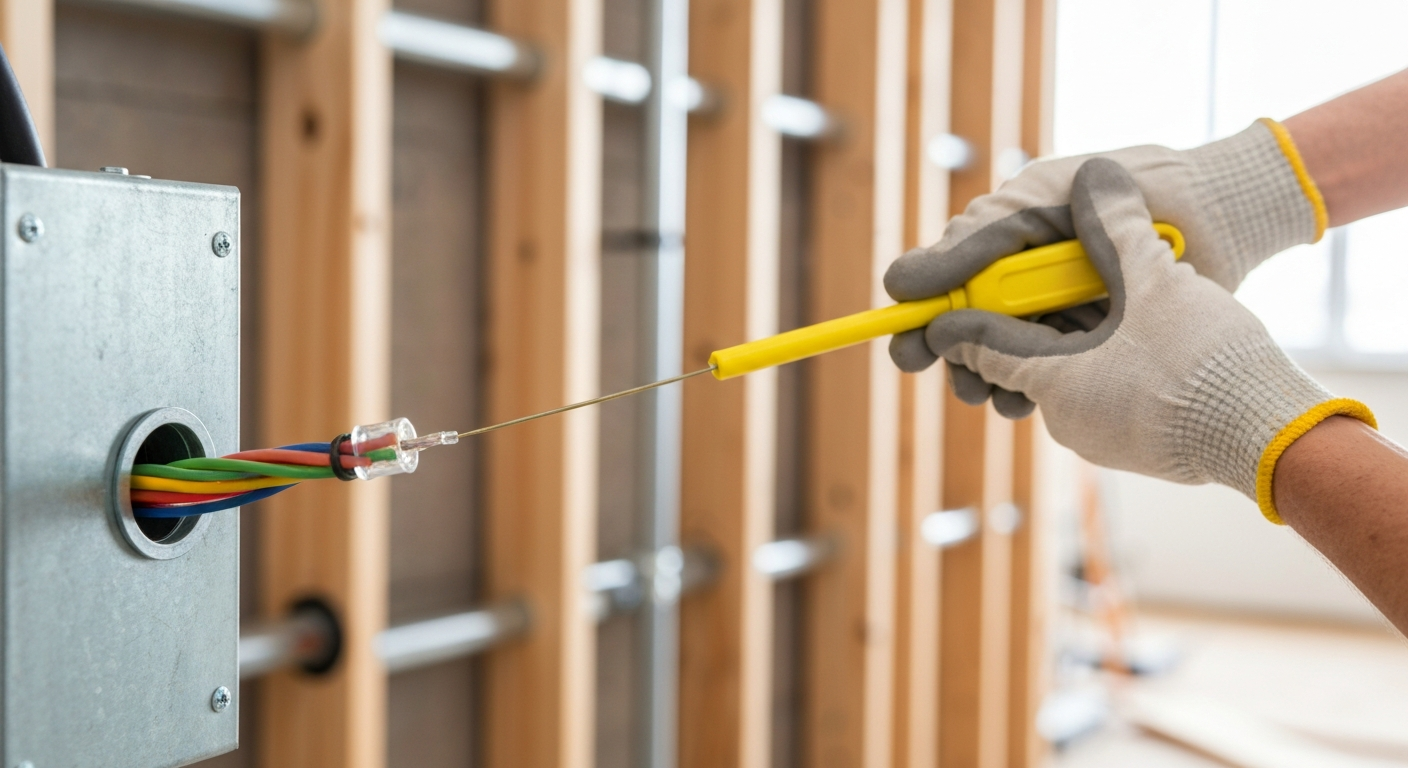
How to Use a Fish Tape for Pulling Wire Through Conduit
How to Use a Fish Tape: A Professional Guide for Electricians
Using a fish tape is a fundamental skill for any electrician, essential for routing wires through an electrical conduit. This guide provides a detailed, professional overview of how to use a fish tape effectively for a safe and efficient cable pull through. The process involves selecting the right tool—selecting the right tool— for example, a non-conductive fish tape when working near potentially energized conductors and a rigid steel fish tape for long, straight runs—preparing the raceway, and attaching the wires securely. Proper technique, including the use of wire pulling lubricant and understanding concepts like pulling tension, ensures that conductors are not damaged during installation. Adhering to the National Electrical Code (NEC) for conduit fill limits is a critical first step before any wire is pulled into an electrical conduit, guaranteeing a compliant and safe installation.
Understanding Your Tools: Steel vs. Non-Conductive Fish Tapes
Selecting the correct fish tape is the first step toward a successful wire pull. The choice between materials directly impacts safety, efficiency, and the types of conduits you can navigate. There is a clear industry trend favoring advanced materials for enhanced safety and flexibility.
Steel Fish Tape
A steel fish tape is the traditional choice, known for its rigidity and strength. It excels in long, straight pulls through larger conduits like EMT conduit or RMC. Its stiffness allows it to be pushed considerable distances without buckling. However, because steel is conductive, avoid using a steel (conductive) tape in or near panels, enclosures, or any raceway that may contain live circuits; when work must be performed where conductors might be energized, follow lockout/tagout and ensure only qualified persons perform the task.
Non-Conductive Fish Tape
Modern fish tapes are often made from fiberglass or nylon. These are known as non-conductive fish tape models and offer a significant safety advantage when work is being done near potentially energized conductors (but they do not replace the need to de-energize circuits when practical). Key benefits include:
- Safety: Preferred when working close to potentially energized conductors because they are not electrically conductive. That said, de-energize and lockout/tagout wherever possible and follow qualified-person procedures.
- Flexibility: Often better at navigating conduits with multiple bends, such as in complex runs of PVC conduit or flexible metallic conduit.
- Memory: Tape ‘memory’ varies by product: some fiberglass or nylon tapes retain curvature while many steel tapes are stiffer. Check the manufacturer’s specifications when selecting a tape for long runs or complex bends.
Newer innovations even include powered fish tapes that automate the feeding and retracting process, significantly reducing physical strain and speeding up large-scale jobs. Some models now integrate digital screens for measuring distance, helping to locate blockages within a conduit run.
Pre-Pull Preparations: Ensuring a Smooth Cable Pull Through
Proper preparation is non-negotiable for a professional installation. Before you even unreel your fish tape, two key areas must be addressed: conduit fill and lubrication.
Calculating Conduit Fill
Overfilling a conduit is a direct violation of the National Electrical Code (NEC) and poses serious risks, including wire damage from excessive pulling tension and heat buildup. The maximum conduit fill percentage depends on the number of conductors in the raceway. For a comprehensive breakdown of these rules, you should reference our detailed conduit fill calculations NEC guide. Using a conduit fill calculator is the most reliable method to ensure compliance. These calculations are critical, as outlined in NEC Chapter 9, Table 1.
Call to Action: Before you pull, make sure your conduit fill is code-compliant.
Applying Wire Pulling Lubricant
For most pulls beyond very short, straight runs, wire pulling lubricant is strongly recommended to reduce friction and the force required for the pull. Industry guidance (NECA and manufacturers) shows that lubricant can substantially reduce pulling tension, but actual reduction varies by conduit configuration, cable type, and product; follow the lubricant manufacturer’s instructions. Apply lubricant to the conductors and the pulling head so the cable can move smoothly through the conduit.
Step-by-Step Guide: How to Use a Fish Tape
With preparations complete, you can begin the physical process of pulling wire. This requires precision and patience.
- Feed the Fish Tape: Position yourself at one end of the electrical conduit. Unreel the fish tape and feed the leader end into the raceway opening. Push the tape through the conduit, using short, firm motions. If you encounter a bend or obstruction, you may need to pull back slightly and twist the tape to help the fish tape leader navigate the corner.
- Attach the Wires: Once the end of the fish tape emerges from the other side of the conduit, it’s time to attach your conductors. Leave at least 6 inches (150 mm) of free conductor (consistent with minimum free conductor guidance) and use a proper wire stripping tool. Stagger the conductors so you can form a tapered transition; this helps reduce snagging.
- Create a Pulling Head: Form a properly tapered pulling head: loop the first conductor through the fish tape eyelet and secure it, then lay the other conductors along it in a staggered, tapered fashion before taping to create a smooth pulling head. Use high-quality electrical tape or follow mechanical pulling-head instructions. Ensure the head is smooth to minimize catching.
- Pull the Conductors: One person should slowly and steadily pull the fish tape back through the conduit. A second person should be at the other end, feeding the stranded wire or solid conductors into the conduit and applying wire pulling lubricant as needed. Communication is key to avoid binding and excessive tension.
- Complete the Pull: Continue pulling with consistent force until the pulling head emerges. Pull enough extra wire through to comfortably make your connections at both ends, then cut the conductors from their spools.
Advanced Techniques and Considerations
For more challenging pulls, electricians use specialized equipment and techniques.
Using Mule Tape and a Pulling Head
For heavy pulls involving large conductors or long runs, a fish tape may only be the first step. Often, the fish tape is used to pull in a stronger pulling medium, such as mule tape (a high-tensile polyester pulling tape). The mule tape is then attached to the conductors using a mechanical pulling head, like a basket grip, which provides a more secure connection than electrical tape alone. This combination is standard practice for commercial and industrial electrical installations.
Managing Pulling Tension
Maximum pulling tensions are specified by cable manufacturers and standards bodies like the Insulated Cable Engineers Association (ICEA) to prevent stretching or damage. The NEC expects installers to follow manufacturer and standards-based instructions; follow published manufacturer pulling limits and applicable standards when conducting a pull. For long or complex pulls, a dynamometer might be used to monitor the force. If tension becomes excessive, stop the pull. The issue could be a collapsed conduit, an unrecognized obstruction, or exceeding allowed bend limits (NEC-conforming practice limits total bends to 360 degrees between pull points for many conduit types).
The type of conduit also plays a major role. Techniques for installing RMC conduit, for instance, differ from those for PVC. For detailed instructions on rigid steel, see our guide on installing RMC conduit. Similarly, be aware of the 2023 NEC rules for PVC conduit use that impact installation and pulling strategies; for more on conduit fill and cable installation, see conduit fill calculations NEC guide.
Key Takeaways for Safe and Compliant Wire Pulling
- Prioritize Safety: Whenever possible, de-energize circuits and use lockout/tagout. Use a non-conductive fish tape when working near potentially energized conductors; this reduces risk but does not eliminate the need for safe work practices.
- Respect Conduit Fill Limits: Never exceed the maximum fill percentages outlined in the National Electrical Code (NEC). Use a conduit fill calculator and refer to Chapter 9 guidance.
- Lubricate Generously: Use an appropriate wire pulling lubricant to reduce friction and protect wire insulation, following the lubricant manufacturer’s instructions.
- Communicate: Effective communication between the puller and the feeder is essential for a smooth and safe cable pull through.
- Use the Right Tools: For heavy pulls, upgrade from electrical tape to mule tape and a mechanical pulling head, and follow cable manufacturer pulling limits.
Primary Sources
- National Fire Protection Association (NFPA) for the National Electrical Code (NEC)
- Insulated Cable Engineers Association (ICEA)
Frequently Asked Questions (FAQ)
How do you use a fish tape in a conduit with multiple bends?
For conduits with several bends, a flexible non-conductive fish tape made of fiberglass or nylon is often preferable. Push the tape until you hit a bend, then pull back a few inches and twist the case while pushing forward to help the leader navigate the turn. Generous use of wire pulling lubricant on the conductors and the pulling head can also help the assembly slide through tight spots. If a run is long or has many bends, consider using mule tape and a mechanical pulling head for the final pull.
Can you use a fish tape to pull Romex wire?
While possible for short, protected segments, pulling Romex wire (Type NM cable) through an entire conduit system is not common practice. The NEC permits NM cable to be installed in a raceway in limited situations for physical protection (such as short exposed locations), but NM is intended primarily for open-cable use in dry locations. For long conduit runs, individual conductors (THHN/THWN or dual-rated THHN/THWN conductors) are the correct choice. Note that THHN is typically rated for dry locations, THWN for wet, and dual-rated THHN/THWN is a common and versatile option for many conduit installations.
What is the difference between a steel fish tape and a non-conductive fish tape?
A steel fish tape is highly rigid and strong, making it ideal for pushing long distances in straight runs of EMT conduit. However, it is electrically conductive and should be avoided near live circuits. A non-conductive fish tape (fiberglass or nylon) is flexible, excellent for conduits with bends, and reduces the risk of electric shock when working near potentially energized conductors; still, prioritize de-energizing and follow safe work procedures.
Continuing Education by State
Select your state to view board-approved continuing education courses and requirements:

Disclaimer: The information provided in this educational content has been prepared with care to reflect current regulatory requirements for continuing education. However, licensing rules and regulations can vary by state and are subject to change. While we strive for accuracy, ExpertCE cannot guarantee that all details are complete or up to date at the time of reading. For the most current and authoritative information, always refer directly to your state’s official licensing board or regulatory agency.
NEC®, NFPA 70E®, NFPA 70®, and National Electrical Code® are registered trademarks of the National Fire Protection Association® (NFPA®)
You may also like

Colorado Electrical Licensing Requirements and Reciprocity Guide
Standby Generators in DE: Navigating Coastal Storm Regulations

 Login with Google