
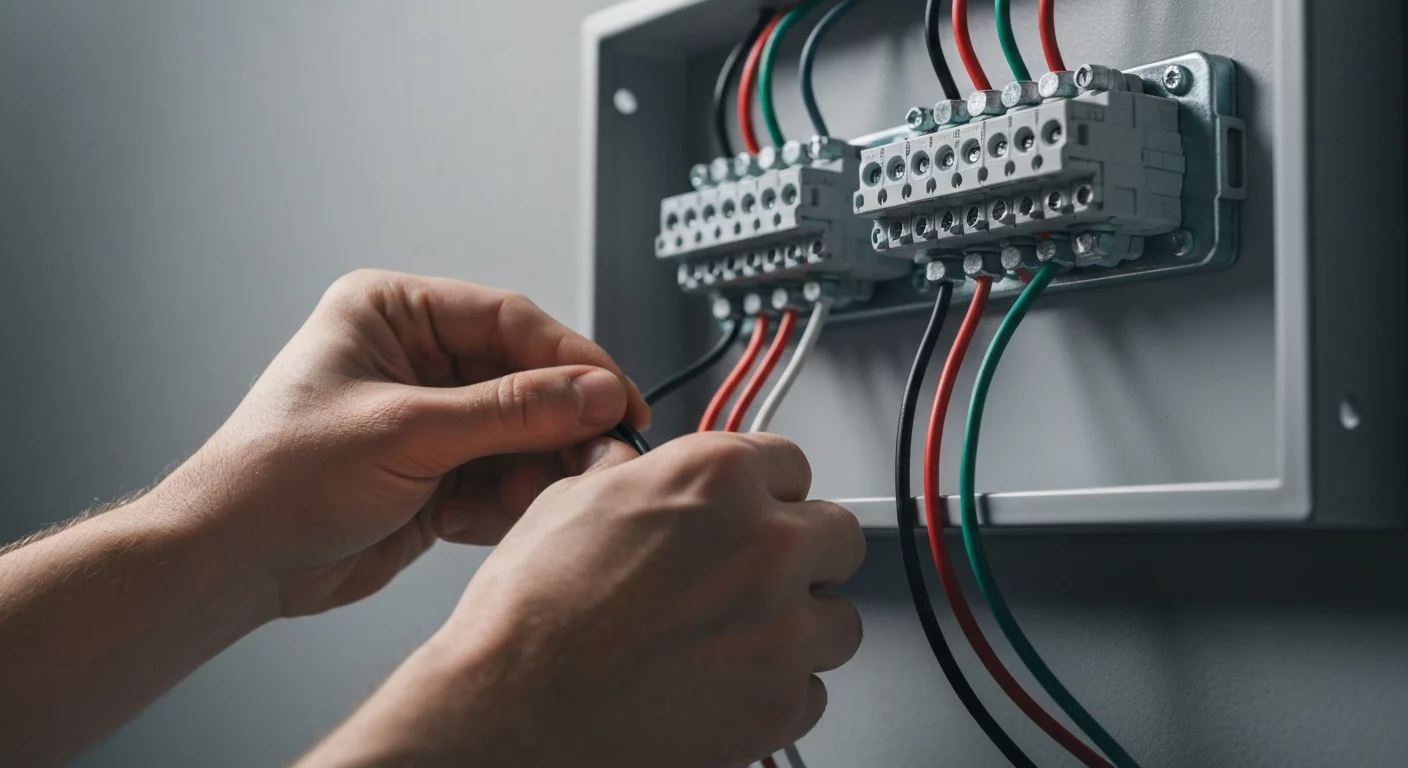
How to Install a Subpanel: Sizing and Wiring Guide
How to Install a Subpanel: Sizing and Wiring Guide
Installing a subpanel requires careful planning, starting with precise load calculations to determine the correct size, including for what might be the smallest sub panel needed for a project. A proper installation is governed by the National Electrical Code (NEC), which mandates specific procedures for sizing the panel, the feeder in electricity, and overcurrent protection. Key to a safe installation is understanding the requirement for a four-wire feeder and the critical rule to isolate neutral and ground within the subpanel. The process involves calculating the total anticipated load per NEC Article 220, applying adjustments for continuous loads, and then selecting a panel and feeder breaker that can safely handle this demand. Furthermore, correct subpanel grounding and bonding, including when a sub panel grounding rod is necessary, are paramount for safety and code compliance. Sizing conductors like the grounding electrode conductor and equipment grounding conductor using NEC tables ensures the system can safely clear a fault.
Understanding Subpanel Fundamentals
A subpanel, technically a panelboard fed by a feeder, extends an existing electrical system’s capacity. It is typically a main lug panel, which means it does not have a single main disconnect breaker built into it. Instead, it relies on the overcurrent protection device—the feeder breaker—in the panel that supplies it. A subpanel becomes necessary when you add a significant number of new circuits for a home addition, a workshop, a detached garage, or when the main panel is full.
The conductors that run from the main panel to the subpanel are defined by the NEC as a “feeder.” A feeder in electricity is composed of all circuit conductors between the service equipment (main panel) and the final branch-circuit overcurrent device (the breakers in the subpanel). Modern code requires this to be a four-wire feeder, consisting of two ungrounded (hot) conductors, one grounded (neutral) conductor, and one Equipment Grounding Conductor (EGC).
Critical First Step: Performing a Load Calculation
Before selecting any hardware, a thorough load calculation is mandatory to determine the total anticipated electrical demand for the new circuits. This process is detailed in NEC Article 220 and ensures the subpanel and its components are not undersized. A key concept in this calculation is accounting for any load expected to run for three hours or more, known as a continuous load. Per the NEC, a continuous load must be calculated at 125% of its nameplate rating. For example, a 16-amp continuous load must be calculated as 20 amps (16A x 1.25). Additionally, NEC Article 220 allows for the application of a demand factor for certain loads, which acknowledges that not all connected equipment will operate simultaneously.
Step-by-Step Load Calculation Process
- List All New Loads: Itemize every new circuit, including lighting, general-use receptacles, fixed appliances (e.g., dishwasher, disposal), and special-purpose outlets (e.g., for a welder or kiln).
- Calculate General Lighting and Receptacle Loads: Based on the square footage served by the subpanel, calculate the general lighting load as prescribed in NEC Article 220.
- Add Fixed Appliance and Motor Loads: Add the nameplate rating (in VA or watts) for all fixed-in-place appliances and motors.
- Apply Continuous Load Adjustments: Identify any continuous loads and multiply their VA rating by 125%.
- Apply Demand Factors: Where permitted by NEC 220.53 for four or more fixed appliances or other sections, apply the appropriate demand factor to reduce the total calculated load.
- Sum the Total Load: Add the adjusted values to arrive at the total calculated load. Convert this total VA to amps (VA / Voltage = Amps) to determine the minimum required capacity for your subpanel.
Sizing the Subpanel and Feeder Breaker
With the load calculation complete, you can select an appropriately sized panel. Common sizes include a 60-amp subpanel, 100-amp, or 125-amp panel. Even if your calculation results in a small load, installing the absolute smallest sub panel, such as a tiny single-circuit panel, is often impractical. Opting for a panel with extra spaces provides flexibility for future additions. The feeder breaker installed in the main panel must be sized to protect the feeder conductors and cannot have a higher amp rating than the subpanel itself. For example, a 100-amp subpanel must be protected by a breaker no larger than 100 amps.
Feeder Wire Sizing and Voltage Drop
Proper feeder wire sizing is based on the ampacity of the feeder breaker. For instance, a 100 amp copper wire size for a feeder would typically be #3 AWG THWN/THHN copper, per NEC Table 310.16. However, you must always consult the latest NEC tables and apply any necessary adjustments for ambient temperature or more than three current-carrying conductors in a single raceway.
For long feeder runs, especially to a detached structure, a voltage drop calculation is crucial. While the NEC offers recommendations rather than a strict mandate for voltage drop, it is best practice to keep it below 3% for the feeder and 5% for the entire circuit to ensure equipment operates efficiently. Excessive voltage drop can cause poor performance and shorten the lifespan of motors and electronics.
Subpanel Grounding and Bonding: The Most Common Point of Failure
Correct subpanel grounding and bonding is a critical safety requirement that is often misunderstood. The most important rule is to isolate neutral and ground within the subpanel. The main bonding jumper—a screw or strap that connects the neutral bar to the panel enclosure—must be removed or left uninstalled. This prevents normal neutral return current from traveling on the equipment grounding system, a hazardous condition known as objectionable current.
A sub panel grounding rod (or a grounding electrode system) is required for subpanels installed in separate buildings or structures, as per NEC 250.32. This provides a direct path to earth for lightning or high-voltage events. The grounding electrode conductor sizing, which is the wire connecting the ground rod to the subpanel’s ground bar, is determined by nec code table 250.66 based on the size of the feeder conductors. The Equipment Grounding Conductor (EGC) that runs with the feeder wires is sized differently, using NEC Table 250.122 based on the rating of the feeder breaker.
Installation and Workspace Considerations
When physically installing the panel, you must adhere to the working space requirements outlined in NEC 110.26 clearance rules. This code mandates a minimum depth (typically 36 inches), a width of at least 30 inches or the width of the equipment, and a height of 6.5 feet to ensure a safe working area. Panelboard safety is an ongoing concern, and it’s essential to understand modern code developments. For example, learning how 2023 NEC panelboard barriers improve worker safety is crucial for new installations. Furthermore, understanding how 2023 NEC panelboard enclosure requirements are different ensures your installation meets the latest standards. Finally, once the circuits are installed, you must follow clear labeling guidelines; for more details, review our lesson on how to properly label switchgear, switchboards, and panelboards per NEC 2023.
Key Takeaways for a Code-Compliant Subpanel Installation
- Start with the Math: Always perform a detailed load calculation following NEC Article 220 before purchasing any materials.
- Use Four Wires: Modern installations require a four-wire feeder (hot, hot, neutral, ground).
- Isolate Neutral and Ground: In the subpanel, the neutral bar must be isolated from the panel case and the ground bar. Remove the bonding jumper main screw.
- Ground Separate Structures: A sub panel grounding rod and grounding electrode system are required for feeders supplying a separate building.
- Size Conductors Correctly: Use NEC tables to size feeder, equipment grounding, and grounding electrode conductors based on load, overcurrent protection, and specific application.
- Respect the Space: Ensure all NEC 110.26 clearance requirements for working space are met.
Mastering these NEC requirements is key to professional installations. To deepen your code knowledge and practical skills, expand your skills with our course on advanced residential wiring.
Primary Sources
- NFPA 70, National Electrical Code (NEC), 2023 Edition
Frequently Asked Questions (FAQ)
- What is the smallest sub panel I can legally install?
- The smallest sub panel you can install depends on the load, but even for a single 240V circuit, a small multi-space panel like a 60-amp subpanel is often a better choice than a single-circuit panel. This provides room for future expansion and is more cost-effective in the long run. The choice must be based on a proper load calculation.
- Do I always need a sub panel grounding rod?
- A sub panel grounding rod (grounding electrode) is not always required. According to NEC 250.32, it is mandatory when a feeder supplies a separate building or structure. For a subpanel in the same building as the service panel, the Equipment Grounding Conductor run with the feeder provides the necessary grounding path, and a separate rod is not needed.
- How do I size the grounding electrode conductor?
- Grounding electrode conductor sizing is performed using nec code table 250.66. The size is determined by the size of the largest ungrounded service-entrance or feeder conductor supplying the subpanel. This is different from the equipment grounding conductor, which is sized using NEC Table 250.122.
- What happens if I don’t isolate neutral and ground in a subpanel?
- Failure to isolate neutral and ground by removing the bonding jumper main creates parallel paths for neutral current to return to the source. This energizes the metal casings of equipment, raceways, and the equipment grounding conductor itself, creating a severe shock hazard. This condition, called “objectionable current,” violates fundamental NEC safety principles.
Continuing Education by State
Select your state to view board-approved continuing education courses and requirements:

Disclaimer: The information provided in this educational content has been prepared with care to reflect current regulatory requirements for continuing education. However, licensing rules and regulations can vary by state and are subject to change. While we strive for accuracy, ExpertCE cannot guarantee that all details are complete or up to date at the time of reading. For the most current and authoritative information, always refer directly to your state’s official licensing board or regulatory agency.
NEC®, NFPA 70E®, NFPA 70®, and National Electrical Code® are registered trademarks of the National Fire Protection Association® (NFPA®)
You may also like

Colorado Electrical Licensing Requirements and Reciprocity Guide
Standby Generators in DE: Navigating Coastal Storm Regulations

 Login with Google