
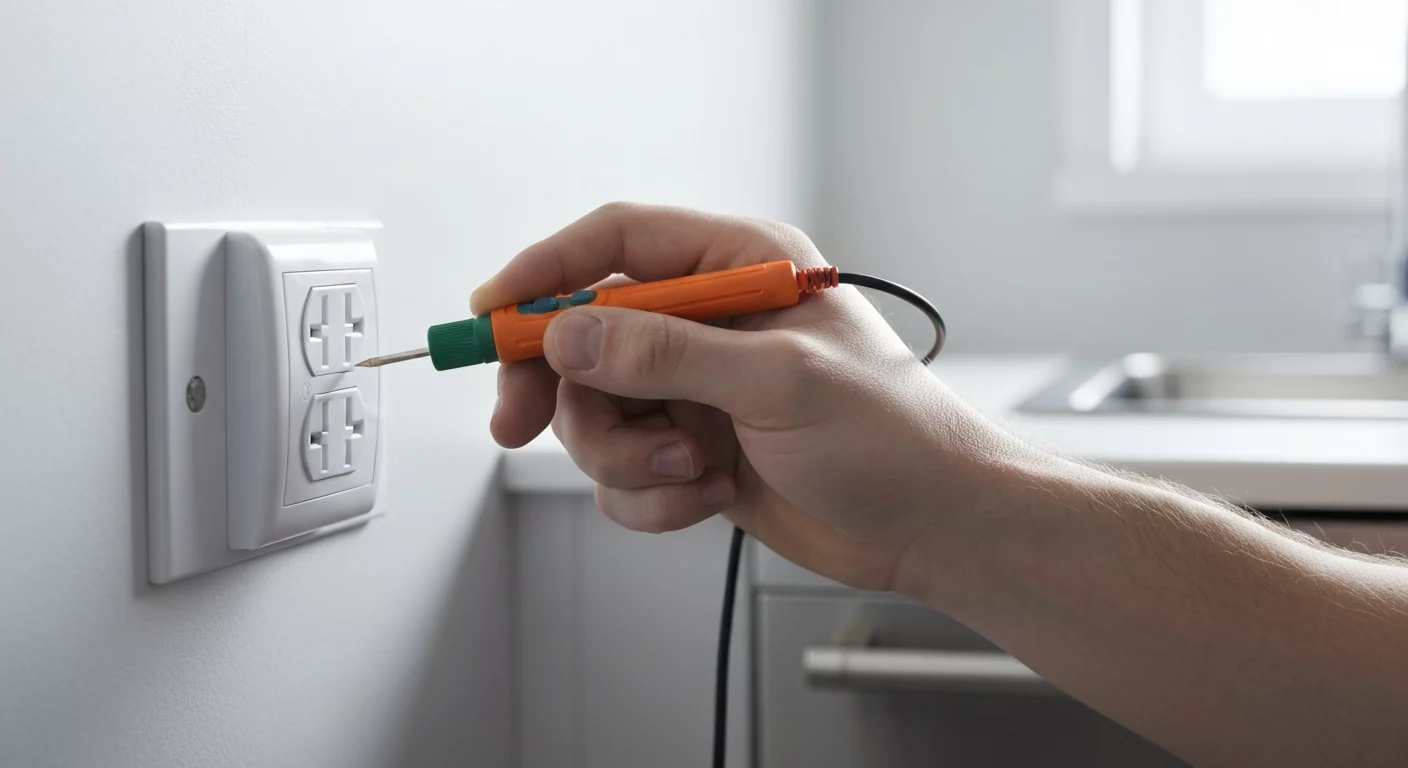
GFCI Protection for Appliances: Navigating NEC 422.5
GFCI Protection for Appliances: Navigating NEC 422.5
Navigating the National Electrical Code requires a sharp eye for detail, especially with evolving rules around ground-fault protection. GFCI protection for appliances is governed primarily by NEC 422.5, a section that consolidates requirements for specific equipment to enhance personnel protection. This rule mandates Class A GFCI protection for certain appliances rated 150 volts or less to ground and 60 amperes or less, regardless of whether they are cord-and-plug-connected or hard-wired. Key appliances covered include dishwashers, sump pumps, vending machines, and tire inflation machines. Understanding this section is critical for any master electrician or journeyman electrician, as it works in tandem with the location-based rules in NEC 210.8. The goal is to mitigate shock hazards by using a GFCI outlet, GFCI receptacle, or a GFCI breaker to protect the entire branch circuit.
Understanding the “Why” Behind GFCI Protection for Appliances
For decades, the Ground-Fault Circuit-Interrupter has been a cornerstone of electrical safety. A Class A GFCI device is designed for personnel protection, tripping when it detects a ground-fault current of approximately 6 milliamperes (mA) between the hot and neutral conductors (Class A devices are intended to trip at about 6 mA and are not required to trip for currents below 4 mA). This rapid response is fast enough to significantly reduce the risk of a fatal electrical shock. While most electricians are familiar with GFCI requirements in locations like bathrooms, kitchens, and outdoor areas, the National Electrical Code (NEC) also contains specific rules for appliances themselves.
Recent editions of the NEC code book have made a concerted effort to streamline these rules. A significant change in the 2023 NEC was the relocation of several appliance-specific GFCI requirements into Article 422, which deals exclusively with appliances. This move helps centralize information, making it easier for professionals to find the exact requirements without cross-referencing multiple articles. Previously, an electrician might have only looked at NEC 210.8 for GFCI rules; now, Article 422 is an equally critical reference. For a deeper dive into the broader changes, it’s helpful to review how they impact general-use receptacles. You can learn more by understanding the NEC 2023 GFCI rule changes in Section 210.8.
What is NEC 422.5? A Detailed Breakdown
NEC Section 422.5(A) explicitly lists the appliances that require GFCI protection. This requirement applies to the appliance’s branch circuit or outlet, covering equipment rated 150 volts or less to ground and 60 amperes or less, single- or 3-phase. If an appliance is on this list, it needs GFCI protection, regardless of its location.
The appliances identified in NEC 422.5(A) are:
- Automotive vacuum machines
- Drinking water coolers and bottle fill stations
- High-pressure spray washing machines
- Tire inflation machines
- Vending machines
- Sump pumps
- Dishwashers
The inclusion of dishwashers in this list, moved from its former place in 210.8(D), is a key update in the 2023 NEC. This change clarifies that all dishwashers in dwelling units must have GFCI protection, simplifying what was previously a point of confusion for many electricians.
Cord-and-Plug-Connected vs. Hard-Wired Appliances
A crucial aspect of NEC 422.5 is that it applies to both cord-and-plug-connected appliances and hard-wired appliances. This closes a potential safety gap, as the shock hazard is related to the appliance’s function and environment, not its connection method. Whether a sump pump is plugged into a GFCI receptacle or hard-wired to a circuit fed by a GFCI circuit breaker, the protection is mandatory.
This requirement has significant implications for both residential and commercial installations, particularly in non-dwelling locations. For a journeyman electrician or master electrician working on commercial kitchens or maintenance facilities, understanding these rules is essential. For instance, a hard-wired, high-pressure spray washing machine in a vehicle service bay must be protected. You can get a more detailed look at these scenarios in our lesson covering GFCI requirements for non-dwelling locations. These rules often differ significantly from those for dwellings, making specialized knowledge critical. Explore the specifics further by reading about the 2023 NEC GFCI updates for non-dwelling units.
The Critical Link: NEC 210.8 Correlation
Understanding GFCI protection for appliances requires looking at both Article 422 and Article 210. The best way to think about the NEC 210.8 correlation is that 210.8 is primarily location-based, while 422.5 is appliance-based.
- NEC 210.8 mandates GFCI protection for receptacles in specific locations like kitchens, bathrooms, garages, unfinished basements, and outdoors. You can review a detailed explanation of Section 210.8 to refresh your knowledge.
- NEC 422.5 mandates GFCI protection for specific appliances, no matter where they are installed.
Sometimes, these rules overlap. For example, a cord-and-plug-connected drinking water cooler (listed in 422.5) installed in a school hallway (which may not be a required location in 210.8) must still have GFCI protection. Conversely, a refrigerator, which is not listed in 422.5, requires GFCI protection if it’s plugged into a receptacle in a garage or an unfinished basement, as mandated by 210.8. The same logic applies to other location-specific rules, such as those governing the NEC bathroom outlet code.
How to Comply: Providing GFCI Protection for Appliances
Ensuring compliance with NEC 422.5 is a straightforward process when broken down into steps. Here’s a guide for electricians in the field:
- Identify the Appliance: First, confirm if the appliance is on the list in NEC 422.5(A).
- Verify Electrical Ratings: Check that the appliance is rated 150V or less to ground and 60A or less. If it exceeds these ratings, this specific rule does not apply, though other code sections might.
- Determine Connection Type: Note whether the equipment is a hard-wired appliance or cord-and-plug-connected. This determines your protection options.
- Select Protection Method: Choose the most appropriate method. For plug-in appliances, a GFCI outlet or GFCI receptacle is common. For both plug-in and hard-wired appliances, a GFCI breaker protecting the entire circuit from the branch-circuit overcurrent device is an excellent and often preferred solution.
- Ensure Accessibility: Per NEC 422.5(B), the GFCI device must be readily accessible for testing. This means it can be reached quickly without using tools or moving obstacles. Placing a GFCI receptacle behind a heavy vending machine or a built-in dishwasher violates this rule. The solution is often to use a GFCI circuit breaker in the panelboard.
- Install and Test: Complete the GFCI outlet wiring or breaker installation according to all other applicable NEC rules. Always test the GFCI device using its integrated test button to ensure it functions correctly.
Staying on top of these nuanced requirements is crucial for any professional electrician. The NEC is constantly evolving to enhance safety. Stay current on all GFCI rules. Check out our latest NEC update online electrical courses to ensure your knowledge is up to date.
Key Considerations for Professional Electricians
As you apply these rules on the job, keep these important takeaways in mind:
- Appliance-Specific, Not Location-Specific: Remember that NEC 422.5 follows the appliance. If it’s a listed appliance, it needs GFCI protection, period.
- The Dishwasher Rule Has Moved: The requirement for dishwasher GFCI protection is now consolidated in 422.5(A)(7) as of the 2023 NEC. Don’t look for it in 210.8(D) anymore.
- Hard-Wired Is Covered: Do not assume that only plug-in appliances need protection. Hard-wired sump pumps, dishwashers, and bottle fillers on the list must also be protected.
- Accessibility Is Not Optional: A GFCI you can’t test is non-compliant. Plan your installations to ensure the test/reset button is readily accessible, or use a GFCI breaker instead.
- Check Local Amendments: Always verify if your state or local jurisdiction has amended the currently adopted NEC code book. Local rules can add to or alter these requirements.
Primary Sources
This article references requirements found in NFPA 70, National Electrical Code®, 2023 Edition. For direct verification, always consult the official publication from the National Fire Protection Association (NFPA).
Frequently Asked Questions (FAQ)
Does a refrigerator require GFCI protection for appliances?
A standard refrigerator is not one of the appliances listed in NEC 422.5. However, it will require GFCI protection if it is plugged into an outlet in a location mandated by NEC 210.8, such as a garage, unfinished basement, or an outdoor kitchen. The expansion of kitchen receptacle rules in the 2023 NEC may also require it, depending on the layout.
Can I use a GFCI breaker instead of a GFCI outlet for a dishwasher?
Yes, using a GFCI breaker is a fully compliant and often superior method for protecting a dishwasher. Since a dishwasher is typically installed under a counter, a receptacle behind it would not be considered readily accessible. Installing a GFCI circuit breaker in the panel ensures the protection is in place and the test/reset function is accessible.
What is the difference between NEC 422.5 and NEC 210.8 for GFCI requirements?
The primary difference is their focus. NEC 210.8 specifies GFCI requirements based on the location of an outlet (e.g., bathrooms, kitchens). NEC 422.5 specifies GFCI requirements based on the type of appliance being powered, regardless of its location (e.g., vending machines, sump pumps).
Does a hard-wired sump pump need GFCI protection?
Yes. Sump pumps are explicitly listed in NEC 422.5(A)(6). The rule requires Class A GFCI protection for these appliances whether they are cord-and-plug-connected or a hard-wired appliance. This is a critical safety measure for equipment that operates in potentially wet environments.
Continuing Education by State
Select your state to view board-approved continuing education courses and requirements:

Disclaimer: The information provided in this educational content has been prepared with care to reflect current regulatory requirements for continuing education. However, licensing rules and regulations can vary by state and are subject to change. While we strive for accuracy, ExpertCE cannot guarantee that all details are complete or up to date at the time of reading. For the most current and authoritative information, always refer directly to your state’s official licensing board or regulatory agency.
NEC®, NFPA 70E®, NFPA 70®, and National Electrical Code® are registered trademarks of the National Fire Protection Association® (NFPA®)
You may also like

Colorado Electrical Licensing Requirements and Reciprocity Guide
Standby Generators in DE: Navigating Coastal Storm Regulations

 Login with Google