
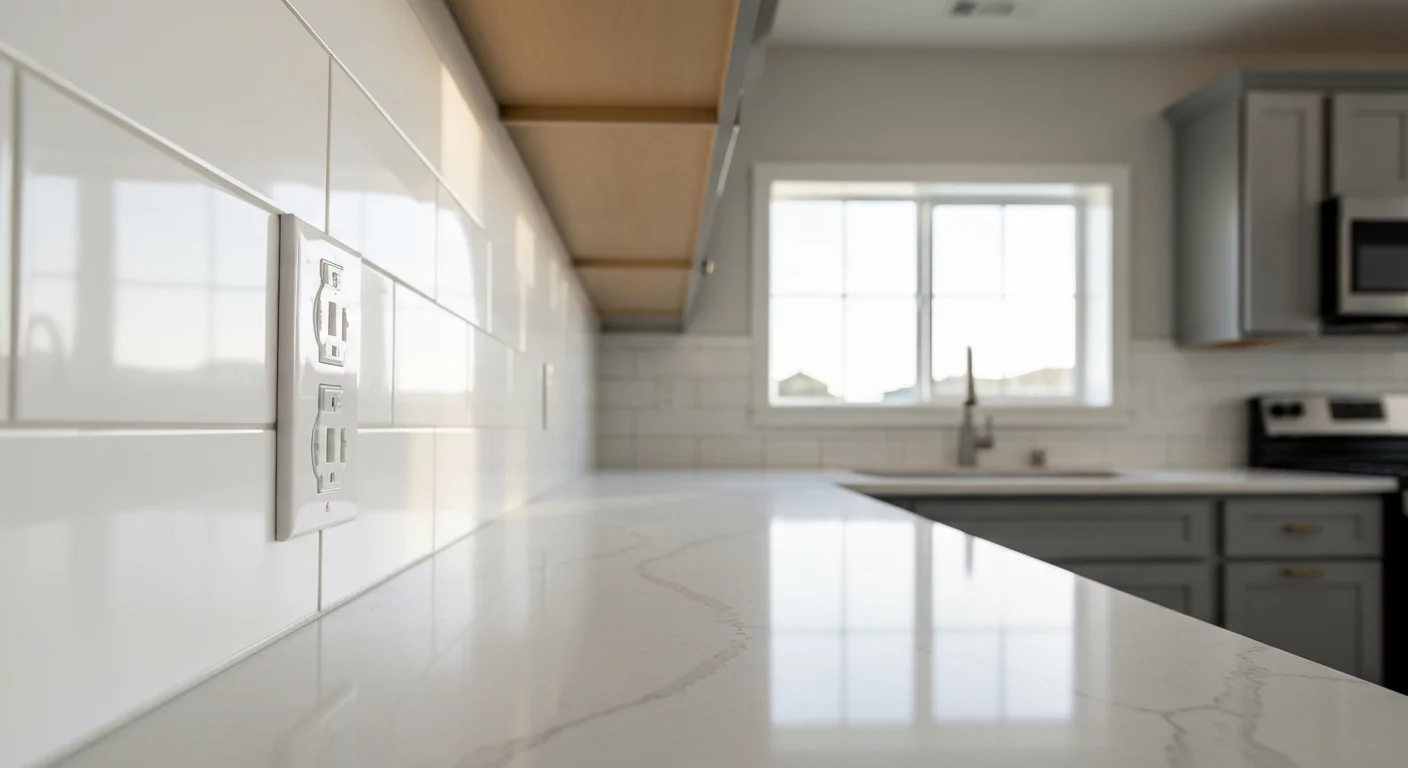
NEC Rules for Countertop Outlet Height and Spacing
NEC Rules for Countertop Outlet Height and Spacing: 2023 Code Explained
For licensed electricians, achieving precise electrical code compliance in a dwelling unit kitchen is a mark of professionalism. According to the National Electrical Code (NEC), the required outlet height above counter surfaces must not exceed 20 inches. This rule is addressed in NEC Article 210 and implemented in the receptacle location provisions to help keep appliance cords short and reduce hazards. For wall countertop spacing, a receptacle outlet is required for any wall space 24 inches (600 mm) or wider, and outlets must be placed so no point along the wall is more than 24 inches from a receptacle. This effectively means the maximum space between outlets is 48 inches. The 2023 NEC modified how island and peninsula receptacles are addressed: while these locations are still covered by the Code’s receptacle rules, the text now uses conditional language for islands and peninsulas (i.e., provisions that apply when receptacles are provided). Understanding the correct countertop receptacle height and spacing, often called the “20-inch rule” for vertical placement, is fundamental for passing inspections and ensuring kitchen safety.
Understanding the Foundation: NEC 210.52(C) for Wall Countertop Spacing
The core requirements for receptacles serving kitchen countertops in a dwelling unit kitchen are found in NEC Article 210, specifically the countertop and small-appliance outlet provisions. These rules are designed to ensure convenience and safety, minimizing the use of extension cords for common kitchen appliances. The primary rule governs the horizontal spacing of outlets along walls.
For any wall countertop or work surface that is 24 inches (600 mm) or wider, receptacle outlets must be installed so that no point along the wall line is more than 24 inches from a receptacle. This is often called the “24-inch reach” rule. In practical terms, this means:
- An outlet must be placed so that no point of the countertop wall line is farther than 24 inches horizontally from a receptacle.
- The maximum practical distance between two adjacent countertop receptacles is therefore 48 inches.
This 48-inch spacing result ensures that countertop appliances can be used without excessive cord runs that cross sinks or cooking surfaces. It’s a foundational element of a safe and compliant kitchen electrical plan and a key topic in any journeyman exam prep program.
The “20-Inch Rule”: Official NEC Countertop Receptacle Height
While horizontal spacing is critical, so is the vertical placement. The maximum receptacle height above the countertop is commonly known as the “20-inch rule”: receptacle outlets serving countertops are expected to be located on or above the countertop but not more than 20 inches above it. This placement keeps appliance cords short and out of the work area.
There is no universal minimum vertical requirement in the Code for countertop receptacles, but installers commonly place the outlet so it is ergonomically accessible and visually pleasing (for example, the finished device 15–18 inches above the counter is common in practice). If a wall location is impracticable, the NEC allows alternative placements “as close as practicable” to the countertop — the Code does not establish a single blanket “12-inch below” limit for all situations; consult the specific allowances and exceptions in the NEC text for the exact application.
Also note: receptacles installed face-up in countertops or work surfaces are permitted only when the receptacle assembly is specifically listed for countertop or work-surface use; unlisted face-up installations are not acceptable for safety reasons.
Step-by-Step Electrical Rough-In Checklist for Countertop Outlets
Following a methodical process is key to ensuring electrical code compliance during the rough-in phase. Use this checklist as a guide:
- Identify and Measure: Identify all wall countertop sections that are 24 inches (600 mm) or wider. These are the spaces requiring receptacle outlets under the NEC.
- Place First Outlet: Measure from any break in the countertop (like a sink, corner, or range top). Position the first required outlet so that no point of the wall line is more than 24 inches from that outlet.
- Measure Subsequent Spacing: From the first outlet, measure along the wall. The next outlet must be positioned so that no point along the countertop wall line is more than 24 inches from a receptacle — which results in a practical center-to-center maximum of 48 inches between outlets. Continue this along all required countertop spaces.
- Set Vertical Height: Position the outlet boxes so that the finished receptacle will be on or above the countertop and not more than 20 inches above the final countertop surface. Confirm cabinet and countertop thickness to set your box height accurately.
- Verify Circuit and Protection: Ensure all kitchen countertop receptacles are supplied by the required 20-amp small-appliance branch circuits (the Code requires the designated small-appliance circuits for kitchen countertop and dining area receptacles) and confirm required GFCI protection for receptacles in kitchen locations as required by the NEC’s GFCI-location rules.
Major Changes in the 2023 NEC: Island and Peninsula Countertop Receptacles
The 2023 NEC revised the island and peninsula language so that the requirements are expressed in conditional terms (for example, “if installed, shall be installed in accordance with…”). In short, islands and peninsulas continue to be covered by the Code, but the text now addresses receptacles for those surfaces with conditional provisions; local jurisdictions (AHJs) may still require receptacles for islands and peninsulas via amendments, so always verify with the AHJ.
If you do install a receptacle on an island or peninsula, the installation must comply with the applicable placement and equipment rules in Article 210 and with the receptacle/listing requirements for countertop or work-surface assemblies. When a receptacle is installed flush with the countertop it must be a device or assembly listed for countertop use (listed pop-up or listed countertop assemblies are examples).
These wording and listing requirements reflect safety and usability concerns and explain why you may want to consult a detailed guidance resource on island installations. For a deeper understanding of these new rules, explore our detailed lesson on how 2023 NEC updates have changed kitchen island receptacle requirements.
GFCI Protection: A Non-Negotiable for Kitchen Safety
Ground-Fault Circuit-Interrupter (GFCI) protection is a cornerstone of modern electrical safety, especially in kitchens. The NEC locations provisions require GFCI protection for receptacle locations listed for kitchens; the 2023 edition clarifies and in many cases expands the set of kitchen receptacles that must have GFCI protection. That means many 125-volt through 250-volt receptacles installed in kitchens are now required to have GFCI protection under the NEC location rules.
Using combination devices (AFCI/GFCI combinations) where permitted and listed can provide both arc-fault (fire-prevention) and ground-fault (shock-prevention) protection from a single device at the panel or branch circuit if that approach is acceptable to the AHJ and the devices are listed for the intended application. The principles of GFCI protection extend beyond the kitchen, as it is a critical safety feature in any area with proximity to water — see our related lesson on receptacle installation near wet locations for additional context: receptacle installation near bathtubs and showers.
Keeping up with evolving GFCI location rules and other code changes is essential for every licensed electrician. Master the NEC requirements for residential wiring with code-focused continuing education.
Key Considerations for Electrical Code Compliance
Beyond spacing and height, several other factors are crucial for a compliant installation. Staying informed through electrical code update classes ensures you are prepared for inspections and deliver the safest possible result for homeowners.
- Accessibility: All required outlets must be readily accessible. An outlet concealed behind a permanently installed appliance that prevents access does not count toward the required number of countertop/wall receptacles.
- Location-Specific Rules: The NEC contains highly specific rules for different areas of a home. Just as kitchens have unique requirements, so do other spaces; it can be valuable to review how the Code treats garages, basements, and accessory buildings when planning layouts. For related guidance, see how many receptacles are required in garages, basements, and accessory buildings.
- Face-Up Installations: Receptacles should not be installed face-up in a countertop or work surface unless the outlet assembly is specifically listed for that application; listed countertop/work-surface assemblies are acceptable and are designed to reduce debris/liquid intrusion.
- Local Amendments: Always remember that local jurisdictions can adopt their own amendments to the NEC. Verify requirements with your local Authority Having Jurisdiction (AHJ) before starting work.
Frequently Asked Questions (FAQ)
- What is the maximum outlet height above a counter according to the NEC?
- Per NEC receptacle location provisions, the common vertical limit for kitchen countertop receptacles is 20 inches above the countertop or work surface; installers should consult the Code text for the precise application language and common practices for finished-device mounting height.
- Are outlets required on kitchen islands in the 2023 NEC?
- The 2023 NEC revised how island and peninsula receptacles are addressed and uses conditional language for these locations. In practice, islands and peninsulas remain covered by Code requirements, but whether a receptacle is required can depend on the particular wording and any local amendments — check with the AHJ. If an outlet is installed it must comply with the Code’s placement and listing requirements for countertop/work-surface devices.
- How far apart should countertop outlets be?
- The NEC requires that no point along the wall countertop be more than 24 inches from a receptacle, which results in a maximum center-to-center spacing of 48 inches between two outlets in practical terms.
- Do all kitchen outlets need to be GFCI protected?
- Many kitchen receptacles are required to have GFCI protection under the NEC’s location rules (the Code expanded and clarified GFCI location requirements in recent editions). This coverage commonly includes 125-volt through 250-volt receptacles in kitchen areas; verify the exact application in the NEC text and with the AHJ for situations involving dedicated appliance circuits or local exceptions.
Continuing Education by State
Select your state to view board-approved continuing education courses and requirements:

Disclaimer: The information provided in this educational content has been prepared with care to reflect current regulatory requirements for continuing education. However, licensing rules and regulations can vary by state and are subject to change. While we strive for accuracy, ExpertCE cannot guarantee that all details are complete or up to date at the time of reading. For the most current and authoritative information, always refer directly to your state’s official licensing board or regulatory agency.
NEC®, NFPA 70E®, NFPA 70®, and National Electrical Code® are registered trademarks of the National Fire Protection Association® (NFPA®)
You may also like

Colorado Electrical Licensing Requirements and Reciprocity Guide

Standby Generators in DE: Navigating Coastal Storm Regulations

 Login with Google