
Bonding Requirements Around Water Meters per NEC 250.68(C)
Bonding Water Meters: A Guide to NEC 250.68(C) for Electricians
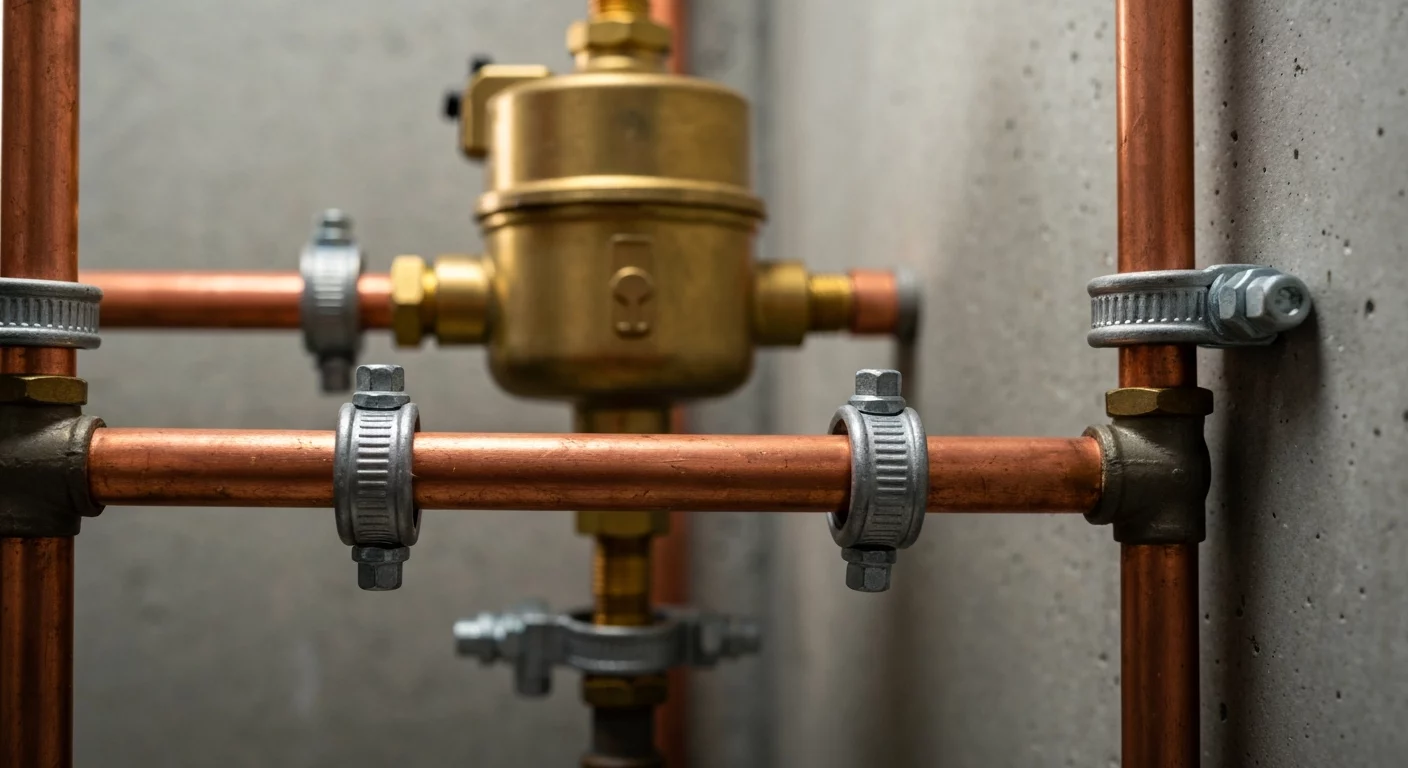
Properly bonding water meters is a fundamental safety requirement mandated by the National Electrical Code (NEC). According to NEC 250.68(C), if a metal underground water pipe is used as a grounding electrode, the connection for the Grounding Electrode Conductor (GEC) must be made within the first five feet of where the pipe enters the building. A critical component of this setup is the Bonding Jumper installed around the water meter. This jumper ensures unbroken electrical continuity for the Grounding Electrode System, providing a safe and continuous low-impedance path for fault current to reach the earth. This is essential because a water meter can be removed for service or replacement, and without a bonding jumper, this action would sever the connection to the grounding electrode, creating a significant safety hazard.
What is Bonding and Why is it Critical for a Grounding Electrode System?
For any journeyman electrician or master electrician, understanding the distinction between grounding and bonding is crucial. While grounding connects a system to the earth, bonding connects metallic parts together to ensure they are at the same electrical potential. This process is called equipotential bonding, and its primary purpose is to eliminate voltage differences between conductive surfaces that could pose a shock hazard.
So, bonding what is it in practice? It’s the intentional connection of all metallic components of a system—from the service equipment enclosure to conduits and pipes—to create a single, continuous electrical path. This network ensures that if a ground fault occurs, a large amount of current can flow back to the source through a dedicated, low-impedance path, tripping the circuit breaker or fuse. Without effective bonding, the ground fault current path could be unreliable or high-impedance, failing to clear the fault and leaving metal parts energized and dangerous. The concepts of grounding vs. bonding are foundational to safe electrical work, as outlined extensively in NEC Article 250.
Decoding NEC 250.68(C): The Core Requirement for Water Meter Bonding
The primary rule governing the connection to a water pipe electrode is found in the NEC code book under section 250.68(C)(1). This section permits a Grounding Electrode Conductor or bonding jumper to connect to an interior metal water pipe, but only under specific conditions. The key requirement is that the connection point must be within the first 5 feet (1.52 m) of where the metal underground water pipe enters the building — and the 2023 NEC clarifies that this distance is measured along the piping.
Furthermore, NEC 250.64(D)(1) explicitly states that the “continuity of the grounding path or the bonding connection to interior piping shall not rely on water meters or filtering devices and similar equipment.” This is the core justification for installing a water meter bonding jumper. Because a water meter is a removable component, it represents a potential break in the path to the grounding electrode. The bonding jumper effectively bypasses the meter, ensuring the Grounding Electrode System remains intact at all times, even during plumbing maintenance. For a deeper dive into GEC connections, it’s helpful to review how grounding electrode conductor connections are handled in the 2023 NEC.
When is a Bonding Jumper Required Around a Water Meter?
A bonding jumper is required whenever a metal water piping system is part of the Grounding Electrode System. For example, where a single rod, pipe, or plate electrode is used, NEC requires that it be supplemented by an additional electrode unless that single electrode has a resistance to earth of 25 ohms or less (see NEC grounding-electrode provisions for rod/pipe/plate requirements). Even when a buried metal service lateral is replaced by nonmetallic pipe, the interior metal piping must still be bonded for equipotential purposes. The jumper ensures this interior system remains continuous. When a metal water pipe is used as an electrode, NEC also requires use or installation of other electrode types where applicable (commonly a supplemental rod or plate) when the single-rod/pipe/plate conditions are met.
It is crucial to distinguish between bonding for grounding-electrode continuity and bonding for equipotential purposes, as this affects conductor sizing. A jumper that is part of the Grounding Electrode Conductor path (maintaining the connection to the water pipe electrode) is sized according to NEC Table 250.66. In contrast, a jumper used only to bond the interior piping system together (when the underground pipe is not an electrode) is sized according to the bonding rules in NEC 250.104 and equipment bonding tables such as Table 250.102(C)(1).
Step-by-Step: How to Properly Install a Water Meter Bonding Jumper
Proper installation is critical for compliance and safety. Improper grounding and bonding are consistently among the most frequent electrical code violations cited by inspectors. Follow these steps to ensure a code-compliant installation:
- Verify the System and Location: Confirm that the metal water pipe is being used as a grounding electrode and identify the water meter. Ensure your GEC connection is within 5 feet of the building entrance, as measured along the pipe.
- Select the Correct Conductor: The bonding jumper must be sized correctly. When maintaining the path for a grounding electrode, determine the jumper size from NEC Table 250.66 based on the largest ungrounded service conductor. For bonding interior metal water piping that is not used as an electrode, follow NEC 250.104 and the related bonding tables. Common copper sizes for a grounding electrode conductor can vary with service size; installers should determine the correct size from NEC Table 250.66 for the specific service-entrance conductor. Residential installations frequently use #6 or #4 copper depending on service size, so verify the required size rather than relying on a single “rule of thumb.” For guidance on sizing, refer to our detailed articles on sizing your GEC with NEC Table 250.66.
- Choose Approved Grounding Clamps: Use grounding clamps that are listed for the pipe material and for direct burial or concrete encasement if the clamp will be installed in the soil. Connectors and clamps used for grounding electrode conductors must be listed for the intended material and environment.
- Prepare the Pipe Surface: Clean the sections of the pipe where the clamps will be attached. Remove any paint, corrosion, or scale to ensure a solid, metal-to-metal connection for maximum electrical continuity.
- Install the Jumper and Clamps: Securely attach one clamp to the metal pipe on the street side of the water meter and the other clamp to the pipe on the house side. Attach the properly sized bonding jumper to both clamps, ensuring all connections are tight. The jumper should be long enough to allow for meter removal without being disconnected.
- Inspect the Installation: Double-check that the clamps are tight and the jumper is secure. A solid connection is essential for creating the reliable, low-impedance path required for safety.
Mastering these details is what separates a proficient electrician from the rest. To ensure you’re up-to-date on all grounding and bonding requirements, master every detail of grounding and bonding. Enroll in our Article 250 course.
Common Mistakes and Code Violations to Avoid
Even seasoned professionals can make mistakes. Avoiding these common pitfalls is key to passing inspection and ensuring a safe installation.
- Incorrect Conductor Size: Using an undersized conductor for the bonding jumper is a serious violation. Always consult the relevant NEC tables like those found in our guide on sizing your Grounding Electrode Conductor.
- Improper Clamps or Connections: Using clamps not listed for grounding or attaching them over paint or rust creates a high-resistance connection that can fail under fault conditions.
- Ignoring a Supplemental Electrode: When a single rod, pipe, or plate electrode is used, NEC requires a supplemental electrode unless the single electrode meets the resistance exception; check NEC grounding-electrode provisions to determine when a supplemental electrode is required.
- Forgetting to Bond Interior Piping: If the exterior water service is non-metallic, the interior metal water piping system does not qualify as an electrode but still must be bonded as per NEC 250.104. This also applies to other systems like an electric water heater‘s piping. For a full understanding of these principles check our article on grounding vs bonding based on NEC Article 250.
- Violating the 5-Foot Rule: Connecting the GEC to the water pipe more than 5 feet from its point of entry into the building (as measured along the pipe) would not meet the requirement set by NEC 250.68(C).
Primary Sources
This article references standards from the National Fire Protection Association (NFPA), publisher of the NEC®. For direct access to the code, please refer to NFPA.org.
Frequently Asked Questions (FAQ)
What is the main purpose of bonding water meters?
The primary purpose of bonding water meters is to maintain electrical continuity in the Grounding Electrode System. A bonding jumper ensures that the path to ground is not broken if the water meter is removed for service or replacement, providing an uninterrupted low-impedance path for fault current.
Do I still need a water meter bonding jumper if I have a grounding rod?
Yes. If your metal underground water pipe is used as the primary grounding electrode, the bonding jumper is mandatory to ensure its continuity. A grounding rod is typically installed as a supplemental electrode when required and does not replace the need to properly bond the primary water pipe electrode. If the water pipe is not an electrode (e.g., fed by PEX), bonding the interior metal piping is still required for equipotential bonding.
What is a conductor size for water meter bonding?
The size of the conductor used for the bonding jumper depends on the size of the service-entrance conductors. You must refer to NEC Table 250.66 when the jumper is part of the GEC path. Common copper sizes vary depending on service ratings, so a licensed master electrician or journeyman electrician must always verify the required size from the current NEC code book for each specific installation.
What does NEC 250.68(C) specifically require?
NEC 250.68(C) requires that when a metal water pipe is used as a grounding electrode, the Grounding Electrode Conductor connection must be made to the interior piping within 5 feet of where the pipe enters the building, measured along the piping. This section works in conjunction with other NEC rules that mandate the use of a bonding jumper to ensure this path remains continuous around removable equipment like water meters.
Continuing Education by State
Select your state to view board-approved continuing education courses and requirements:

Disclaimer: The information provided in this educational content has been prepared with care to reflect current regulatory requirements for continuing education. However, licensing rules and regulations can vary by state and are subject to change. While we strive for accuracy, ExpertCE cannot guarantee that all details are complete or up to date at the time of reading. For the most current and authoritative information, always refer directly to your state’s official licensing board or regulatory agency.
NEC®, NFPA 70E®, NFPA 70®, and National Electrical Code® are registered trademarks of the National Fire Protection Association® (NFPA®)
You may also like
Colorado Electrical Licensing Requirements and Reciprocity Guide
Standby Generators in DE: Navigating Coastal Storm Regulations

 Login with Google