
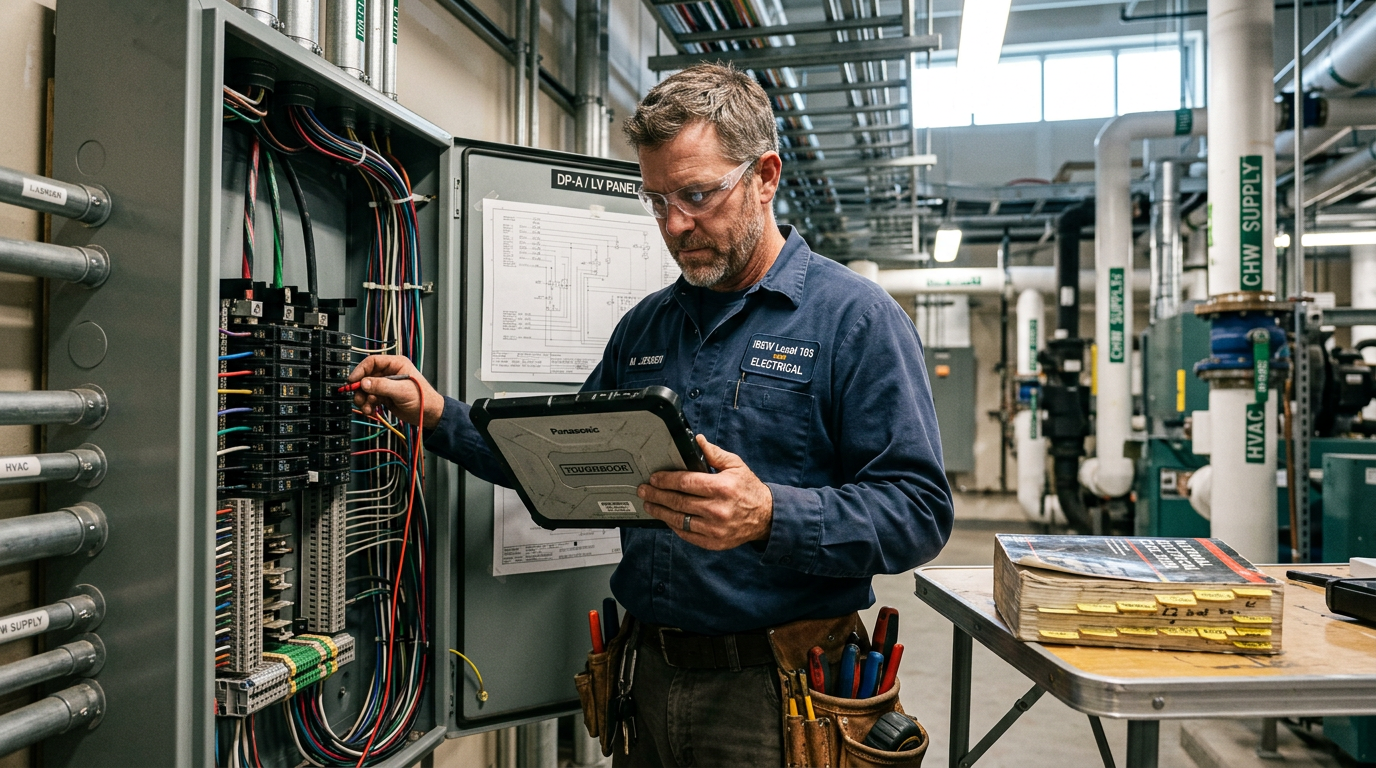
Why Continuing Education is Crucial for Every Electrician
Beyond Compliance: The Core Benefits of Lifelong Learning
While meeting state licensing requirements is a primary driver for CE, the real value extends far beyond compliance. A commitment to continuous learning directly impacts your daily work, your safety, and your bottom line.
- Enhanced Electrical Safety Training: Safety protocols are not static. Standards like NFPA 70E, which addresses electrical safety in the workplace, are updated to protect you from hazards like arc flash and shock. Continuing education courses keep you current on the latest safeguards and work practices, protecting you, your team, and your clients.
- Increased Earning Potential: The more you know, the more you’re worth. Obtaining specialized electrical certifications in high-demand areas like solar, automation, or industrial electrician training can open doors to more complex and higher-paying projects.
- Boosting Professional Credibility: Holding certifications from respected bodies like NCCER (The National Center for Construction Education and Research) demonstrates a verified level of skill and knowledge. This builds trust with employers and customers, setting you apart from the competition.
- Future-Proofing Your Career: Technology waits for no one. Skills in smart home technology installation and EV charger installation are rapidly shifting from niche specialties to standard expectations. Ongoing education ensures you remain relevant and in-demand.
Keeping Pace with National Electrical Code (NEC) Updates
The National Electrical Code (NFPA 70) is the bedrock of safe electrical design, installation, and inspection. Updated every three years, the NEC introduces hundreds of electrical code changes that can be significant. Ignoring these updates isn’t just bad practice—it’s a serious liability that can lead to failed inspections, costly rework, and dangerous safety oversights.
Effective electrician continuing education is designed to break down these complex revisions. Instead of just reading the new codebook, a quality course explains the practical implications of the changes. For instance, understanding how NEC 2023 definition changes have impacted electrical work can alter how you approach a project from the very start. Likewise, learning how the 2023 NEC improves electrical worker safety directly translates to a safer job site. These are not just theoretical concepts; they are critical updates for your day-to-day operations.
State Licensing Requirements: Why You Must Verify with the Board
Failing to meet state licensing requirements for electricians is a non-starter for your career. These regulations are in place to protect the public and ensure a high standard of work. Each state has its own rules, and it’s your responsibility to know them. Requirements can vary significantly from state to state and between journeyman and master levels, so always check with your state licensing authority.
For example, New Hampshire’s Office of Professional Licensure and Certification (OPLC) publishes the board’s guidance for electricians online; verify the current renewal rules, approved courses, and renewal periods directly with the OPLC before you plan CEUs. State boards typically require board-approved coursework and may have specific topical requirements such as NEC updates or state statutes that affect installations, so confirming the exact rules with the official board site is essential to avoid renewal issues.
How to confirm your requirements
- Locate your state electrician board’s renewal and CE guidance web page and review the current rules.
- Confirm whether required courses must be specifically board-approved (many states require this) and whether any topical mandates (e.g., NEC changes or state law updates) are required.
- Keep documentation: maintain certificates and course materials to present to the board if requested at renewal.
This approach ensures you’re meeting official requirements and avoids surprises when the renewal date arrives. For additional guidance, refer to your state board’s website and resources.
The Future is Electric: High-Demand Specializations
Beyond mandatory code updates, the most valuable professional development for electricians often lies in specialization. The electrical industry is expanding into exciting new territories, and with the right training, you can become a leader in these fields.
Emerging Technology Courses
- EV Charger Installation: With the electric vehicle market booming, the demand for qualified installers is soaring. Specialized courses teach the specific load calculations, equipment, and NEC Article 625 requirements for this work.
- Smart Home Technology Installation: Home automation is no longer a luxury. Training in this area covers everything from integrated lighting and security to energy management systems, often involving advanced electrical theory and low-voltage systems.
- Energy Storage & Solar PV: As renewable energy becomes more prevalent, expertise in photovoltaic systems and battery storage is a significant differentiator. This training often involves complex NEC articles and requires a deep understanding of system integration.
Choosing Your Path: Online Electrical Courses
Thankfully, fitting continuing education into a busy work schedule has never been easier. High-quality online electrical courses offer the flexibility to learn at your own pace, on your own time. Whether you’re on a lunch break or at home after a long day, you can access courses that cover everything from mandatory license renewal for electricians to advanced topics.
When choosing a provider, look for courses that are approved by your state board and that offer engaging, relevant content. The goal isn’t just to earn a certificate—it’s to gain practical knowledge that you can apply on the job tomorrow.
Investing in your education is investing in yourself. It ensures you’re not only meeting the requirements but are also building a safer, more profitable, and more resilient career. Ready to take the next step in your professional development? Browse our courses to find electrical training that fits your needs.
Continuing Education by State
Select your state to view board-approved continuing education courses and requirements:
Disclaimer: The information provided in this educational content has been prepared with care to reflect current regulatory requirements for continuing education. However, licensing rules and regulations can vary by state and are subject to change. While we strive for accuracy, ExpertCE cannot guarantee that all details are complete or up to date at the time of reading. For the most current and authoritative information, always refer directly to your state’s official licensing board or regulatory agency.
NEC®, NFPA 70E®, NFPA 70®, and National Electrical Code® are registered trademarks of the National Fire Protection Association® (NFPA®)
You may also like
Standby Generators in DE: Navigating Coastal Storm Regulations

Upgrading to a Master Electrician License in Delaware

 Login with Google