
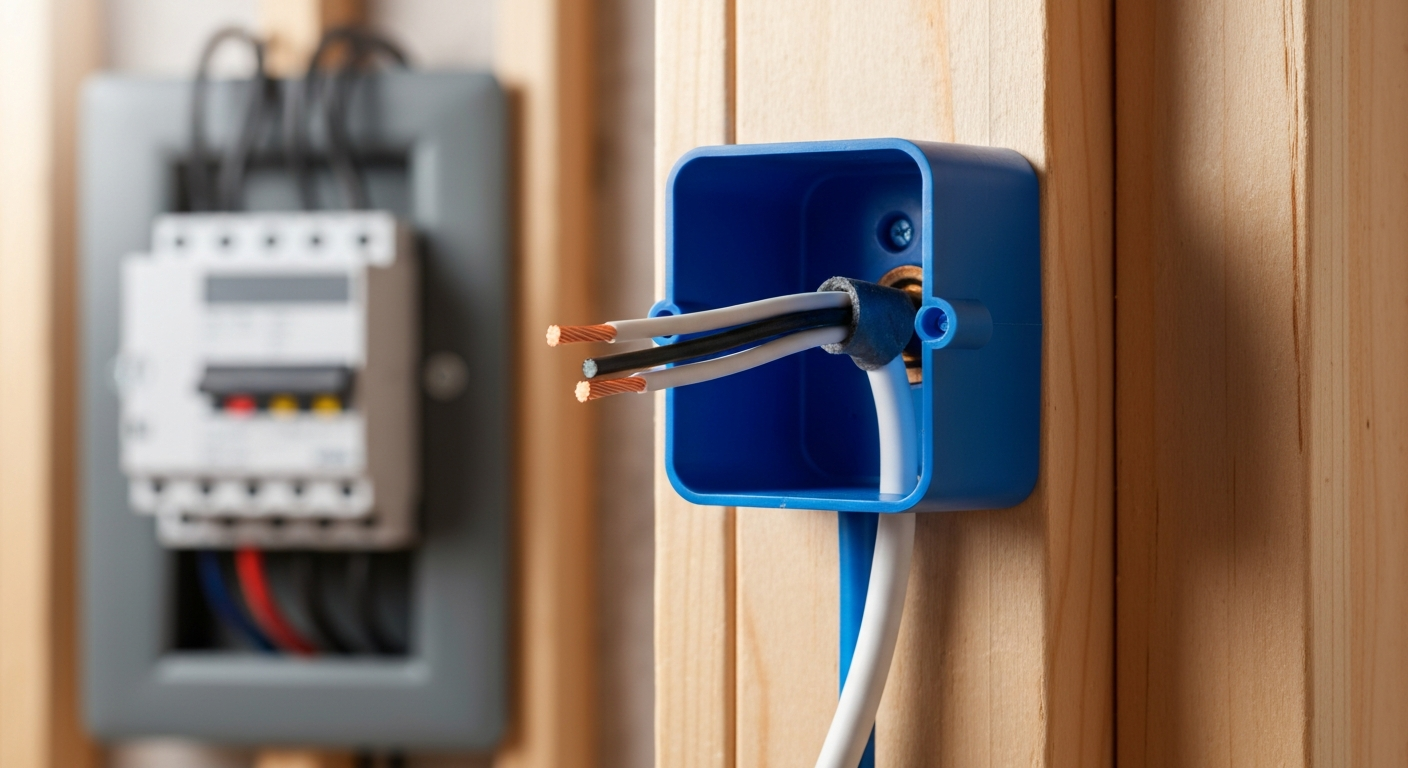
What is a Branch Circuit? A Guide for Apprentice Electricians
What is a Branch Circuit? A Guide for Apprentice Electricians
For any apprentice electrician, understanding the fundamental components of an electrical system is the bedrock of a successful career. At the heart of power distribution within any building is the branch circuit. According to the National Electrical Code (NEC), a branch circuit consists of the conductors running between the final overcurrent protection device (like a circuit breaker) and the outlets, lighting fixtures, or appliances. In simple terms, it’s the last leg of the journey for electricity, carrying power from the breaker panel to the points of use. NEC Article 210 is the primary chapter in the nec code book that every electrician must master, as it governs the requirements for these circuits, including their ratings, conductor sizing, and required safety measures like AFCI and GFCI protection. This guide will break down exactly what is a branch circuit, the different types you’ll encounter, and the critical code requirements that ensure a safe and reliable installation.
The Core Components of a Branch Circuit
Every branch circuit, regardless of its purpose, is composed of three essential elements. Understanding the function of each is crucial for proper installation, troubleshooting, and overall safety.
1. Overcurrent Protection Device (OCPD)
The branch circuit begins at the panelboard, also known as the breaker panel. Here, a circuit breaker or fuse acts as the overcurrent protection device. Its sole purpose is to protect the circuit’s conductors from excessive current, which can cause dangerous overheating and create a fire hazard. When a breaker keeps tripping, it’s an indication of either an overload (too many devices drawing power) or a fault (like a short circuit or ground fault) somewhere on the circuit. This device is a critical safety feature, not an inconvenience.
2. Circuit Conductors
Conductors are the wires that carry electrical current from the OCPD to the loads. A standard 120-volt branch circuit includes:
- Ungrounded Conductor: Commonly called the “hot” wire, this conductor carries the electrical potential from the breaker.
- Grounded Conductor: Known as the “neutral” wire, this conductor completes the circuit by providing a return path for the current back to the source.
- Equipment Grounding Conductor (EGC): This is the safety wire. It is normally not a current-carrying conductor but provides a path for fault current to flow in the event of a ground fault, enabling the OCPD to trip quickly.
Proper conductor sizing is determined by the circuit’s amperage rating. This rating, or ampacity, must be sufficient to handle the anticipated electrical load without overheating. For a deeper dive into this topic, see our guide on how to size a circuit breaker based on NEC rules.
3. Outlets and Loads
The branch circuit terminates at the load—the point where electricity is used. This can be a receptacle outlet, a lighting fixture, or a piece of hardwired equipment like a dishwasher or water heater.
Feeder Circuit vs. Branch Circuit: What’s the Difference?
A common point of confusion for those in electrician training is the distinction between a feeder and a branch circuit. While both carry electricity, their roles in the distribution system are distinct.
- A Feeder Circuit consists of the conductors that run from the service equipment or a main panel to a subpanel or other distribution point. Think of feeders as the electrical highways that transport large amounts of power to different areas of a building.
- A Branch Circuit runs from the final OCPD in that subpanel (or main panel) to the individual outlets or devices. These are the local streets that deliver power directly to the “homes” (the loads).
In short, feeders feed panels, and branch circuits feed loads.
Understanding the Types of Branch Circuits (NEC Article 210)
The NEC defines several types of branch circuits, each designed for a specific application. As a residential electrician or journeyman electrician, you will work with these daily.
General-Purpose Branch Circuit
This is the most common type of circuit, supplying power to multiple lighting outlets and receptacles in general living areas like bedrooms, hallways, and living rooms. They are typically rated for 15 or 20 amps. The NEC has specific rules governing how many devices can be placed on these circuits. The answer often depends on the type of load and local code interpretations. As a best practice, always perform a load calculation to ensure you don’t overload the circuit. Want to know more? Learn how many outlets are allowed on a 15-amp or 20-amp branch circuit. You can explore this topic in detail in our article on how many outlets are allowed on a circuit according to the NEC.
Appliance Branch Circuit
These circuits supply power to one or more outlets intended for appliances, commonly found in kitchens, laundry rooms, and pantries. For example, NEC 210.11(C)(1) requires at least two 20-amp small appliance branch circuits to serve countertop receptacles in a dwelling unit kitchen. These circuits are intended to power portable appliances and have specific rules about what other loads, if any, can be connected to them.
Individual Branch Circuit
An individual branch circuit, also known as a dedicated circuit, is designed to serve only a single piece of utilization equipment. Large, fixed-in-place appliances with high power demands, such as electric ranges, water heaters, HVAC units, and clothes dryers, require an individual branch circuit to ensure they have sufficient power without affecting other parts of the electrical system.
Multi-Wire Branch Circuit (MWBC)
A multi-wire branch circuit consists of two or more ungrounded conductors that share a single grounded (neutral) conductor. This configuration allows two 120V circuits to be run with fewer wires than two separate circuits. While efficient, MWBCs have strict safety rules. For instance, NEC 210.4(B) requires a means to simultaneously disconnect all ungrounded conductors at the panelboard, typically accomplished with a double-pole circuit breaker or two single-pole breakers with an approved handle tie.
Critical Safety and Code Considerations
Beyond identifying circuit types, an electrician’s primary job is to ensure safety. This involves careful calculation and adherence to modern code requirements for protective devices.
Load Calculation and Conductor Sizing
A circuit must be sized to handle its load safely. The NEC distinguishes between two types of loads for calculation purposes:
- Non-continuous load: A load that is not expected to operate for three hours or more at a time. This is calculated at 100% of its rating.
- Continuous load: A load where the maximum current is expected to run for three hours or more (e.g., commercial lighting). This load must be calculated at 125% of its rating to account for the additional heat generated over time.
How to Perform a Basic Branch Circuit Load Calculation
- Identify all lighting, receptacle, and equipment loads that will be connected to the circuit.
- Determine which loads are continuous and which are non-continuous.
- Multiply the amperage of the continuous loads by 125% (or 1.25).
- Add the amperage of the non-continuous loads (calculated at 100%).
- Sum the results to get the total calculated load for the branch circuit.
- Ensure this total does not exceed the ampacity of the conductors or the rating of the OCPD.
AFCI and GFCI Protection: A Modern Necessity
Recent editions of the NEC have significantly expanded requirements for two critical safety devices:
- GFCI Outlet (Ground-Fault Circuit-Interrupter): A GFCI outlet or breaker is designed to protect people from electric shock. It monitors the current flowing in the ungrounded and grounded conductors. If it detects an imbalance—indicating that current is leaking to the ground, possibly through a person—it trips the circuit in a fraction of a second. GFCIs are required in kitchens, bathrooms, garages, outdoors, and other areas where moisture is present.
- Arc-Fault Circuit Interrupter (AFCI): An arc fault circuit breaker is designed to protect against fires. It detects the unique electrical signatures of dangerous arcing faults—common in damaged or degraded wiring—that may not be severe enough to trip a standard breaker but can still ignite surrounding materials. AFCI protection is now required for most branch circuits supplying outlets and devices in dwelling units.
A Note on Circuit Configurations: Series vs. Parallel
When discussing circuits, you may encounter the terms `series vs parallel circuit`. It is essential to know that virtually all branch circuits in residential and commercial wiring are wired in parallel. In a parallel circuit, each load is connected across the same two conductors (hot and neutral), so each receives the full circuit voltage. If one light bulb burns out, the others stay on. In a series circuit, loads are connected one after another, so the voltage is divided among them, and if one burns out, the entire circuit is opened and all loads stop working.
Related Resources
- How Are 10-Amp Branch Circuits Permitted in the 2023 NEC?
- How Does the 2023 NEC Clarify Branch Circuit Conductor Voltage Limitations?
Key Takeaways for Apprentice Electricians
- The definition, types, and requirements for branch circuits are found primarily in NEC Article 210. Always consult the latest edition of the nec code book for your projects.
- Remember the fundamental difference: a feeder circuit supplies power to a breaker panel, while a branch circuit supplies power from the panel to the loads.
- Never underestimate the importance of proper conductor sizing and selecting the correct overcurrent protection device. This is your first line of defense against electrical fires.
- A breaker keeps tripping for a reason. It is a safety device doing its job. Investigate the cause of the overload or fault rather than simply resetting it.
- Mastering the installation requirements for GFCI outlets and arc fault circuit breakers is essential for modern electrical work and passing your licensing exams.
Primary Sources
- NFPA 70, National Electrical Code (NEC), 2023 Edition
Frequently Asked Questions
- What’s the difference between a branch circuit and a feeder circuit?
- A feeder circuit delivers power from the main service to a subpanel. A branch circuit delivers power from the final overcurrent device in a panel (the breaker) to the actual point of use, like a receptacle or light fixture.
- Why are residential circuits wired in parallel instead of in series?
- Branch circuits are wired in parallel to ensure that every device on the circuit receives the full voltage (e.g., 120V). It also ensures that if one device fails or is turned off, the rest of the devices on the circuit continue to function. This is a core concept in any electrician training program.
- What are the four main types of branch circuits defined by the NEC?
- The four primary types are the general-purpose branch circuit (for lights and general receptacles), the appliance branch circuit (for areas like kitchens), the individual branch circuit (for a single large appliance), and the multi-wire branch circuit (which shares a neutral conductor).
- What is the purpose of an arc fault circuit breaker (AFCI)?
- An arc fault circuit breaker is a safety device designed to detect dangerous electrical arcs that can cause fires. It provides a higher level of protection than a standard circuit breaker, which is primarily designed for overloads and direct short circuits.
Continuing Education by State
Select your state to view board-approved continuing education courses and requirements:

Disclaimer: The information provided in this educational content has been prepared with care to reflect current regulatory requirements for continuing education. However, licensing rules and regulations can vary by state and are subject to change. While we strive for accuracy, ExpertCE cannot guarantee that all details are complete or up to date at the time of reading. For the most current and authoritative information, always refer directly to your state’s official licensing board or regulatory agency.
NEC®, NFPA 70E®, NFPA 70®, and National Electrical Code® are registered trademarks of the National Fire Protection Association® (NFPA®)
You may also like

Colorado Electrical Licensing Requirements and Reciprocity Guide
Standby Generators in DE: Navigating Coastal Storm Regulations

 Login with Google