
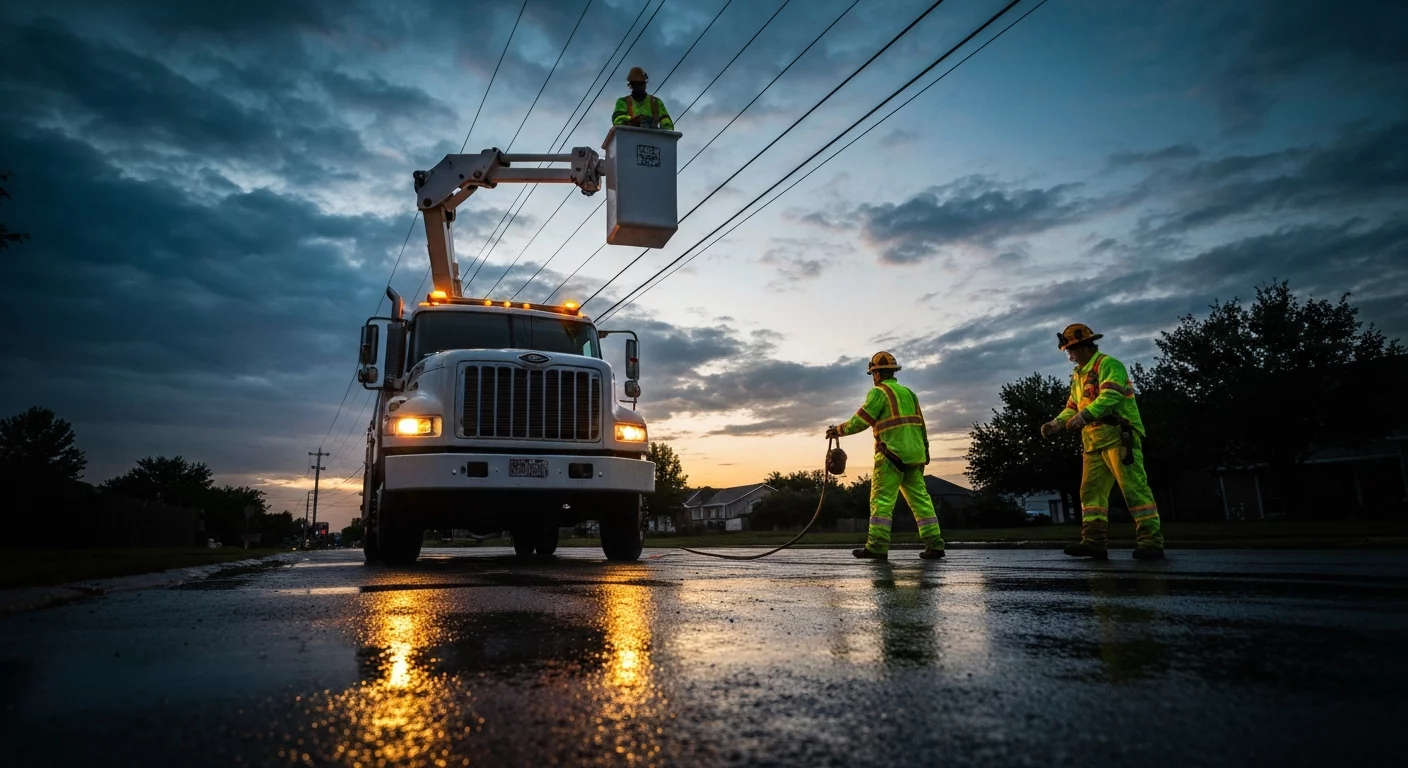
Emergency Preparedness for Storm Response Line Work
Emergency Preparedness for Storm Response Line Work
Effective storm response line work is a high-stakes discipline demanding rigorous preparation, unwavering adherence to safety protocols, and a systems-based approach to power restoration. For utility crew safety, this begins with proactive planning using frameworks like the Incident Command System (ICS) and mutual aid agreements. On-site, the work requires methodical damage assessment, strict de-energized line work procedures including Lockout/Tagout (LOTO), and diligent personal protective grounding to prevent injuries from downed power lines or accidental re-energization. A critical, often overlooked threat is backfeed from improperly connected standby generators, which can be lethal. Mitigating this requires appropriate transfer or interconnection equipment: listed transfer switches for permanently installed standby generators, and in the case of portable generators, an approved interlock or other utility-acceptable method to ensure the building and utility sources cannot be connected simultaneously. As the grid evolves, preparedness now also includes understanding grid hardening strategies and leveraging new technologies to enhance safety and efficiency during power restoration efforts. The ultimate goal is to restore service while protecting the lives of every journeyman electrician and line worker on the ground.
The Unseen Dangers: Why Storm Response Line Work Demands Elite Preparation
Working to restore power after a major weather event is one of the most hazardous jobs in the nation. Statistics show that the fatality rate for lineworkers is significantly higher than the national average for all occupations, with electrocution, falls, and transportation incidents being leading causes of death. Storms amplify these risks, creating a chaotic environment of downed power lines, structural instability, and immense pressure to restore service quickly. Utility crew safety in these scenarios hinges on disciplined preparation long before the storm makes landfall.
The primary threat involves working with or near high voltage infrastructure under compromised conditions. A journeyman electrician engaged in storm response must navigate unique hazards not typically found in standard electrical work, such as hidden structural damage to poles, unpredictable tension on conductors, and the constant threat of accidental energization.
Pre-Deployment Strategy: The Incident Command System (ICS) and Mutual Aid
Modern storm response is no longer a localized, reactive effort. Large-scale outages often require a coordinated response from multiple utilities, sometimes across several states. This is managed through two key frameworks:
- Mutual Aid Agreements: These are pre-established contracts between utility companies that allow them to share resources, including personnel and equipment, during widespread emergencies. These agreements ensure that a utility facing overwhelming damage can call upon a larger workforce for faster power restoration.
- Incident Command System (ICS): Originally developed for fighting wildfires, ICS is a standardized management system designed for emergency response. It creates a clear chain of command and organizes the complex logistics of a large-scale operation, including planning, operations, and finance. For utility work, ICS provides a common language and structure, allowing crews from different companies to integrate seamlessly and work toward common objectives, greatly enhancing utility crew safety and efficiency.
This organized approach ensures that resources are deployed effectively and that every team, from damage assessment crews to line workers, operates under a unified plan.
On-Site Safety Protocols: From Damage Assessment to De-Energized Line Work
Once crews are on-site, a strict sequence of safety procedures is essential. The environment is hazardous, and skipping a single step can have fatal consequences.
Step 1: Systematic Damage Assessment
The first phase of any power restoration effort is a thorough damage assessment. This involves patrolling circuits to identify the extent of the damage, including broken poles, transformers, and downed power lines. In recent years, utilities have begun using drones and AI-powered visual intelligence systems to perform this work more quickly and safely, reducing the need for personnel to enter potentially unstable areas on foot.
Step 2: Securing the Scene with LOTO and Protective Grounding
Before any physical work begins on a line, it must be demonstrated to be de-energized. This is a multi-step process informed by OSHA requirements for electric utility work and by company-specific safety rules. The core components are Lockout/Tagout (LOTO) and personal protective grounding. LOTO procedures ensure that a circuit is isolated from all known energy sources and cannot be accidentally re-energized while crews are working. However, in a storm environment, the risk of accidental energization from unknown sources—such as another utility’s circuit or generator backfeed—is high.
This is why personal protective grounding is non-negotiable. After verifying the absence of voltage, grounding cables are applied to create an equipotential zone. This ensures that if the line unexpectedly becomes energized, the fault current will be shunted to the ground through the cables rather than through a line worker’s body. A proper grounding rod connection and correctly sized grounding jumpers are key parts of this protective system.
The Dangers of Backfeed: Standby Generator Connections
One of the most insidious threats during storm response line work is electrical backfeed from a portable or standby generator. If a generator is improperly connected to a home’s electrical system—for instance, by plugging it into a wall outlet—it can send electricity back onto the utility’s grid. A line worker expecting to work on a de-energized line can be electrocuted by this unexpected power. To prevent this, permanently installed standby generators must be connected to the building wiring through listed transfer equipment to isolate the utility and generator sources. For portable generators, properly installed interlocks or an approved transfer method that meets the NEC and local utility requirements are required to ensure the main breaker and the generator breaker cannot be on at the same time.
Advanced Techniques and Essential Gear for Modern Lineworkers
The work of a lineman requires a unique combination of technical skill and physical fortitude. Comprehensive electrician training is the foundation for a safe and effective career.
Mastering High-Voltage Environments
While most storm recovery work is ideally performed as de-energized line work, situations may arise that require energized line work. This highly specialized task demands advanced training and specialized PPE. A critical component of planning any work near energized parts is conducting an arc flash hazard analysis, as required by NFPA 70E. This analysis determines the potential incident energy at a location, which dictates the required level of arc-rated clothing and PPE. To learn more about recent updates to these crucial safety standards, you can review how NFPA 70E 2024 updates have changed job safety planning.
When disaster strikes, be prepared. Learn storm response safety.
5-Step De-Energized Line Work Verification Process
OSHA regulations, industry consensus standards, and utility procedures require that lines be treated as energized until proven otherwise. The following steps represent industry-standard verification before starting work:
- Plan and Identify: Clearly identify the circuit to be de-energized and obtain a clearance from the system operator.
- Isolate and LOTO: Open all switches and disconnecting devices that supply energy to the work area. Apply locks and tags to prevent them from being closed.
- Test for Voltage: Using a properly rated, functioning voltage detector, test each phase conductor to confirm the absence of voltage. Verifying your equipment and procedures are up to date is critical, and you can explore more on this topic with our guide on how NFPA 70E 2024 has changed voltage verification.
- Apply Personal Protective Grounding: Connect protective grounds to establish an equipotential zone at the worksite.
- Verify Grounding: Ensure all grounds are securely connected and appropriately sized for the potential fault current.
Specialized Equipment and Rescue Operations
Safe operation of heavy machinery is paramount. This includes adhering to strict bucket truck safety protocols, such as proper setup on stable ground, using outriggers, and never exceeding load limits. Similar rules apply to digger derrick operation. Critically, every line worker must also be trained in pole-top rescue. This is a procedure to safely lower an injured or unconscious colleague from a utility pole. OSHA’s electric power safety standard for utility work contains training and rescue provisions for employees, and annual practice drills are considered an industry best practice to ensure crew members remain proficient in this life-saving skill.
The Future of Storm Response: Grid Hardening and Technology
In response to the increasing frequency of extreme weather events, utilities are investing heavily in grid hardening. This proactive strategy involves strengthening the electrical infrastructure to better withstand damage. Key initiatives include replacing traditional wood poles with more resilient steel or composite structures, undergrounding power lines in vulnerable areas, and managing vegetation near power lines. Additionally, grid automation technologies are creating “self-healing” networks that can automatically detect faults, isolate damaged sections, and reroute power to minimize the number of customers affected by an outage.
Key Takeaways for Utility Crew Safety
- Always treat downed power lines as energized. Never assume a line is safe to touch.
- Follow all Lockout/Tagout (LOTO) and personal protective grounding procedures without exception.
- Be aware of the lethal danger of generator backfeed. Use listed transfer equipment for permanently installed standby generators, and use approved interlocks or transfer methods for portable generators to prevent backfeed.
- Adhere to the Incident Command System (ICS) structure to ensure clear communication and coordination during large-scale restoration efforts.
- Master equipment-specific safety, including bucket truck safety and pole-top rescue techniques.
- Stay current with your electrician training, including the latest NEC code book and NFPA 70E standards for arc flash hazard analysis.
Primary Sources
- Occupational Safety and Health Administration (OSHA) – 29 CFR 1910.269
- National Fire Protection Association (NFPA) – NFPA 70E, Standard for Electrical Safety in the Workplace®
- National Electrical Code® (NEC) – NFPA 70
Frequently Asked Questions (FAQ)
- What is the biggest unexpected danger during storm response line work?
- One of the most significant and unexpected dangers is backfeed from an improperly installed standby generator. This can energize a line that crews believe is de-energized, creating a deadly hazard for any journeyman electrician working on it.
- Why is a generator interlock kit so important for lineman safety?
- A generator interlock kit is a mechanical safety device that prevents the main electrical panel’s main breaker and the generator’s backfeed breaker from being turned on at the same time. When installed and permitted per the interlock manufacturer’s instructions, the NEC, and the local utility’s interconnection rules, it prevents power from the generator flowing back onto the utility grid—an essential protection to prevent electrocution of line workers. For permanently installed standby systems, listed transfer equipment is the standard method to ensure a safe separation of sources.
- How does the Incident Command System (ICS) improve utility crew safety?
- The Incident Command System (ICS) creates a standardized, hierarchical structure for managing emergencies. By establishing clear roles, responsibilities, and communication channels, it reduces confusion and improves coordination among multiple utility crews, including those arriving under mutual aid agreements. This organized approach leads to safer, more efficient storm response line work.
- What’s the difference between de-energized line work and energized line work in a storm scenario?
- De-energized line work is performed on conductors that have been disconnected from power sources, tested for the absence of voltage, and properly grounded. This is the preferred and safest method for storm restoration. Energized line work (or “live-line” work) involves repairing conductors while they are still carrying high voltage. It requires highly specialized training, tools, and personal protective equipment and is typically reserved for critical repairs where shutting down a line is not feasible.
Continuing Education by State
Select your state to view board-approved continuing education courses and requirements:

Disclaimer: The information provided in this educational content has been prepared with care to reflect current regulatory requirements for continuing education. However, licensing rules and regulations can vary by state and are subject to change. While we strive for accuracy, ExpertCE cannot guarantee that all details are complete or up to date at the time of reading. For the most current and authoritative information, always refer directly to your state’s official licensing board or regulatory agency.
NEC®, NFPA 70E®, NFPA 70®, and National Electrical Code® are registered trademarks of the National Fire Protection Association® (NFPA®)
You may also like

Colorado Electrical Licensing Requirements and Reciprocity Guide
Standby Generators in DE: Navigating Coastal Storm Regulations

 Login with Google