
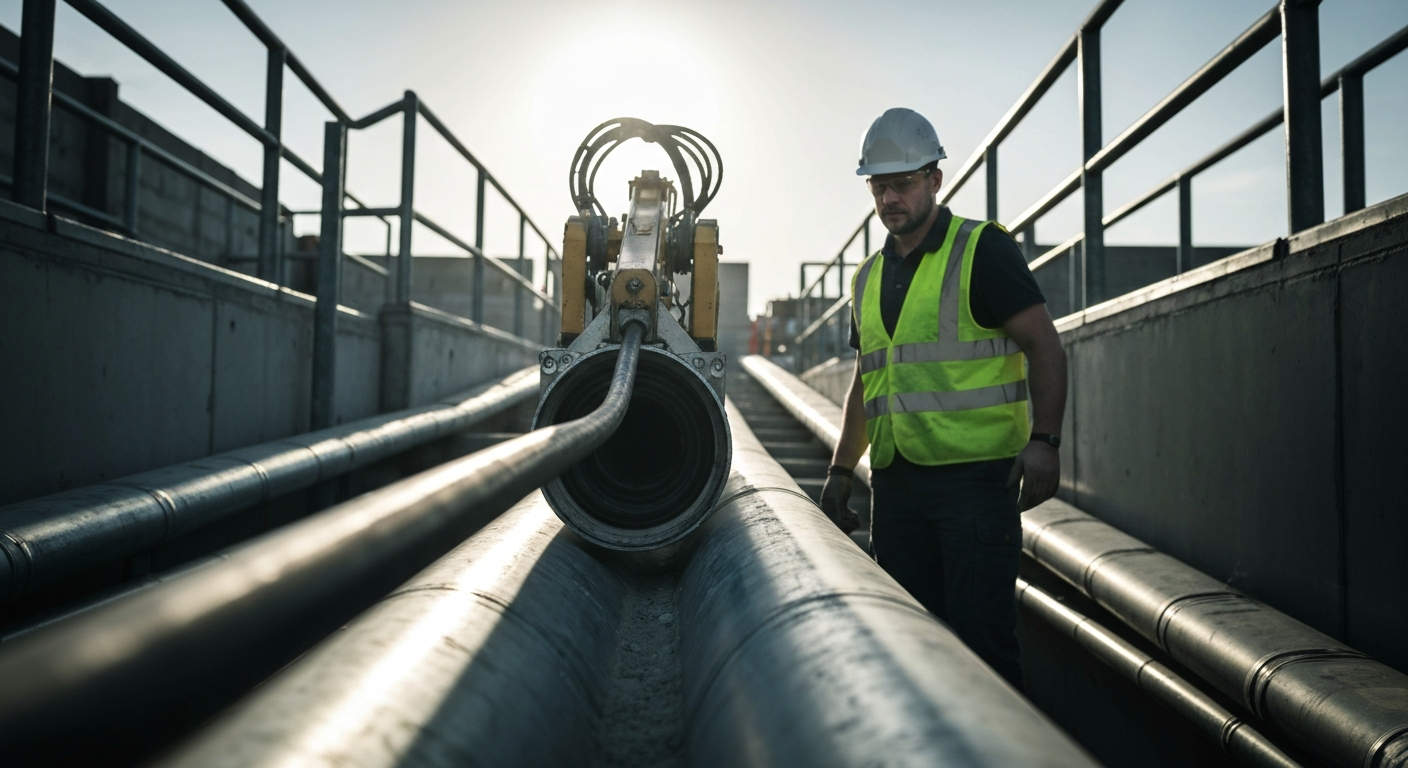
How to Solve Basic Ramp and Inclined Plane Problems
How to Solve Inclined Plane Problems: A Guide for Electricians
Solving inclined plane problems is a fundamental skill that separates novice technicians from seasoned professionals, impacting everything from job site safety to project efficiency. For a journeyman electrician or master electrician, mastering the physics of forces on a slope is essential for accurately calculating pulling force for wire, ensuring conduit stability, and executing complex installations on ramps and other inclines. This guide breaks down the core principles of electrician math for ramps, providing the formulas and practical steps needed to handle challenges like high cable pulling tension and proper support for conduit on inclined planes. Proficiency in these calculations is a key component of advanced electrician training and is critical for success in certification exams and demanding field applications.
Why Physics for Electrical Contractors Matters on the Job Site
While electricians are masters of circuits and code, a deep understanding of basic mechanics is equally crucial. On any given construction site, a significant portion of the workday is spent on material handling—moving heavy reels of cable, positioning switchgear, and running conduit. This is where the principles of physics for electrical contractors become paramount. Miscalculating the job site mechanical force required to move a heavy load can lead to damaged equipment, costly project delays, and serious safety hazards. An accurate electrical job site load calculation prevents overloading winches, breaking pull ropes, and exceeding the tension limits of expensive cables.
Understanding these forces allows for smarter planning. It informs decisions on whether a manual pull is feasible or if specialized equipment like a capstan or tugger is necessary. This knowledge is not just theoretical; it has direct implications for profitability and safety on every project.
The Core Components of an Inclined Plane Problem
At its heart, an inclined plane is simply a flat supporting surface tilted at an angle. For electricians, this could be a loading ramp, a sloped roof, or a graded utility trench. When an object (like a run of conduit or a heavy cable) is on this slope, the force of gravity is split into two components:
- Force Parallel (Fp): The force pulling the object down the slope. This is the force you must overcome to pull the object up the incline.
- Normal Force (Fn): The force the object exerts perpendicular to the surface of the incline. This force is critical for calculating friction.
Friction is the third key force. It always opposes the direction of motion. When pulling cable through conduit, you must overcome both the parallel gravitational force and the frictional force. This is where factors like the coefficient of friction for conduit and the use of lubricants become essential.
Step-by-Step: Calculating Pulling Force for Wire on a Ramp
Imagine you need to pull a heavy 500 kcmil cable through a conduit that runs 100 feet up a 20-degree ramp. Here is a simplified, step-by-step process for calculating pulling force for wire in this scenario.
- Determine Total Weight: First, find the total weight of the cable being pulled. You’ll need the cable weight per foot from the manufacturer’s spec sheet. Let’s say our cable weighs 2 lbs/ft. For a 100-foot pull, the total weight (W) is 2 lbs/ft * 100 ft = 200 lbs.
- Calculate the Parallel Force Component: This is the component of gravity you are fighting against directly. The formula is: Force Parallel (Fp) = W * sin(θ), where θ is the angle of the incline. In our example: Fp = 200 lbs * sin(20°) ≈ 200 * 0.342 = 68.4 lbs. This means gravity alone is pulling the cable down the ramp with 68.4 pounds of force.
- Calculate the Frictional Force: Friction depends on the normal force and the coefficient of friction (μ). The Normal Force (Fn) is calculated as: Fn = W * cos(θ). The Frictional Force (Ff) is: Ff = Fn * μ.
- Fn = 200 lbs * cos(20°) ≈ 200 * 0.940 = 188 lbs.
Coefficient of friction values vary widely depending on cable jacket, conduit material, and whether a lubricant is used. For illustration, consider two example coefficients:
- Dry/ungreased example: μ = 0.25 (a conservative example for many cable-on-conduit conditions) → Fn = 200 lbs * cos(20°) ≈ 188 lbs; Ff = 188 lbs * 0.25 ≈ 47.0 lbs.
- Lubricated example: μ = 0.10 (typical with a good pulling lubricant) → Fn = 188 lbs; Ff = 188 lbs * 0.10 ≈ 18.8 lbs.
Use the manufacturer’s specified or tested coefficient of friction where available. Pulling lubricants can dramatically reduce μ and therefore the required pulling force.
- Calculate the Total Pulling Tension: The total force you need to exert is the sum of the parallel force and the frictional force. Total Force = Fp + Ff. Using the example values above:
- With μ = 0.25: Total ≈ 68.4 lbs + 47.0 lbs = 115.4 lbs.
- With μ = 0.10 (lubricated): Total ≈ 68.4 lbs + 18.8 lbs = 87.2 lbs.
This demonstrates how much the coefficient of friction affects required pulling tension; always verify with manufacturer’s data and, when in doubt, plan for a higher required capacity.
Advanced Considerations for Journeyman and Master Electricians
For a journeyman electrician or master electrician, basic ramp calculations are just the beginning. Real-world pulls involve bends, changes in elevation, and complex raceway systems that add layers of complexity.
The Capstan Equation and Winch Mechanics
Any bend in the conduit adds significant pulling tension. The force required to pull a cable around a bend is calculated using the capstan equation: T(out) = T(in) * e^(μ·θ) (where θ is in radians). This relationship shows that the tension leaving a bend increases exponentially with μ·θ, so radius and number of turns matter a great deal. Understanding winch and capstan mechanics is crucial for managing these forces. The capstan provides a mechanical advantage, allowing a small amount of force on the free end of the rope to control a much larger load.
Sidewall Pressure and Conduit Bend Radius
As cable is pulled around a bend, it exerts a force on the inside wall of the conduit. This is known as sidewall pressure. A proper sidewall pressure calculation is vital to prevent insulation damage. The pressure is directly related to the pulling tension and inversely related to the bend radius. Using a larger conduit bend radius on slopes and straightaways reduces sidewall pressure, protecting the cable’s integrity. This is especially important for high-voltage and fiber optic cables.
NEC Requirements for Sloped Conduit
While the National Electrical Code (NEC) does not have a single, dedicated article for “sloped conduit,” a compliant installation requires applying principles from several sections. There are no specific NEC requirements for sloped conduit as a standalone topic. However, electricians must combine standard support rules with the intent of rules for vertical runs. For instance, general support intervals in articles like NEC 358.30 for EMT or NEC 352.30 for PVC must be strictly followed. On a slope, these supports counteract both gravity and the parallel forces trying to pull the conduit downhill. Furthermore, the principles of NEC 300.19, “Supporting Conductors in Vertical Raceways,” are highly relevant. This section aims to prevent conductor weight from stressing terminations. A sloped run creates a similar, albeit lesser, strain that must be managed with secure supports, especially near the top of the incline. For complex electrical calculations, our guide to three-phase calculations offers further insight.
From Theory to Practice: Training and Certification
Mastering these concepts is a hallmark of comprehensive electrician training. Whether you are enrolled in an electrician school or pursuing online electrical courses, a solid grasp of mechanical physics is non-negotiable for career advancement. Certification bodies like the NCCER emphasize these practical skills. For those preparing for higher-level licensing exams, the ability to perform calculations related to the voltage drop formula, wire size computation, and mechanical forces is critical. The math behind inclined plane problems frequently appears on these tests. To build a robust study plan, consider our master electrician exam prep guide. Elevate your test score with our in-depth physics and math guides.
Key Takeaways for Solving Inclined Plane Problems
- Break Down the Forces: Always start by resolving the object’s weight into its parallel and normal force components.
- Friction is Key: Never underestimate friction. Use the correct coefficient of friction for your materials and consider how lubricants can help.
- Bends Add Exponential Force: Remember that every bend acts as a multiplier on your pulling tension, as described by the capstan equation.
- Know Your Code: Apply general NEC support requirements diligently and use the principles from vertical support codes (NEC 300.19) to manage conductor strain on slopes.
- Protect the Cable: Use sidewall pressure calculations and a proper conduit bend radius to prevent costly damage to cable insulation during the pull.
Primary Sources
- National Fire Protection Association (NFPA) for the National Electrical Code (NEC)
Frequently Asked Questions (FAQ)
What is the most important factor in inclined plane problems for electricians?
The single most important factor is accurately calculating the total pulling force required. This involves summing the force needed to overcome gravity (the parallel force) and the force needed to overcome friction. Underestimating this value can lead to failed pulls, broken equipment, and damaged cables.
How does the coefficient of friction for conduit affect cable pulling tension?
The coefficient of friction directly impacts the amount of frictional force you must overcome. A higher coefficient (e.g., pulling a rough-jacketed cable through a dry, rusted conduit) will significantly increase the overall cable pulling tension. Using pulling lubricants is a common practice for pulling lubricant friction reduction, which lowers the friction coefficient and makes the pull easier and safer.
Are there specific NEC requirements for sloped conduit?
No, the NEC does not have a single article that exclusively governs sloped conduit installations. Instead, electricians must apply the standard support requirements for the specific conduit type (e.g., from NEC Articles 352 for PVC or 358 for EMT) and combine them with the principles of NEC 300.19 (Supporting Conductors in Vertical Raceways) to ensure the weight of the conductors does not place undue strain on terminations.
Why is understanding electrician math for ramps crucial for a master electrician?
A master electrician is often responsible for planning and supervising large, complex installations. Understanding electrician math for ramps and other inclines is crucial for job planning, ensuring safety, and protecting expensive materials. It allows them to perform an accurate electrical job site load calculation, select the appropriate pulling equipment (winches, capstans), and ensure the final installation is both safe and code-compliant.
Continuing Education by State
Select your state to view board-approved continuing education courses and requirements:

Disclaimer: The information provided in this educational content has been prepared with care to reflect current regulatory requirements for continuing education. However, licensing rules and regulations can vary by state and are subject to change. While we strive for accuracy, ExpertCE cannot guarantee that all details are complete or up to date at the time of reading. For the most current and authoritative information, always refer directly to your state’s official licensing board or regulatory agency.
NEC®, NFPA 70E®, NFPA 70®, and National Electrical Code® are registered trademarks of the National Fire Protection Association® (NFPA®)
You may also like
Colorado Electrical Licensing Requirements and Reciprocity Guide
Standby Generators in DE: Navigating Coastal Storm Regulations

 Login with Google