
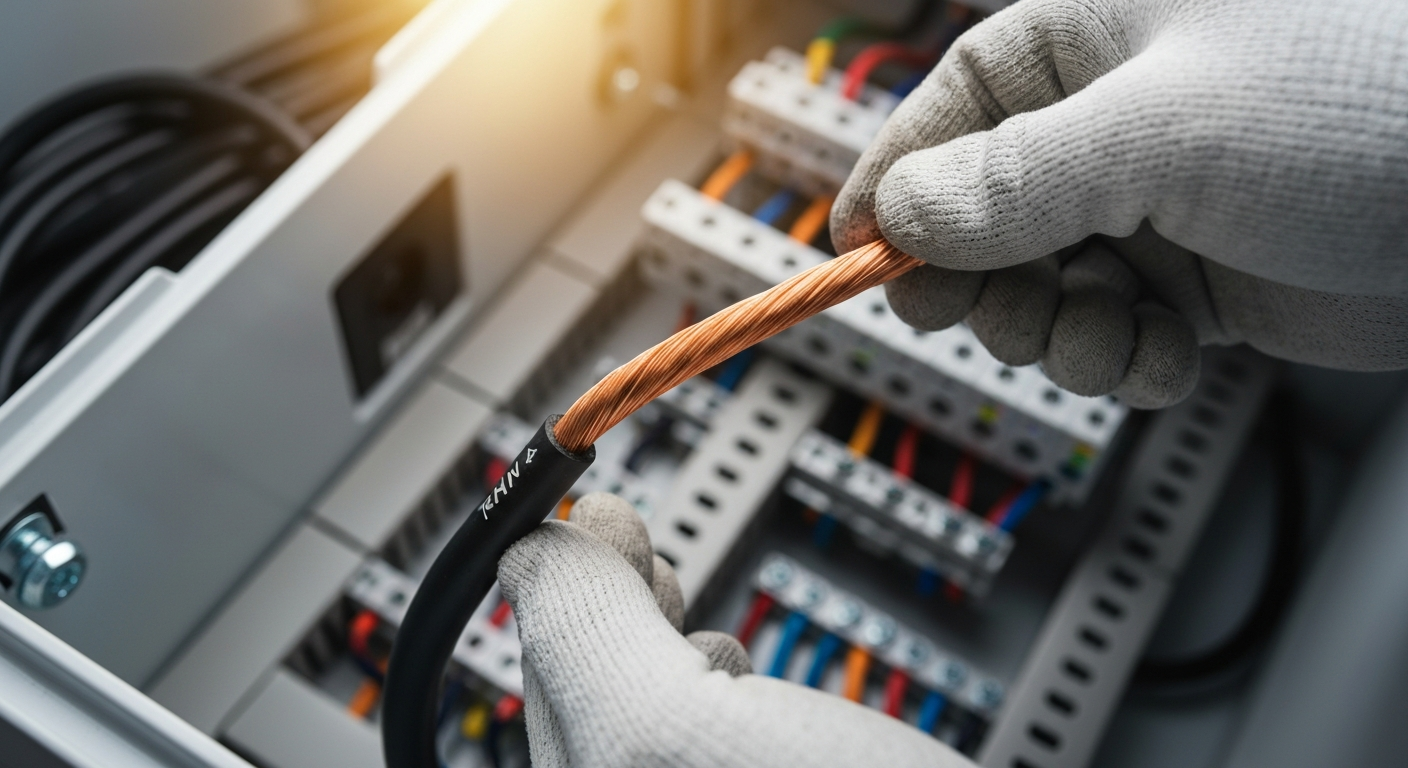
Sizing Conductors for a 60 Amp Circuit: A Step-by-Step Guide
Sizing Conductors for a 60 Amp Circuit: A Professional Guide
For a 60-amp circuit, the common 60 amp wire size choices are 4 AWG copper or 2 AWG aluminum for THHN/THWN conductors. This selection is primarily based on the wire ampacity chart found in NEC Table 310.16, using the 75°C temperature rating column where equipment terminations allow. However, simply picking a wire from the chart is not enough for a compliant and safe installation. Professional electricians must also account for critical factors such as whether the circuit supports a continuous load, which invokes the 80% rule, and potential voltage drop on long runs. The choice of conductor material (copper vs. aluminum), ambient temperature, and the number of conductors in a conduit can all require adjustments to the baseline wire size. Sizing a conductor correctly is a core competency that ensures the circuit operates safely without overheating, a requirement governed by the NEC code book.
Understanding the Core Principles of Wire Sizing
Before diving into calculations, it’s essential to grasp the foundational concepts that govern conductor selection. An error in these fundamentals can lead to misapplication of the rules, resulting in failed inspections and unsafe electrical systems.
What is a Conductor? Ampacity vs. Wire Gauge
At its core, what is a conductor? It’s a material, typically copper or aluminum, that allows electrical current to flow. The physical size of this conductor is expressed in American Wire Gauge (AWG), where a smaller AWG number corresponds to a larger conductor diameter. The conductor’s ability to carry current safely is known as its ampacity. This is the maximum current a conductor can handle continuously without exceeding its temperature rating. Exceeding the ampacity causes the wire to overheat, which can damage its insulation and create a fire hazard.
The Role of the NEC Code Book in Conductor Sizing
The National Electrical Code (NEC), or NFPA 70, is the authoritative standard for safe electrical design and installation in the United States. When sizing conductors, the nec code book is not just a guide—it’s a legal requirement in most jurisdictions. Key articles and tables, such as NEC 110.14(C) for terminal temperature ratings and Table 310.16 for ampacities, provide the mandatory rules for every installation. Relying on memory or outdated rules is a common pitfall; always reference the currently adopted code cycle.
The Step-by-Step Guide to 60 Amp Wire Size Selection
Follow this systematic process to ensure your conductor sizing is accurate, safe, and compliant with the NEC. This method goes beyond a simple chart lookup to account for real-world installation variables.
- Step 1: Determine the Load Type (Continuous vs. Non-Continuous)
The NEC defines a continuous load as one where the maximum current is expected to run for three hours or more (e.g., EV chargers, electric heating). According to NEC 210.19(A)(1), conductors and the overcurrent protection device must be sized to 125% of the continuous load. This is often called the 80% rule, as it means a continuous load cannot exceed 80% of the circuit’s rating. For a 60 A rated circuit, the maximum continuous load is 48 A (60 A × 0.80). If you have a load that is 60 A and continuous, the conductors and OCPD must be sized to at least 125% of that load (60 A × 1.25 = 75 A), meaning you would need a circuit rated for 75 A, not 60 A. - Step 2: Choose Your Conductor Material (Copper vs. Aluminum)
The conductor material is a primary factor in determining the required AWG. Copper is more conductive and generally requires a smaller gauge; aluminum is lighter and often more cost-effective but requires a larger conductor size for the same ampacity. For a 60 A circuit, you commonly use 4 AWG copper or 2 AWG aluminum to meet NEC ampacity requirements in typical installation conditions. - Step 3: Consult NEC Table 310.16 for Baseline Ampacity
NEC Table 310.16 is the primary wire ampacity chart used for most installations. This table lists the ampacities for different conductor sizes, materials, and insulation types. For conductors like THHN wire or THWN, you’ll see columns for 60°C, 75°C, and 90°C. Per NEC 110.14(C)(1), for circuits rated 100 A or less, the ampacity must be selected from the 60°C column unless all terminations (breaker, receptacles, and equipment) are marked for a higher temperature rating.- For a 60 A circuit using copper, the default 60°C column in Table 310.16 shows 6 AWG has an ampacity of 55 A, which is insufficient. Therefore, the practical selection is 4 AWG copper, which has a 60°C ampacity of 70 A. If all terminations are rated for 75°C, 6 AWG copper (65 A at 75°C) could be used in accordance with NEC rules, though many electricians prefer 4 AWG for margin and equipment compatibility.
- For aluminum, the 60°C column shows 4 AWG has a 55 A rating (insufficient for a 60 A circuit). In practice installers commonly select 2 AWG aluminum for a 60 A branch because its ampacity is comfortably above 60 A; if all terminations are rated for 75°C and the installation conditions permit, 4 AWG aluminum might sometimes be considered but is generally marginal. For this reason, many professionals specify 2 AWG aluminum for a 60 A circuit to avoid derating issues and to provide additional margin.
For a deeper understanding, explore our detailed guide on how to use NEC Table 310.16 ampacity.
- Step 4: Apply Adjustment Factors for Derating (If Necessary)
The ampacities in Table 310.16 assume an ambient temperature of 30°C (86°F) and no more than three current-carrying conductors in a raceway or cable. If your installation exceeds these conditions (e.g., wiring in a hot attic or running multiple circuits in one conduit fill), you must apply adjustment factors found in NEC 310.15. These adjustments reduce the conductor’s effective ampacity and often require you to upsize the wire. Learn more by reading our guide on how to calculate wire ampacity derating. - Step 5: Perform a Voltage Drop Calculation for Long Runs
The NEC recommends—but does not strictly mandate for branch circuits—that voltage drop be limited to 3% for optimal performance. On a long conductor run, resistance causes the voltage to decrease, which can impair the performance of motors and electronics. A voltage drop calculation is critical for feeders and long branch circuits. If the drop exceeds 3–5%, you must increase the conductor size (e.g., from 4 AWG to 3 AWG copper) to reduce resistance. You can find a voltage drop calculator online or perform the calculation manually. - Step 6: Size the Equipment Grounding Conductor (EGC)
Finally, you must select the correct grounding conductor size. This is based on the rating of the circuit’s overcurrent protection device. According to NEC Table 250.122, a 60 A circuit requires a minimum of a 10 AWG copper or 8 AWG aluminum EGC.
Get your wire sizing right every time. Check out our NEC calculation courses.
Common Applications for a 60 Amp Circuit
A 60 A circuit is robust and typically used to power high-demand equipment and subpanels in residential and commercial settings. Common uses include:
- Subpanel Feeder: A 60 A circuit is an excellent choice for a subpanel feeder in a garage, workshop, or basement, providing ample power for multiple 15 A and 20 A branch circuits.
- Electric Vehicle (EV) Chargers: Many Level 2 EV chargers require a dedicated 60 A circuit to deliver 48 A of continuous power.
- Large Appliances: Equipment such as large tankless water heaters, electric furnaces, or powerful kitchen ranges can require a 60 A supply.
Contextually, this falls between the common 50 amp wire size used for ranges and the larger 100 amp wire size typically used for main service feeders or larger subpanels. Properly sizing a wire for a 100-amp subpanel involves the same principles but with larger conductors.
Key Considerations and Common Mistakes
Avoid these common errors to ensure a code-compliant and safe installation:
- Ignoring Terminal Temperature Ratings: The single most common mistake is using the 90°C ampacity of THHN wire because the breaker and equipment terminals are not always rated for higher temperatures. Per NEC 110.14(C), you must use the ampacity from the lowest-rated component in the circuit.
- Using the Wrong Ampacity Column for Non-Metallic Sheathed Cable: When using Type NM-B cable (Romex), NEC 334.80 limits its ampacity to the 60°C column of Table 310.16, regardless of the conductor’s higher insulation rating. For a 60 A circuit, this limits allowable conductor choices and is an important installation constraint.
- Forgetting Voltage Drop: Failing to perform a voltage drop calculation on a long run (e.g., to a detached garage) can lead to poor equipment performance and is an unprofessional oversight.
- Wet vs. Dry Location: Ensure your conductor has the proper rating for its environment. THHN is rated for dry locations, while THWN is suitable for wet locations. Most THHN sold today is dual-rated as THHN/THWN to accommodate both conditions.
- Improper Breaker and Wire Coordination: The overcurrent device is there to protect the conductor. Sizing the breaker correctly is just as important as the wire. Learn more about how to size a circuit breaker according to the NEC.
Primary Sources
- NFPA 70, National Electrical Code (NEC), 2023 Edition
Frequently Asked Questions (FAQ)
- What is the standard 60 amp wire size for a subpanel feeder?
- The most common size for a 60 A subpanel feeder is 4 AWG copper or 2 AWG aluminum, using THHN/THWN conductors. 4 AWG copper has a 75°C ampacity that provides comfortable margin for a 60 A circuit, and 2 AWG aluminum is commonly used where aluminum conductors are preferred.
- Can I use 6 AWG copper wire for a 60 amp breaker?
- Under default conditions, no. According to NEC 110.14(C)(1), circuits rated 100 A or less must use the ampacity appropriate to the lowest-rated termination temperature (often the 60°C column), and 6 AWG copper at 60°C is typically rated 55 A, which is insufficient for a 60 A breaker. It can be compliant only if every terminal and the overcurrent device are specifically rated for 75°C (then 6 AWG could be acceptable using the 75°C rating), and the installation meets all other NEC requirements.
- How does the 80% rule affect my 60 amp wire size calculation?
- The 80% rule is another way of stating the 125% rule for continuous loads. It means a continuous load cannot exceed 80% of the circuit’s rating. For a 60 A circuit, the maximum continuous load is 48 A (60 × 0.80). If your load is continuous, your calculation must start with this 125% / 80% requirement, ensuring the conductors have an ampacity of at least 125% of the load.
- What size grounding conductor do I need for a 60 amp circuit?
- According to NEC Table 250.122, the minimum equipment grounding conductor size for a circuit protected by a 60 A overcurrent device is 10 AWG for copper or 8 AWG for aluminum or copper-clad aluminum.
Continuing Education by State
Select your state to view board-approved continuing education courses and requirements:

Disclaimer: The information provided in this educational content has been prepared with care to reflect current regulatory requirements for continuing education. However, licensing rules and regulations can vary by state and are subject to change. While we strive for accuracy, ExpertCE cannot guarantee that all details are complete or up to date at the time of reading. For the most current and authoritative information, always refer directly to your state’s official licensing board or regulatory agency.
NEC®, NFPA 70E®, NFPA 70®, and National Electrical Code® are registered trademarks of the National Fire Protection Association® (NFPA®)
You may also like

Colorado Electrical Licensing Requirements and Reciprocity Guide
Standby Generators in DE: Navigating Coastal Storm Regulations

 Login with Google