
Radio Communication Protocols for Line Crews
Radio Communication Protocols for Line Crews
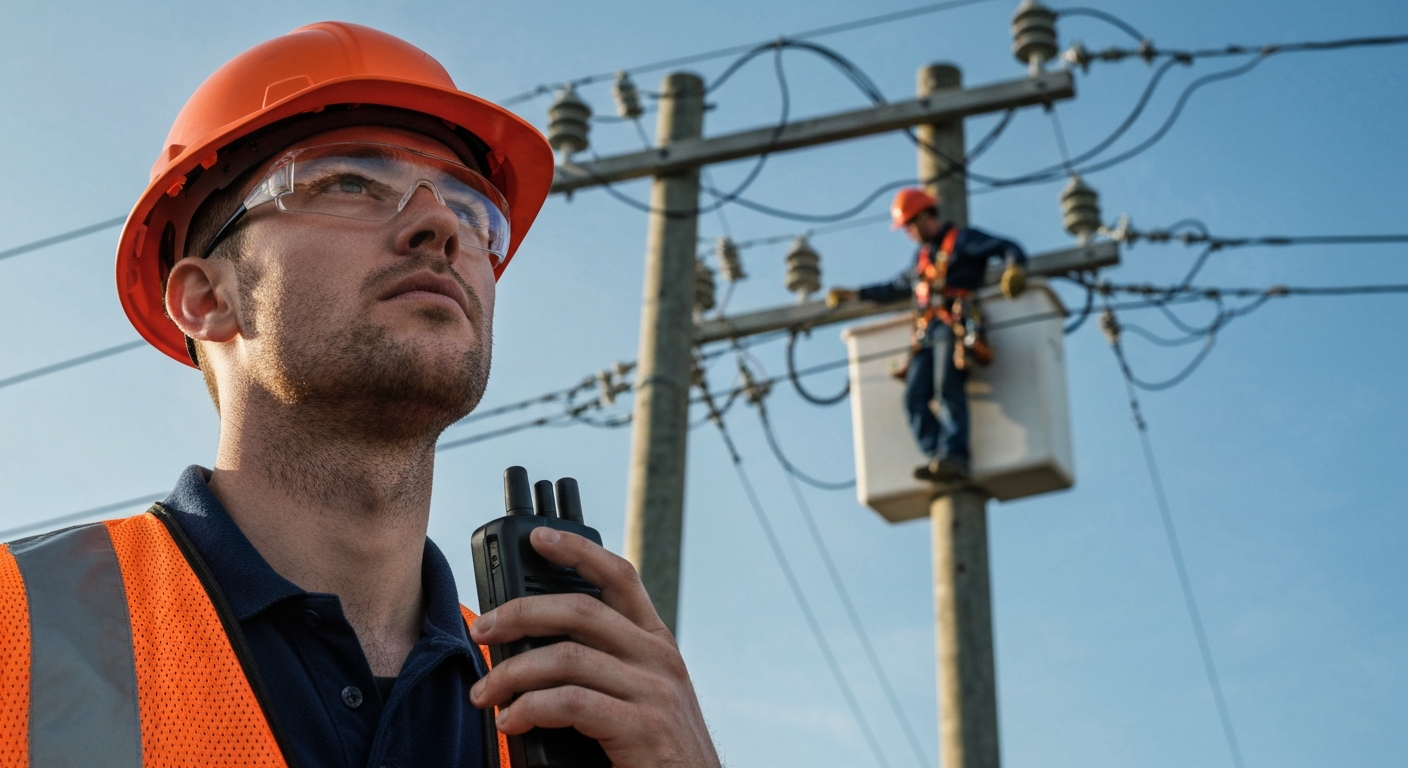
Effective radio communication protocols are a structured set of rules and procedures that ensure every message transmitted between line crew members is clear, concise, and understood. For any journeyman electrician or master electrician working with high voltage, these protocols are a critical lifeline, not just a matter of convenience. The core of this system is the three-part communication method, a closed-loop technique that drastically reduces misunderstandings when working near a dangerous element like an electrical transformer or energized lines. Mastering this, along with standard two-way radio etiquette and emergency radio procedures like the “man down” call, is a fundamental part of modern electrician training. As technology advances, these voice protocols are being integrated with hands-free communication systems and digital radio networks, making the worksite safer and more efficient. Understanding and consistently applying these rules is as crucial as mastering the NEC code book for ensuring job site safety and operational integrity.
Why Standardized Radio Communication Protocols are Non-Negotiable
In the high-stakes environment of line work, ambiguity can be fatal. Standardized radio communication protocols eliminate guesswork, ensuring every instruction is delivered and received with absolute clarity. This is paramount when a crew is managing high voltage circuits, where a single misunderstood word could lead to catastrophic equipment failure, serious injury, or death. A crucial first step on any job site is the Personal protective equipment (PPE) communication check, where each team member confirms their radio is functioning correctly. This simple act establishes a baseline for safety before any hazardous work begins. Effective protocols create a predictable framework for every conversation, which is especially critical during complex operations or emergency situations. This structure improves workflow efficiency, reduces project delays, and, most importantly, builds a culture of safety and trust among the crew.
The Core of Clarity: Three-Part Communication Explained
The single most important procedure in line crew communication is the three-part communication protocol. This method, also known as closed-loop communication, is designed to ensure the sender and receiver are in perfect sync. It is an industry-standard, strongly recommended skill for electricians and utility crews; many employers and utilities require closed-loop repeat-backs to validate that critical instructions have been heard and understood before any action is taken. This systematic process is fundamental to all electrician training focused on field safety.
How to Execute Three-Part Communication
- Step 1: The Call (Initiation) – The sender initiates contact by first stating the receiver’s callsign or name, followed by their own, to establish a connection. For example: “Groundman, this is Crew Chief. Do you read? Over.” The receiver then acknowledges they are ready to receive: “Crew Chief, this is Groundman. I read you loud and clear. Over.”
- Step 2: The Message (Transmission) – The sender delivers a clear, concise instruction or piece of information using the same “Receiver, this is Sender” format. The message should be direct and free of unnecessary jargon. For example: “Groundman, this is Crew Chief. Open switch 7A now. Over.”
- Step 3: The Repeat-Back (Confirmation) – The receiver repeats the message back to the sender verbatim. This is the most critical step. For example: “Crew Chief, this is Groundman. You want me to open switch 7A now. Is that correct? Over.” The original sender then gives a final confirmation, such as “That is correct. Out.” This closes the loop and confirms the instruction is understood before it is executed.
Essential Two-Way Radio Etiquette and Common Lineman Slang
Beyond the formal three-part protocol, effective daily operations rely on universally understood two-way radio etiquette. Proper use of Push-to-Talk (PTT) technology is the foundation. Always listen for a moment to ensure the channel is clear before transmitting, and keep messages as brief as possible to maintain open airtime for other crew members. This discipline is essential for efficient radio channel management. While informal lineman slang exists, critical commands should always use standardized phrases to avoid confusion.
- “Roger that” vs. “Copy that”: While often used interchangeably, it’s useful to know their common meanings and aviation origins. The FAA’s Aeronautical Information Manual notes that “Roger” indicates receipt of the last transmission. In field practice, “Copy” is commonly used to indicate a message was received and often understood. Regardless of these colloquial uses, for high-voltage line work neither term replaces the full verbal repeat-back called for by closed-loop (three-part) communication. Follow your utility’s or employer’s specific communication protocols, which prioritize safety and clarity.
- Phonetic Alphabet: Use the NATO phonetic alphabet (Alpha, Bravo, Charlie…) to clarify letters when spelling out equipment identifiers or locations, especially in noisy environments or when signal strength is poor.
- Emergency Calls: The phrase “Emergency, Emergency, Emergency” or a “Man down” call immediately gives the situation priority and should clear the channel of routine traffic so crew members can hear and respond to instructions from the incident commander or safety lead. All other crew members must cease transmission and listen for instructions.
- Clearance or lockout/tagout (LOTO) tags: These refer to procedures for de-energizing, locking, and tagging equipment to make it safe to work on. Communication regarding placing or removing clearance tags or other formal clearances is safety-critical and typically requires closed-loop (three-part) communication.
The Evolution of Communication Technology for Line Crews
The tools of the trade are evolving, and communication hardware is no exception. The industry is rapidly moving from analog to Digital Mobile Radio (DMR) systems, driven by the need for superior voice clarity, better battery life, and enhanced security. This shift is part of a larger trend toward grid modernization, with utilities increasingly adopting private LTE and 5G networks. This technology supports high-bandwidth applications beyond voice, allowing a journeyman electrician to send and receive data-intensive files like schematics or work orders directly in the field on ruggedized tablets. The rise of Push-to-Talk over Cellular (PoC) is also creating hybrid systems that blend the reliability of Land Mobile Radio (LMR) with the broad coverage of cellular networks. These advancements are paving the way for more integrated and effective hands-free communication solutions, allowing crews to stay connected without compromising safety or mobility. As job sites become more complex, understanding safety updates is crucial. These advancements in communication go hand-in-hand with updated safety standards, such as those discussed in the 2024 NFPA 70e updates for electrical job safety planning.
Training and Mastery of Communication Skills
Mastering radio communication protocols is a skill that requires dedicated training and continuous practice. It’s as important as knowing the latest edition of the NEC code book. Professional electrician training programs, including those using curriculum certified by bodies like NCCER, incorporate modules specifically on communication. For example, organizations such as NCCER include communication modules in their core curricula that are commonly required components of many craft training programs. These programs and various online electrical courses drill the fundamentals of three-part communication, emergency procedures, and proper radio etiquette until they become second nature. A well-trained crew that communicates effectively is a safe and efficient crew. For any master electrician leading a team, ensuring every member is proficient in these protocols is a primary responsibility. Before beginning any critical job, running a quick drill or a signal strength check can reinforce these life-saving habits. Clear communication is a critical safety tool. Learn the standard calls.
Frequently Asked Questions
What is the three-part communication protocol?
Three-part communication, also known as closed-loop communication, is a safety-critical radio protocol. It involves three steps: the sender states the message, the receiver repeats the message back verbatim, and the sender confirms the repeat-back is correct. This ensures critical instructions are perfectly understood before any action is taken, which is vital when working with high voltage.
Why is “Copy that” different from “Roger that” in radio communication?
In formal two-way radio etiquette, “Roger that” confirms a transmission was received; in common field usage, “Copy that” is often used to indicate the message was received and understood. However, the terms are frequently used interchangeably in practice. For critical tasks involving an electrical transformer or line switching, neither phrase is an acceptable substitute for the full repeat-back required by the three-part communication protocol to ensure absolute clarity and safety.
How do new technologies like private LTE impact a journeyman electrician’s job?
New technologies like private LTE and 5G networks are transforming a journeyman electrician’s role by enabling more than just voice communication. These high-speed networks allow for the real-time transmission of data, such as digital blueprints, work orders, and video feeds from the field. This improves diagnostic capabilities, reduces errors, and enhances overall job efficiency and safety.
Continuing Education by State
Select your state to view board-approved continuing education courses and requirements:

Disclaimer: The information provided in this educational content has been prepared with care to reflect current regulatory requirements for continuing education. However, licensing rules and regulations can vary by state and are subject to change. While we strive for accuracy, ExpertCE cannot guarantee that all details are complete or up to date at the time of reading. For the most current and authoritative information, always refer directly to your state’s official licensing board or regulatory agency.
NEC®, NFPA 70E®, NFPA 70®, and National Electrical Code® are registered trademarks of the National Fire Protection Association® (NFPA®)
You may also like
Colorado Electrical Licensing Requirements and Reciprocity Guide
Standby Generators in DE: Navigating Coastal Storm Regulations

 Login with Google