
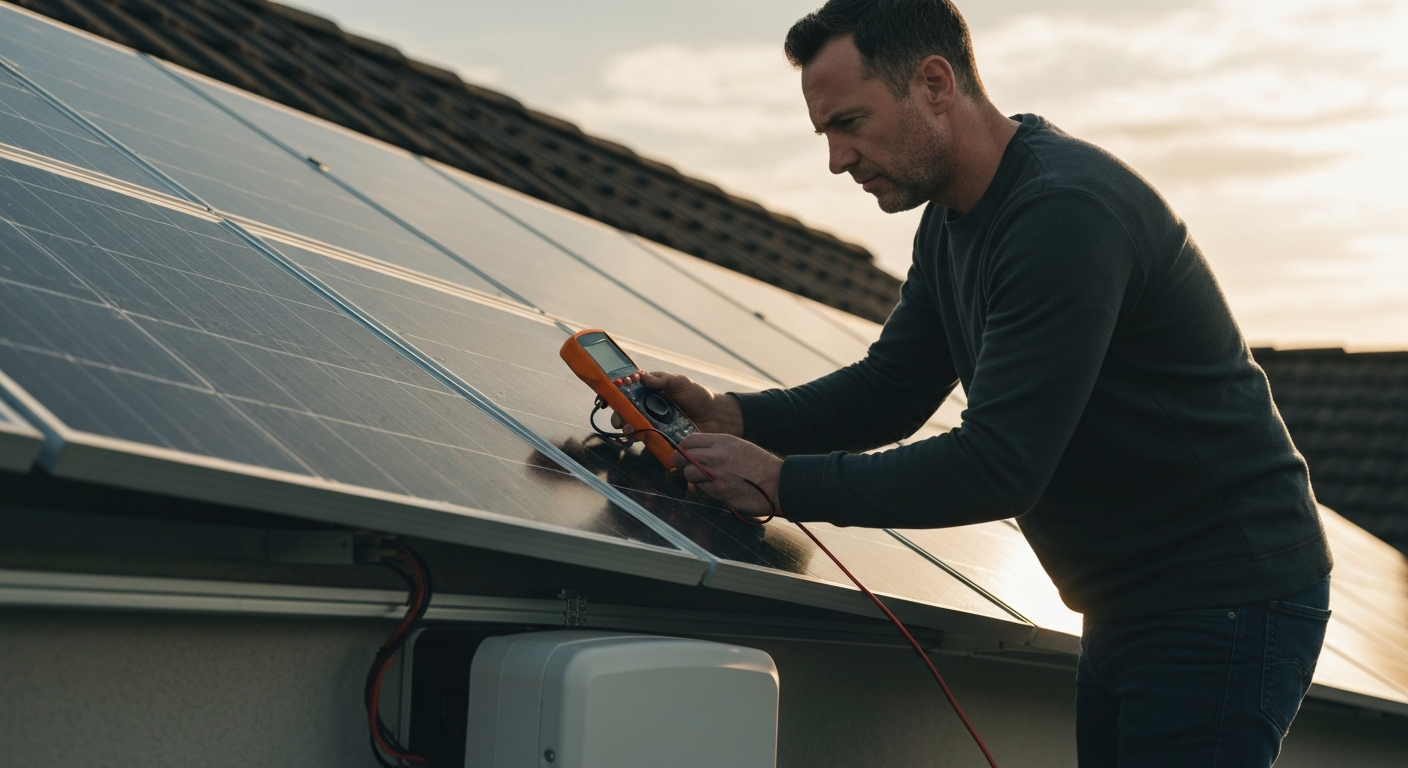
PV String Sizing Calculations for Grid-Tied Inverters
PV String Sizing Calculations for Grid-Tied Inverters: A Master Electrician’s Guide
Proper PV string sizing calculations are critical for designing a safe, efficient, and code-compliant solar energy system. These calculations determine the correct number of solar modules to connect in a series string, ensuring the array’s voltage stays within the operational limits of the grid-tied inverter. The core of this process involves two key assessments: calculating the maximum number of modules based on the inverter’s maximum system voltage and the coldest expected ambient temperature, and calculating the minimum number of modules needed to operate within the inverter’s MPPT voltage range during the hottest conditions. Failure to correctly apply NEC 690.7 guidelines and manufacturer specifications can lead to equipment damage, significant performance losses, or serious safety hazards. For any journeyman or master electrician working with photovoltaics, mastering these calculations is a fundamental requirement for a successful installation.
Understanding the Core Components of String Sizing
Before performing any calculations, a licensed electrician must gather and interpret data from two primary sources: the solar panel (module) datasheet and the string inverter specification sheet. These documents contain the essential electrical characteristics needed to ensure a safe and high-performing system design.
Solar Panel Datasheet Interpretation
The solar panel datasheet provides performance data under Standard Test Conditions (STC), which are a laboratory benchmark of 25°C cell temperature and 1000 W/m² of irradiance. Key values include:
- Module Open Circuit Voltage (Voc): This is the maximum voltage a single panel can produce when it’s not connected to a load. It’s foundational for maximum-voltage (safety) calculations required by NEC 690.7.
- Module Maximum Power Voltage (Vmp): This is the voltage at which the panel produces maximum power when operating under load. It is used to ensure the system performs efficiently in hot weather and to check the inverter MPPT window.
- Temperature Coefficient of Voc: This value, typically a negative percentage per degree Celsius (e.g., -0.25%/°C as an example), indicates how much the open-circuit voltage changes for every degree of temperature deviation from STC. NEC 690.7 specifically requires use of the module’s Voc temperature coefficient (if provided) to calculate the maximum Voc at the lowest-expected ambient temperature.
String Inverter Specifications
The inverter’s datasheet dictates the operational boundaries for the entire PV array. The most important specifications for string sizing are:
- Maximum System Voltage: NEC requires the designer to use the maximum voltage for conductors, equipment, and working-space determinations. For arrays on or attached to buildings, NEC 690.7 limits PV system dc circuits to 1000 V (and limits PV system dc circuits on or in one- and two-family dwellings to 600 V). Exceeding the inverter’s listed maximum system voltage must be avoided to prevent equipment damage and safety risks.
- Inverter MPPT Voltage Range: The Maximum Power Point Tracking (MPPT) range is the “sweet spot” where the inverter can most efficiently harvest energy from the solar array. A string’s operating voltage (based on corrected Vmp) should remain within this window across expected temperature ranges to maximize power output and ensure reliable inverter operation.
The Critical Role of Temperature in Voltage Calculations
A fundamental principle for every journeyman electrician and master electrician in the solar industry is that PV module voltage has an inverse relationship with temperature: as temperature drops, voltage rises, and as temperature rises, voltage drops. This is why temperature correction is the most critical part of PV string sizing calculations.
For safety, we must calculate the highest possible voltage a string will produce. This occurs at the lowest-expected ambient temperature when the sun is out. NEC 690.7 requires using the lowest-expected ambient temperature and provides permitted calculation methods (module manufacturer Voc temperature coefficient, crystalline module correction factors, or an engineered design for large systems). NEC 690.7’s Informational Note references ASHRAE data as one source for lowest-expected ambient temperature guidance.
Step-by-Step: PV String Sizing Calculations Based on NEC 690.7
The primary goal is to determine the acceptable range for the number of modules in a series string configuration. This involves finding the maximum number of modules allowed for safety and the minimum number required for performance.
- Calculate the Temperature-Corrected Maximum Module Voltage (Max Voc)
The first step is to determine the highest possible voltage a single module will produce at the lowest-expected ambient temperature. NEC 690.7 permits the use of the module open-circuit voltage temperature coefficient provided by the manufacturer (if available) or the crystalline-module correction factors or an engineered design for large systems. Apply the temperature coefficient (converted from percent to decimal) to the temperature difference between STC (25°C) and the lowest-expected ambient temperature to obtain the corrected Voc for the cold condition. Use the manufacturer’s provided Voc temperature coefficient or follow the methods allowed by NEC 690.7(A)(2) or 690.7(A)(3) as applicable.
Example: For a module with a 48 V Voc and a -0.25%/°C coefficient at a site with a -10°C lowest-expected temperature (convert -0.25% to -0.0025):
Temperature difference = -10°C – 25°C = -35°C
Correction = (-35) * (-0.0025) = +0.0875 (or +8.75%)
Corrected Voc = 48 V * (1 + 0.0875) = 52.2 V - Determine the Maximum Number of Modules per String
Divide the inverter’s maximum system voltage by the corrected Voc calculated in the previous step. Round this result down to the nearest whole number to ensure the string does not exceed the inverter’s listed maximum system voltage.
Formula: Maximum Modules = Inverter Maximum System Voltage / Corrected Voc
Example (using a 600 V inverter): 600 V / 52.2 V = 11.49 → round down to 11. So the maximum number of modules for this string is 11. - Calculate the Temperature-Corrected Minimum Module Voltage (Min Vmp)
Next, determine the lowest operating voltage of the string to ensure the inverter will start up and run efficiently in the highest expected ambient temperatures. NEC’s 690.7 focuses on maximum-voltage safety; minimum-MPPT calculations are a performance design consideration. Use the module’s Vmp and the specific Vmp temperature coefficient from the datasheet to correct Vmp for the highest expected ambient temperature.
Example: For a module with a 40 V Vmp and a Vmp temperature coefficient of -0.40%/°C at a site with a 45°C high temperature (convert -0.40% to -0.004):
Temperature difference = 45°C – 25°C = 20°C
Correction = 20 * (-0.004) = -0.08
Corrected Vmp = 40 V * (1 – 0.08) = 36.8 V - Determine the Minimum Number of Modules per String
Divide the inverter’s minimum MPPT voltage by the corrected Vmp. Round this result up to the nearest whole number to ensure the string Vmp stays above the inverter minimum MPPT requirement.
Formula: Minimum Modules = Inverter Minimum MPPT Voltage / Corrected Vmp
Example (using an inverter with a 150 V minimum MPPT): 150 V / 36.8 V = 4.08 → round up to 5. So the minimum number of modules for this string is 5.
In this example, a valid string design could have anywhere from 5 to 11 modules (subject to the inverter and module manufacturer instructions and NEC limits).
Avoid costly design errors. Master string sizing with our expert-led online electrical courses. Our programs are designed for professionals seeking to enhance their skills and stay current with the latest NEC standards and industry best practices.
Advanced Considerations for System Design
Beyond the core voltage calculations, several other factors must be considered for a complete and compliant system design.
Voltage Drop Calculations and Wire Sizing
Once you know the string length, perform voltage-drop calculations to select conductor sizes. NEC includes informational guidance about voltage drop (see the informational note in Article 310 that references 210.19 and 215.2). Designers must account for voltage drop when selecting conductors and apply the ampacity and adjustment/correction rules in Article 310 and the associated ampacity tables to determine conductor sizes consistent with NEC ampacity and correction rules.
Series vs Parallel Circuit Configuration
When modules are connected in series, voltages add; when strings are combined in parallel to the inverter or combiner, currents add. NEC requires that paralleled conductors and cable or raceway runs meet the rules for parallel conductors (same size/material/length/insulation/terminations) and that conductors be identified and grouped as required. For PV systems, designers should follow NEC requirements for grouping and consistent electrical characteristics to avoid string imbalance and related issues, and follow manufacturer instructions for combiner connections and any listed multiconductor cable assemblies used in PV arrays.
Rapid Shutdown and Module-Level Power Electronics (MLPE)
NEC rapid shutdown requirements for PV systems on buildings are intended to reduce shock hazards to emergency responders. NEC 690.12 specifies the rapid shutdown function, controlled conductors, required initiation devices, and exceptions (for example, for ground-mounted systems and certain detached structures). The use of module-level power electronics (MLPE) — such as DC optimizers or microinverters — affects how the system meets rapid-shutdown rules. Note that ac modules and microinverters are handled differently by the NEC (see 690.6) and their PV source circuits are treated as internal components of the ac module or ac module system.
Primary Sources
- National Fire Protection Association (NFPA) for the National Electrical Code® (NEC®) — see Articles 690, 310, and 110 for the requirements discussed here.
- ASHRAE is referenced in NEC 690.7 Informational Note for ambient temperature data guidance.
Frequently Asked Questions (FAQ)
- What is the most critical factor in PV string sizing calculations?
- The most critical factor for avoiding overvoltage is correcting the module’s open-circuit voltage (Voc) for the lowest-expected ambient temperature, as required by NEC 690.7. This determines the maximum voltage the system can produce and ensures it does not exceed the inverter’s maximum system voltage rating.
- How does the inverter MPPT voltage range affect the minimum number of modules?
- The inverter’s MPPT voltage range dictates the operational window for efficient power production. The total string Vmp, corrected for the highest expected ambient temperature, must be within the inverter’s MPPT window so the inverter can start and operate efficiently on hot days.
- Do I still need to perform PV string sizing calculations if I use module-level power electronics (MLPE)?
- If you use microinverters (ac modules), NEC considers the PV source circuits of the ac module or ac module system to be internal components (NEC 690.6), so the central DC string-sizing calculation is not applicable for microinverter outputs. However, if you use DC optimizers or other MLPE that leave the array as a DC series string to a central inverter, then DC string sizing and NEC 690.7 maximum-voltage calculations still apply and must be followed.
- What happens if my calculated string voltage is too high for the inverter’s maximum system voltage?
- If a string’s temperature-corrected maximum voltage exceeds the inverter’s maximum system voltage rating, it violates NEC guidance and risks damaging the inverter input electronics, voiding manufacturer warranties, and creating significant electrical and fire hazards. Correct application of NEC 690.7 and manufacturer instructions is required to prevent this condition.
Continuing Education by State
Select your state to view board-approved continuing education courses and requirements:

Disclaimer: The information provided in this educational content has been prepared with care to reflect current regulatory requirements for continuing education. However, licensing rules and regulations can vary by state and are subject to change. While we strive for accuracy, ExpertCE cannot guarantee that all details are complete or up to date at the time of reading. For the most current and authoritative information, always refer directly to your state’s official licensing board or regulatory agency.
NEC®, NFPA 70E®, NFPA 70®, and National Electrical Code® are registered trademarks of the National Fire Protection Association® (NFPA®)
You may also like

Colorado Electrical Licensing Requirements and Reciprocity Guide
Standby Generators in DE: Navigating Coastal Storm Regulations

 Login with Google