
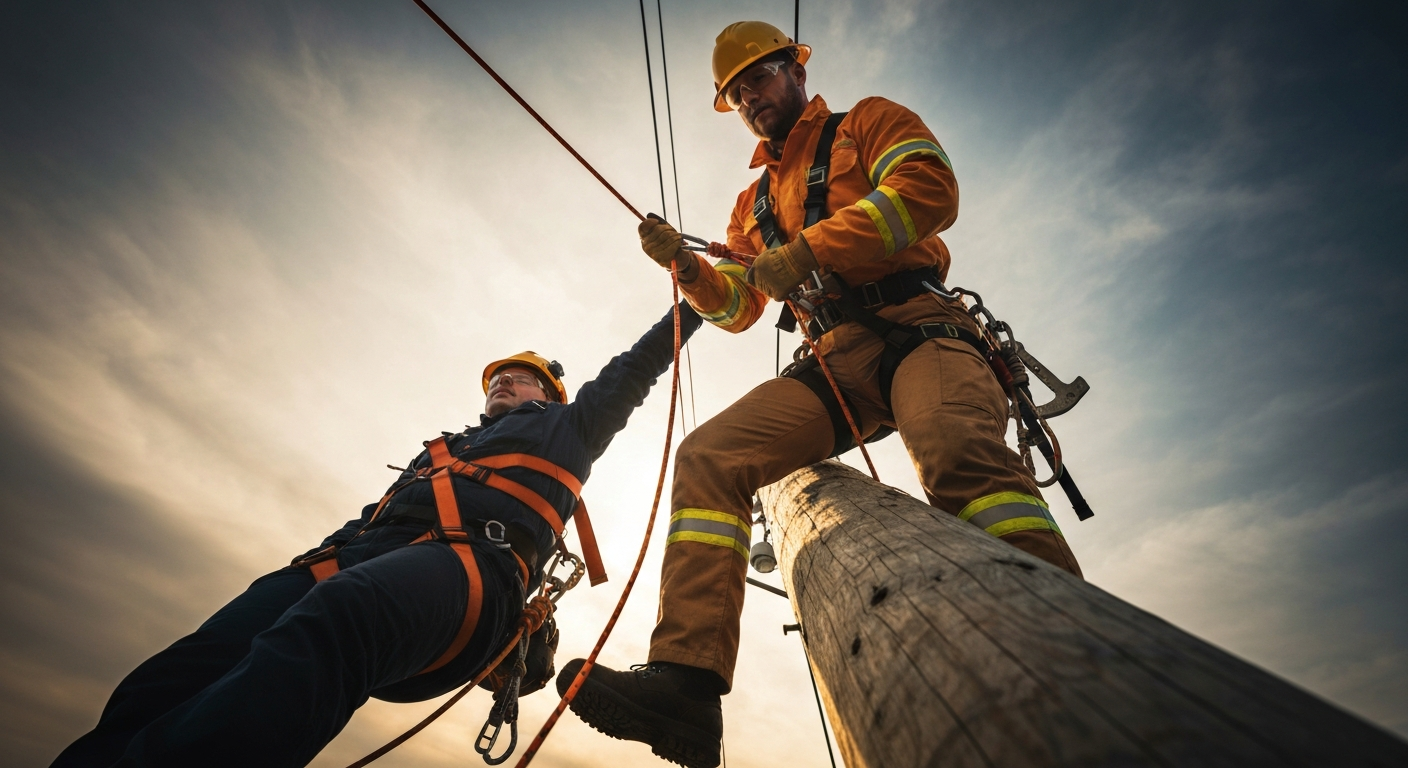
Pole Top and Bucket Truck Rescue Procedures
Pole Top and Bucket Truck Rescue Procedures for Electrical Workers
A pole top rescue is an emergency procedure performed by qualified electrical workers to safely retrieve an injured or incapacitated colleague from an elevated position on a utility pole. Similarly, bucket truck rescue involves recovering a worker from the basket of an aerial lift. These life-saving maneuvers are a critical component of electrical lineman safety, governed by OSHA 1910.269, which mandates that employees are trained in emergency procedures. Due to the inherent dangers of working with high voltage, swift and proficient execution of these rescue techniques is essential. Effective qualified electrical worker training ensures that a rescuer can assess a hazardous scene, ascend the structure, secure the victim, and lower them to the ground for medical aid in minutes. This rapid response is vital, as it can mean the difference between life and death in the event of electrical contact or other incapacitating incidents.
The Critical Importance of Rescue Preparedness
Working on or near energized power lines is one of the most hazardous jobs in the electrical trade. For lineworkers and utility linemen, the environment presents constant risks, from falls to electrical contact. When an incident occurs dozens of feet in the air, the response must be immediate and precise. The first few minutes, often called the “golden minutes,” are crucial for the victim’s survival, especially after electric shock or in cases of suspension trauma. A comprehensive electrical hazard assessment is the first line of defense, but when preventative measures fail, a well-rehearsed emergency response is the last. This is why regular, hands-on electrician training in rescue procedures is not just a regulatory requirement but a moral imperative for any crew working at height.
OSHA 1910.269: The Regulatory Backbone of Electrical Lineman Safety
The mandate for this specialized training comes directly from the Occupational Safety and Health Administration (OSHA). Specifically, OSHA 1910.269 requires employers to ensure that workers are trained in safety-related work practices and emergency procedures relevant to their tasks. This includes pole top and bucket truck rescue. The standard itself does not specify a fixed rescue timeframe; medical response guidance emphasizes immediate CPR and early defibrillation when indicated, but OSHA leaves timing and training frequency to employer programs based on the work performed. To comply, companies must provide training as often as necessary for employees to maintain proficiency, with many adhering to an annual schedule as an industry best practice. Demonstrating proficiency through this training, often documented by a Pole top rescue certification from the employer or a recognized industry program, is a key part of becoming a qualified electrical worker in the utility sector. While OSHA sets the requirement for training, it does not standardize the exact procedure, allowing companies to develop techniques best suited to their specific conditions and equipment.
Step-by-Step Pole Top Rescue Procedure (Hurtman Rescue)
The most common method for pole top rescue is often called “Hurtman rescue.” While specific steps can vary based on company protocols and the rescue equipment used, the fundamental process follows a logical sequence designed to protect both the rescuer and the victim. Mastering these Hurtman rescue techniques is a core competency learned at any reputable electrician school for linemen.
- Assess the Scene and Call for Help: The first action is to evaluate the situation from the ground. Is the victim in contact with an energized conductor? Is the pole stable? The rescuer must call out to the victim and, if there is no response, immediately direct another crew member to call emergency services. This initial assessment dictates the required personal protective equipment.
- Perform an Electrical Hazard Assessment: Before ascending, the rescuer must determine if the scene is electrically safe. A key part of modern safety involves a deep understanding of job planning, as detailed in recent NFPA 70E updates. For more on this, see how NFPA 70E 2024 updates have changed job safety planning. If the victim is in contact with an energized conductor, de-energizing the line is the preferred and safest option when feasible. If de-energizing is not possible, only properly trained and equipped live-line qualified workers using appropriate insulating tools and procedures should perform a live-line rescue.
- Ascend to the Rescue Position: Using proper climbing gear and wood pole fall protection, the rescuer climbs to a position where they can safely rig the rescue system. This position is chosen to provide the leverage needed to rig and control the rescue while minimizing additional risk to the victim and rescuer.
- Rig the Rescue System: The rescuer secures a handline with a block and tackle to the pole above the victim. Rescuers should secure the victim using approved rescue harnesses or approved chest/attachment devices provided in rescue kits. If ropes are used, they must be part of an approved rescue technique taught in the employer’s training program to minimize risk of further injury.
- Cut the Victim’s Positioning Strap: This is the point of no return. Once the victim is secured by the rescue line or approved harness, the rescuer cuts the victim’s fall arrest or work positioning lanyard. The victim is now fully supported by the rescue system.
- Lower the Victim in a Controlled Descent: Using the handline, ground personnel or the rescuer carefully lowers the victim to the ground in a smooth, controlled manner. Specialized controlled descent devices or approved personnel descent systems may be used to manage the rate of descent.
- Provide Medical Aid: As soon as the victim is safely on the ground, crew members trained in CPR and first aid must provide immediate medical attention while awaiting the arrival of professional emergency medical services.
Bucket Truck Emergency Procedures
Rescues from an aerial lift, or bucket truck, present a different set of challenges. Bucket truck emergency procedures can involve self-rescue by a conscious worker or an assisted rescue by a second worker on the ground. The primary method of assisted rescue is to use the truck’s ground or base controls (or other emergency lowering means provided by the equipment) to bring the bucket safely to the ground. OSHA and equipment standards require operation controls for the platform and provisions for emergency lowering; many trucks include ground controls to lower the boom, but configurations vary by manufacturer. If the primary hydraulic system fails, an auxiliary power or manual lowering system can often be engaged to lower the boom. For a conscious worker facing a situation like a fire or control failure, self-rescue may be possible using an approved evacuation/descent device specifically rated for controlled descent (for example, a personnel descent device or approved escape system). Not all self-retracting lifelines are rated or intended for controlled descent.
Essential Equipment for a Successful Rescue
Having the right tools is just as important as having the right training. A successful emergency response for electricians hinges on well-maintained and readily accessible equipment. Key items include:
- Pole Top Rescue Equipment: Pre-packaged kits often containing a handline, a pulley system (block and tackle), an approved rescue harness or chest attachment, a sharp knife, and a protective rope bag.
- Utility Pole Fall Arrest Systems: This includes the rescuer’s personal climbing gear, such as gaffs, a fall protection harness, and positioning lanyards.
- Controlled Descent Devices: Modern systems, including approved personnel descent devices, are designed for controlled lowering of a rescued worker.
- Dielectric Personal Protective Equipment (PPE): This is non-negotiable. Rubber gloves, sleeves, and proper arc-rated clothing are essential for protecting against electrical hazards. Proper voltage verification is a crucial skill; you can learn more about how NFPA 70E 2024 has changed voltage verification.
- Arc Flash Protection: A full suit or hood may be required depending on the initial electrical hazard assessment.
- Live-Line Tools: Insulated hot sticks and other live-line tools are used by qualified personnel when work near energized conductors is necessary. Only properly trained workers using appropriate insulating tools should attempt live-line work or live-line rescue.
Be prepared for the worst. Learn life-saving rescue techniques.
The Value of Realistic Training and Certification
Reading about rescue is not something learned from the NEC code book, as these procedures are addressed in OSHA 1910.269 and NFPA 70E. Proficiency in these life-saving skills can only be developed through rigorous, hands-on training that simulates real-world emergencies. Leading industry curricula, such as those from NCCER, incorporate pole climbing and rescue procedures as a foundational skill. This qualified electrical worker training goes beyond theory, forcing linemen to practice rigging, climbing, and handling the weight of a victim (usually a weighted mannequin) under pressure. Regular drills, often held annually, build the muscle memory and calm demeanor required to act effectively when a real emergency strikes. Whether you’re pursuing a career as a journeyman electrician or a master electrician in the power utility field, proficiency in rescue is a non-negotiable skill you can hone through online electrical courses and in-person labs.
Frequently Asked Questions
What is the primary OSHA standard for pole top rescue?
The primary standard is OSHA 1910.269, Electric Power Generation, Transmission, and Distribution. It mandates that employees be trained in applicable emergency procedures, like those required for pole top rescue, necessary for their safety.
How often do qualified electrical workers need pole top rescue certification?
While OSHA requires demonstrated proficiency, industry best practice and many utility company policies mandate regular hands-on training and practice to maintain rescue skills. OSHA requires training as often as necessary to maintain proficiency; many employers choose annual hands-on drills as a practical industry standard. This proficiency is often validated through a Pole top rescue certification issued by the employer or a training provider, not OSHA itself.
What is the difference between Hurtman rescue and bucket truck rescue?
Hurtman rescue techniques refer specifically to retrieving an incapacitated worker from a utility pole, involving climbing and using a rope-and-pulley system or approved harnessing methods. Bucket truck emergency procedures are used to rescue a worker from the basket of an aerial lift, which typically involves using the truck’s platform controls, ground/emergency lowering means, or approved evacuation/descent devices.
What are the key components of a utility pole fall arrest system?
A complete utility pole fall arrest system includes a full-body harness, a primary work-positioning lanyard or strap, and a secondary fall-arrest device. For wood pole climbing, this often involves a “bucksqueeze” or similar pole-circling device that provides wood pole fall protection while allowing the worker to ascend and descend.
Continuing Education by State
Select your state to view board-approved continuing education courses and requirements:

Disclaimer: The information provided in this educational content has been prepared with care to reflect current regulatory requirements for continuing education. However, licensing rules and regulations can vary by state and are subject to change. While we strive for accuracy, ExpertCE cannot guarantee that all details are complete or up to date at the time of reading. For the most current and authoritative information, always refer directly to your state’s official licensing board or regulatory agency.
NEC®, NFPA 70E®, NFPA 70®, and National Electrical Code® are registered trademarks of the National Fire Protection Association® (NFPA®)
You may also like
Colorado Electrical Licensing Requirements and Reciprocity Guide
Standby Generators in DE: Navigating Coastal Storm Regulations
 Login with Google