
Meeting NEC 690.12 Rapid Shutdown Requirements for Solar
Meeting NEC 690.12 Rapid Shutdown Requirements for Solar
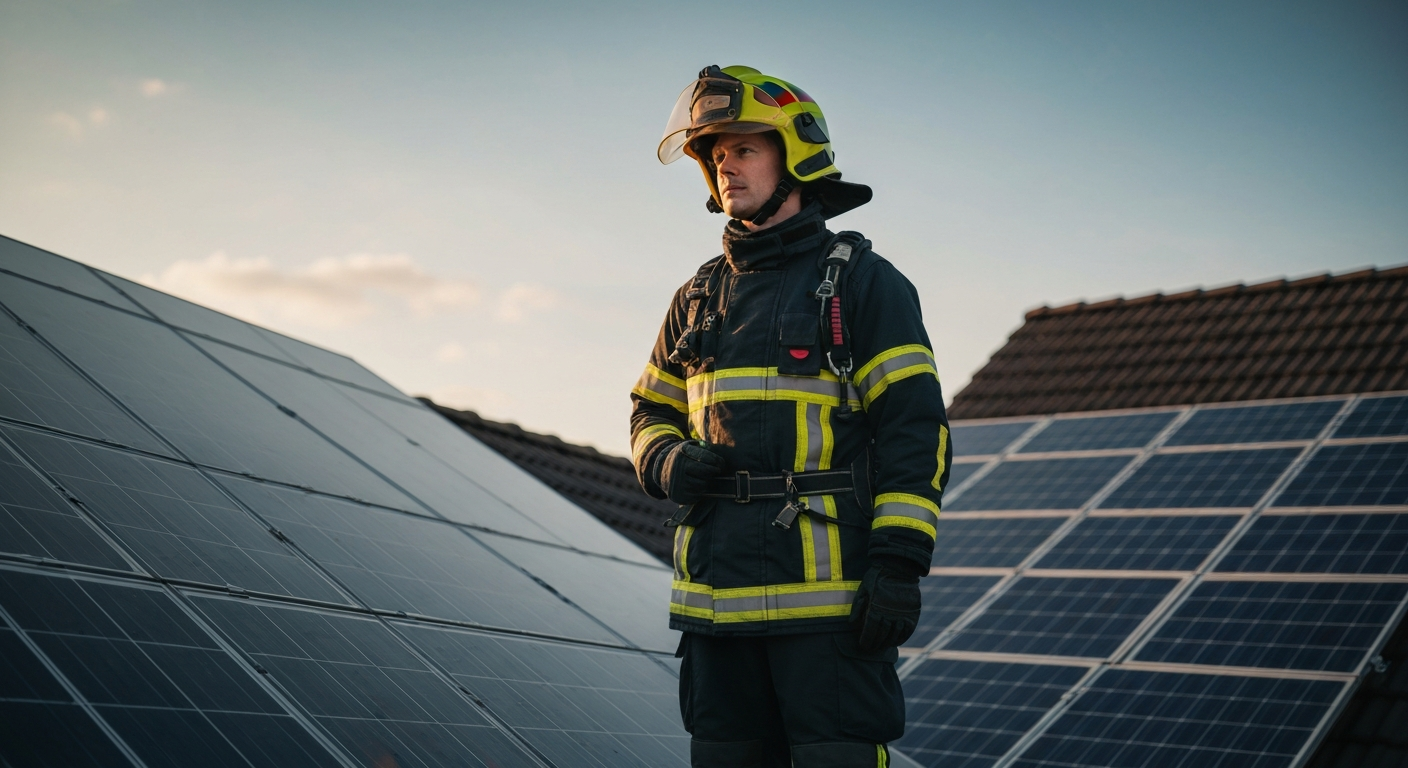
Ensuring compliance with NEC 690.12 for rapid shutdown solar systems is a critical aspect of modern photovoltaic (PV) installations. The primary goal of this requirement in the National Electrical Code is firefighter safety, providing a method to quickly de-energize a solar panel generator and its associated high voltage conductors to reduce shock hazards for first responders. Compliance has evolved, now largely achieved through two main pathways: the use of module-level power electronics (MLPE) like microinverters or power optimizers, or through a listed PV Hazard Control System (PVHCS). A rapid shutdown system (RSS) must control conductors both inside and outside the array boundary, reducing voltage to safe limits within 30 seconds of initiation. For any master electrician or journeyman electrician, understanding these rules is essential for safe, code-compliant electrician training and installation practices.
What is Solar Rapid Shutdown and Why is it Critical for Firefighter Safety?
A solar rapid shutdown system (RSS) is an electrical safety requirement first introduced in the 2014 National Electrical Code (NEC) and detailed in Article 690.12. Its sole purpose is to provide a simple, reliable method for firefighters to de-energize the high voltage DC conductors of a rooftop solar panel generator during an emergency. When a fire occurs in a building with a solar array, first responders may need to cut into the roof for ventilation or access, putting them at extreme risk of electric shock from energized PV system components. Even when an inverter is turned off, the conductors running from the modules can remain live as long as the sun is shining. The rapid shutdown requirement mandates that these conductors are reduced to safe voltage levels, significantly enhancing shock hazard reduction for emergency personnel.
The Evolution of NEC 690.12: From 2017 to 2023
The rules for rapid shutdown have undergone significant changes with each update to the NEC code book. What began as a relatively simple concept has become more specific to enhance safety as solar technology advances. For a professional electrician, staying current with these changes is paramount.
NEC 2017: The Shift to Module-Level Control
The 2017 NEC marked a major shift by introducing the concept of the array boundary, defined as the area 1 foot from the array in all directions. This code cycle mandated two different controlled zones:
- Outside the boundary: Conductors must be reduced to 30 volts or less within 30 seconds.
- Inside the boundary: Conductors within the array must be reduced to 80 volts or less within 30 seconds.
This “80 volts in 30 seconds” rule for the area inside the boundary effectively required the adoption of module-level power electronics (MLPE), as traditional string inverters could not de-energize individual modules. This was a pivotal moment that accelerated the market for microinverters and power optimizers.
NEC 2020: Introducing PV Hazard Control Systems (PVHCS)
The 2020 NEC provided an alternative pathway for compliance inside the array boundary. While the 80V/30s rule remained, the code introduced the option of using a PV Hazard Control System (PVHCS). A PVHCS is a complete system of components that has been evaluated and listed, typically to the UL 3741 standard, to prove it provides an equivalent level of shock hazard protection for firefighters. This standard was developed based on extensive research into firefighter interactions with PV systems, providing a data-backed method for ensuring safety without strictly adhering to the 80V limit. This opened the door for innovative solutions beyond MLPE, including systems that use specific wiring methods and non-conductive racking to achieve safety.
NEC 2023 Compliance: Clarifications and Exemptions
The latest NEC 2023 compliance cycle refined the rules further, providing important clarifications. A key change in 690.12 is an exception for PV systems installed on non-enclosed, detached structures. This means that installations on carports, solar trellises, and similar structures are no longer required to have rapid shutdown, as firefighters are unlikely to perform rooftop operations on them. Additionally, the code clarified that conductors from a ground-mounted array that terminate on the exterior of a building and do not enter it are not considered “controlled conductors” and do not require rapid shutdown. Labeling requirements were also revised and consolidated into section 690.12(D) for clarity.
Ensuring your knowledge is current with the latest code is essential. Comprehensive online electrical courses can help bridge the gap between code cycles.
Step-by-Step: Verifying an NEC 690.12 Compliant System
For a journeyman electrician or master electrician, verifying a rapid shutdown system (RSS) is a crucial part of commissioning and inspection. Follow these steps to ensure compliance:
- Locate the Rapid Shutdown Initiator: Identify the switch or device used to start the rapid shutdown process. This must be in a readily accessible location and clearly labeled. The NEC, also known as NFPA 70, provides specific guidance on labeling.
- Define the Array Boundary: Visually or physically measure 1 foot (305 mm) in all directions from the PV array. This line separates the “inside” and “outside” zones with different voltage limits.
- Verify “Outside the Boundary” Conductors: After activating the rapid shutdown initiator, use a voltmeter to confirm that all controlled conductors outside the 1-foot boundary drop to 30 volts or less within 30 seconds.
- Verify “Inside the Boundary” Conductors: This is more complex. Confirm one of two conditions is met:
- The conductors are limited to 80 volts or less within 30 seconds (typical for MLPE systems).
- The system is a listed PV Hazard Control System (PVHCS) installed per its UL 3741 listing instructions. This may involve specific racking, wiring, and inverter combinations that don’t require MLPE.
- Check for Certification and Labeling: Ensure the components used, such as inverters and module-level devices, are listed for rapid shutdown. Many compliant devices are SunSpec certified, indicating interoperability for this function. All required labels must be in place.
Key Components and Compliance Methods
Achieving compliance involves understanding the different components and strategies available. It’s not just about a single switch but an entire system working together.
Compliance Method 1: Module-Level Power Electronics (MLPE)
This is the most common method for residential and many commercial rooftops. Module-level power electronics (MLPE) are devices attached to each solar module.
- Microinverters: These devices convert DC to AC power at each module. When the rapid shutdown initiator is activated (which typically cuts AC power), the microinverters inherently cease to produce high-voltage DC, easily meeting the 80V requirement.
- Power Optimizers: These devices manage the DC output of each module before sending power to a central string inverter. When the rapid shutdown signal is sent (often via power line communication), each optimizer reduces its module’s voltage to a safe level (e.g., 1 volt), thus controlling the string voltage.
Both solutions are a core part of modern electrician training for PV systems and are a reliable way to meet code. They are central to understanding the function of a disconnecting means in a DC system.
Compliance Method 2: PV Hazard Control System (PVHCS)
A PV Hazard Control System (PVHCS) listed to UL 3741 is an engineered solution that achieves firefighter safety without necessarily using MLPE. This approach might involve specific inverter models paired with non-conductive racking systems, special conductor routing, and other design considerations. The entire assembly is tested and certified to prove it prevents shock hazards, even if the voltage within the array exceeds 80V. This can sometimes be a more cost-effective solution for large commercial roofs by reducing the number of electronic components and potential points of failure, representing a form of string-level shutdown strategy.
In all systems, proper grounding and bonding are also essential for safety. While rapid shutdown controls energized conductors, understanding `bonding what is it` and how to apply it correctly per NEC Article 250 ensures that all metallic components that could become energized have a safe path to ground.
Ensure your PV systems are safe and compliant. Learn rapid shutdown solutions by exploring ExpertCE’s electrician’s guide to NEC 2023.
Primary Sources
- NFPA 70®, National Electrical Code® (Source: nfpa.org)
Frequently Asked Questions (FAQ)
- What is the primary purpose of rapid shutdown solar systems?
- The primary purpose of a rapid shutdown solar system, as required by NEC 690.12, is to enhance firefighter safety. It provides a method to quickly de-energize the high voltage DC conductors of a PV array, reducing the risk of electric shock for first responders during an emergency on a building’s roof.
- Do all solar installations require compliance with NEC 690.12?
- No. The NEC 2023 introduced exceptions. Rapid shutdown is generally not required for ground-mounted arrays or for systems on non-enclosed, detached structures like carports, pergolas, and solar trellises, where firefighters are not expected to perform rooftop operations.
- What is the difference between microinverters and power optimizers for rapid shutdown?
- Both are forms of module-level power electronics (MLPE) that achieve rapid shutdown. Microinverters convert DC to AC at the module, so when AC power is cut, the entire system is de-energized. Power optimizers are DC-to-DC converters that reduce the voltage of each module to a safe level (often 1V) upon receiving a shutdown signal, which then controls the voltage of the whole string connected to a central inverter.
- Is a PV hazard control system (PVHCS) the same as MLPE?
- No. MLPE is one way to achieve rapid shutdown compliance. A PV Hazard Control System (PVHCS) is an alternative compliance path listed under UL 3741. It’s a complete system (which could include the inverter, racking, and specific wiring methods) that has been tested to prove it mitigates shock risk for firefighters, even if it doesn’t use MLPE or reduce voltage to under 80V inside the array.
Continuing Education by State
Select your state to view board-approved continuing education courses and requirements:

Disclaimer: The information provided in this educational content has been prepared with care to reflect current regulatory requirements for continuing education. However, licensing rules and regulations can vary by state and are subject to change. While we strive for accuracy, ExpertCE cannot guarantee that all details are complete or up to date at the time of reading. For the most current and authoritative information, always refer directly to your state’s official licensing board or regulatory agency.
NEC®, NFPA 70E®, NFPA 70®, and National Electrical Code® are registered trademarks of the National Fire Protection Association® (NFPA®)
You may also like

Colorado Electrical Licensing Requirements and Reciprocity Guide
Standby Generators in DE: Navigating Coastal Storm Regulations

 Login with Google