
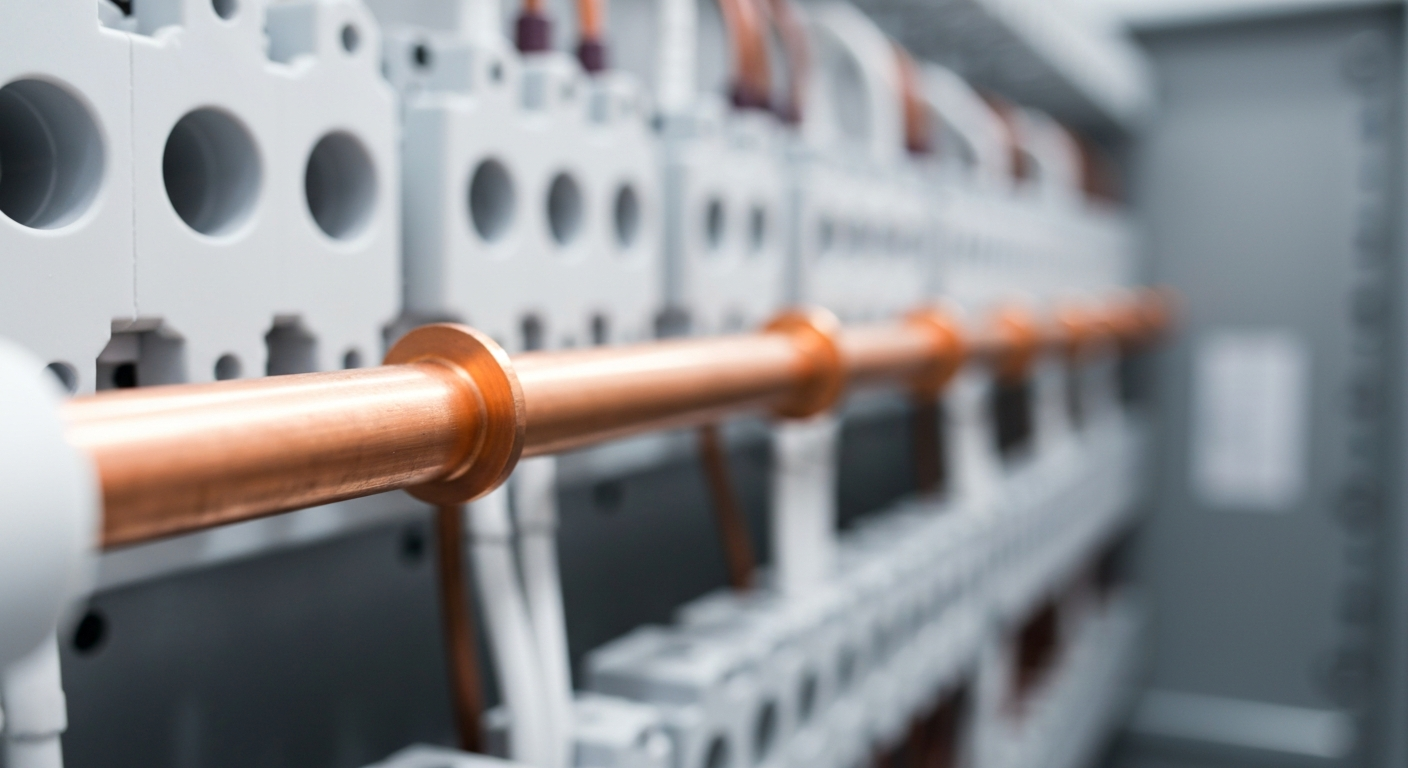
Navigating NEC 250 Part II: System Grounding Explained
Navigating NEC 250 Part II: System Grounding Explained
NEC 250 Part II provides the foundational rules for system grounding in electrical installations, a critical concept for every master and journeyman electrician. This section of the nec code book dictates which AC systems must be connected to earth and specifies the exact location for this connection. Its primary goals are to limit voltage surges from lightning or line faults and to stabilize the voltage to ground during normal operation. Understanding system grounding is essential for creating an effective ground-fault current path, which is vital for clearing faults and preventing hazards. Key components covered in this part include the grounded conductor, the grounding electrode conductor, and rules for both grounded systems and ungrounded systems. Properly applying these principles is fundamental to safety and code compliance, forming the basis for more advanced topics like bonding and managing objectionable current.
Understanding System Grounding: The Core of NEC 250 Part II
Article 250 of the National Electrical Code is dedicated entirely to grounding and bonding. While often discussed together, it’s crucial to understand their distinct roles. Grounding is the act of connecting an electrical system to the earth itself, primarily for overvoltage protection. Bonding, on the other hand, is about connecting all metallic parts of the electrical system together to create a low-impedance path for fault current. You can learn more about this crucial distinction in our detailed guides on grounding versus bonding and an overview of Article 250. Part II of this article specifically focuses on system grounding—determining whether and how the power source itself is referenced to the earth.
Which Systems are Required to be Grounded? A Look at NEC 250.20
NEC 250.20 is the roadmap that tells electricians which AC systems must be grounded. The decision to ground a system is not optional; it is mandated by the code to ensure safety and stability. Grounding helps stabilize the voltage to earth under normal conditions and creates the low-impedance path necessary for overcurrent devices to operate quickly during a ground fault.
AC Systems: Grounded Systems vs. Ungrounded Systems
The code outlines specific voltage and system configurations that must be grounded. These typically include:
- Single-phase, 3-wire systems (like a standard residential 120/240V service).
- 3-phase, 4-wire, wye-connected systems (common in commercial buildings).
- 3-phase, 4-wire, delta-connected systems where the midpoint of one phase winding is used as a circuit conductor (high-leg delta).
Other parts of the NEC and referenced standards discuss systems that may be permitted to operate ungrounded in special industrial applications and list circuits or locations where grounding is restricted or addressed by separate rules. Understanding the difference between a grounded and ungrounded conductor is key to applying these rules correctly.
The Critical Components of System Grounding
Once it’s determined that a system must be grounded, several key conductors and jumpers come into play. Each has a specific function in creating a safe and compliant installation, from the service point to the breaker panel.
The Grounded Conductor and its Role
The grounded conductor (usually the neutral in residential and many commercial systems) is the current-carrying conductor that is intentionally connected to earth. It serves two purposes: it acts as the return path for normal circuit current in many systems, and under fault conditions, it becomes a critical part of the ground-fault current path. It’s essential to properly identify and terminate this conductor as detailed in our guide, what is a grounded conductor?.
Grounding Electrode Conductor Explained
The grounding electrode conductor (GEC) is the wire that connects the grounded conductor at the service to the grounding electrode system (e.g., a grounding rod, concrete-encased electrode, or water pipe). Its sole purpose is to connect the electrical system to the earth. It does not carry current under normal operating conditions. The sizing of the GEC is determined by NEC Table 250.66, based on the size of the ungrounded service-entrance conductors.
The Main Bonding Jumper and Supply-Side Bonding Jumper
Bonding is what truly makes a grounding system effective for clearing faults.
- The main bonding jumper (MBJ) is a connection made at the service disconnecting means. It connects the grounded conductor to the equipment grounding conductor and the enclosure. This jumper creates the vital link that allows fault current to return to the source, tripping the breaker or blowing the fuse.
- The supply-side bonding jumper (SSBJ) performs a similar function but is used on the supply side of the service disconnect. It ensures that any metallic raceways or enclosures on the line side of the service are bonded together and connected back to the grounded conductor.
Step-by-Step: Establishing an Effective Ground-Fault Current Path (NEC 250.24)
For service-supplied systems, NEC 250.24 outlines the requirements for grounding service-entrance conductors. Creating an effective ground-fault current path is the ultimate safety goal. This path is an intentionally created, low-impedance circuit designed to carry fault current from the point of a fault back to the electrical source, enabling overcurrent devices to operate.
- Identify the Grounded Conductor: At the service, identify the conductor to be grounded per NEC 250.24(C). This conductor must be routed with the ungrounded conductors to the service disconnecting means.
- Install the Main Bonding Jumper: At the service disconnect, install the main bonding jumper to connect the grounded conductor to the equipment grounding conductor(s) and the disconnect enclosure, as required by NEC 250.24(D). This is the only point in the system where this bond should be made to prevent objectionable current from flowing on grounding conductors.
- Connect the Grounding Electrode Conductor: Connect the GEC from the grounded service conductor to the grounding electrode system. According to NEC 250.24(A), this connection can be made at any accessible point from the load end of the service drop or lateral up to and including the service disconnect terminal.
- Bond Supply-Side Equipment: Use a supply-side bonding jumper to bond any conductive materials that enclose the service-entrance conductors, ensuring they are connected to the grounded conductor at the service.
- Verify the Path: The completed path ensures that if an ungrounded conductor faults to a metallic enclosure, the current will flow through the equipment grounding conductor, across the main bonding jumper, onto the grounded (neutral) conductor, and back to the source, completing the circuit and clearing the fault.
Properly executing these steps is a fundamental skill for any professional engaged in electrician training or seeking to advance their career as a journeyman or master electrician.
Special Cases: Separately Derived Systems and High-Impedance Grounding
NEC 250 Part II also covers more complex scenarios that electricians encounter in commercial and industrial settings.
What is a Separately Derived System?
A separately derived system is a power source with no direct electrical connection to the conductors of another system. The most common examples are transformers, generators, and some solar PV systems. According to NEC 250.30, these systems must be grounded and bonded at the source. Instead of a main bonding jumper, they require a system bonding jumper to connect the grounded conductor to the equipment grounding conductor and the system’s enclosure. This ensures an effective ground-fault current path is established for that specific system.
High-Impedance Grounded Neutral Systems
Found in industrial facilities, high-impedance grounded neutral systems are permitted for 3-phase AC systems from 480V to 1,000V under specific conditions outlined in NEC 250.36. A high-impedance resistor is inserted between the system neutral and the grounding electrode. This setup limits the ground-fault current to a very low level (typically under 10 amps), which allows the process to continue running while the fault is located and addressed. The 2023 NEC made important clarifications to these systems, which you can learn about in our course on how the 2023 NEC updates impedance grounding.
Correctly applying the rules for system grounding is non-negotiable for safety and compliance. Mastering Article 250 is a hallmark of a true professional. Become a grounding and bonding expert. Explore our Article 250 courses and other online electrical courses to sharpen your skills.
Key Takeaways on System Grounding
- Purpose: System grounding (connecting to earth) is done to limit voltage from lightning and line surges and to stabilize voltage during normal operation.
- Mandatory vs. Permitted: NEC 250.20 dictates which AC systems must be grounded. Grounding is not an optional choice for these systems.
- Critical Bond: The main bonding jumper (or a system bonding jumper for separately derived systems) is the key link that creates the effective ground-fault current path.
- One Connection: The neutral-to-ground bond should only occur at the service disconnect (or at the source of a separately derived system) to prevent objectionable current.
- Separate Roles: The Grounding Electrode Conductor (GEC) connects the system to the earth, while the Equipment Grounding Conductor (EGC) and bonding jumpers provide the path to clear faults.
Frequently Asked Questions about NEC 250 Part II
What is the difference between a main bonding jumper and a system bonding jumper?
A main bonding jumper is used at the service disconnect of a service-supplied system to connect the grounded conductor and the equipment grounding conductor. A system bonding jumper performs the same function but is used at the source of a separately derived system, like a transformer or generator.
What is a corner-grounded delta system?
A corner-grounded delta system is a 3-phase system where one of the phase conductors is intentionally grounded. It is less common today but may be found in older industrial facilities. NEC 250.20 and related notes describe how different 3‑phase configurations are treated for grounding; whether a particular delta variant is required or permitted to be grounded depends on its configuration and voltage.
Does a grounding rod help clear a ground fault?
No, a grounding rod or the earth itself generally has too high of an impedance to allow enough current to flow to trip a standard breaker or fuse. The purpose of the grounding electrode system is overvoltage protection and voltage stabilization. The effective ground-fault current path, created by equipment grounding conductors and bonding jumpers, is what clears a fault.
What causes objectionable current and how is it prevented?
Objectionable current is current that flows on the equipment grounding conductors and other metallic paths during normal operation. It is typically caused by having multiple neutral-to-ground bonds in a system (e.g., bonding the neutral in a subpanel). This creates parallel paths for neutral current to return to the source. It is prevented by ensuring the grounded (neutral) conductor is only connected to the grounding system at one single point: the service disconnect or the source of a separately derived system.
Continuing Education by State
Select your state to view board-approved continuing education courses and requirements:

Disclaimer: The information provided in this educational content has been prepared with care to reflect current regulatory requirements for continuing education. However, licensing rules and regulations can vary by state and are subject to change. While we strive for accuracy, ExpertCE cannot guarantee that all details are complete or up to date at the time of reading. For the most current and authoritative information, always refer directly to your state’s official licensing board or regulatory agency.
NEC®, NFPA 70E®, NFPA 70®, and National Electrical Code® are registered trademarks of the National Fire Protection Association® (NFPA®)
You may also like

Colorado Electrical Licensing Requirements and Reciprocity Guide
Standby Generators in DE: Navigating Coastal Storm Regulations

 Login with Google