
A Lineman’s Guide to OSHA 1910.269: Key Safety Rules
A Lineman’s Guide to OSHA 1910.269: Key Safety Rules
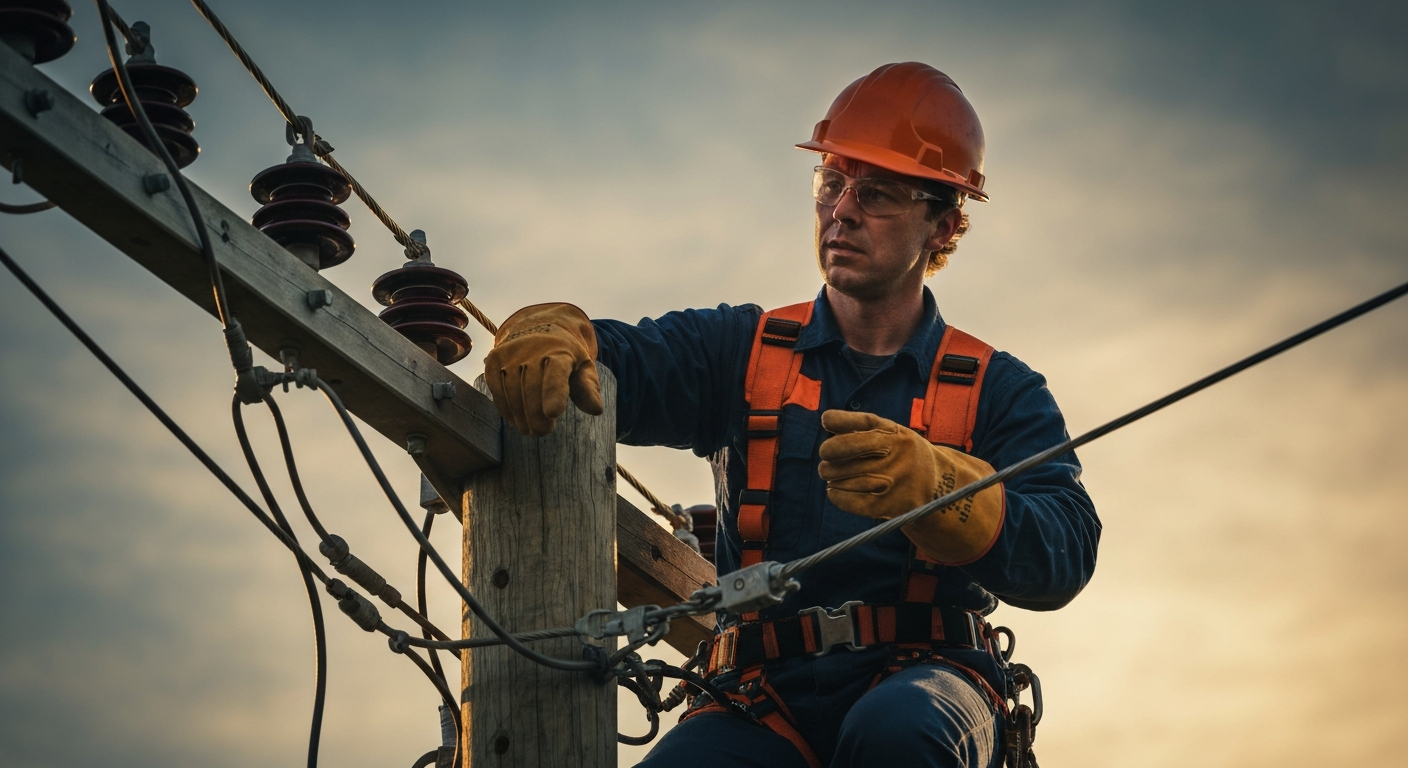
For any journeyman electrician or master electrician working with high-voltage systems, a thorough understanding of OSHA 1910.269 is non-negotiable. This standard is the definitive rulebook for the operation and maintenance of electric power generation, transmission, and distribution systems. This guide to OSHA 1910.269 provides a focused overview of the most critical safety protocols that every lineman must master. Key components include rigorous qualified employee training, precise lockout/tagout (LOTO) procedures for de-energizing lines, and strict adherence to minimum approach distance (MAD) to prevent arc flash incidents. Mastery of these electrical safety-related work practices, including the use of appropriate personal protective equipment (PPE) for electricians and establishing an equipotential zone, is fundamental to preventing injury or death when working on or near energized equipment.
What is OSHA 1910.269?
OSHA 29 CFR 1910.269 is the federal standard that covers the operation and maintenance of electric power generation, control, transformation, transmission, and distribution lines and equipment. Its purpose is to provide a comprehensive set of rules designed to protect employees from the unique and severe hazards present in this line of work. The standard applies to the operation and maintenance of electric power generation, transmission, and distribution systems and focuses on work performed by “qualified employees” — workers who have been trained and evaluated by their employer to perform high-voltage power system tasks — distinguishing this high-hazard power work from the general electrical work covered by other OSHA regulations. It addresses everything from initial training and job planning to specific work practices for energized and de-energized lines, substation safety, and the use of specialized protective equipment.
The Core of 1910.269: Qualified Employee Training
At the heart of OSHA 1910.269 is the concept of the “qualified employee.” A qualified employee is defined as one who is knowledgeable in the construction and operation of electric power equipment and has received safety training on the associated hazards. This goes beyond the typical electrician training required for residential or commercial work. For a lineman, whether a journeyman electrician or a master electrician, this means they must be trained and competent in several specific areas:
- Distinguishing exposed live parts from other parts of electrical equipment.
- Determining the nominal voltage of exposed live parts.
- Understanding the minimum approach distances (MAD) corresponding to the voltages they will be exposed to and how to maintain those distances.
- Proper use of special precautionary techniques, personal protective equipment (PPE), insulated tools, and shielding materials.
- Recognizing electrical hazards and knowing the skills and techniques necessary to control or avoid them.
The employer is responsible for certifying that each employee has demonstrated proficiency in these work practices. This often involves a combination of classroom instruction, on-the-job training, and assessments; many organizations use third-party programs such as NCCER or employer-developed assessment plans to document competence and satisfy employer verification requirements under OSHA.
Job Safety Planning and Briefing: The First Line of Defense
Before any job begins, OSHA requires the person in charge to conduct a job briefing with all employees involved. This planning session is a critical step for electrical hazard recognition and mitigation. The briefing must cover, at a minimum:
- Hazards associated with the job.
- Work procedures to be used.
- Special precautions.
- Energy source controls (LOTO).
- Personal protective equipment (PPE) requirements.
A brief discussion may suffice for routine work, but a more detailed briefing is required for complex jobs or when the crew is unfamiliar with the task. This process is directly aligned with the principles outlined in NFPA 70E standards and recent updates have further emphasized the importance of a thorough job safety plan. The goal is to ensure every team member understands the hazards, including the potential for arc flash, and the exact procedures to be followed to maintain a safe work environment.
Controlling Hazardous Energy: Lockout/Tagout (LOTO) Procedures
Properly de-energizing transmission and distribution lines is one of the most important safety procedures in line work. The lockout/tagout (LOTO) procedures in OSHA 1910.269(d) are more complex than those for general industry because power systems often have multiple energy sources and the potential for stored energy or induced voltage. The process ensures that equipment is isolated from all energy sources and cannot be unexpectedly re-energized. While specifics vary, the sequence generally follows these steps:
- Notification: Inform all affected employees that the equipment will be shut down and de-energized.
- Shutdown: Shut down the equipment using established procedures.
- Isolation: Operate all energy isolating devices (e.g., disconnect switches, breakers) to isolate the equipment from its energy sources.
- Apply Lock/Tag: Authorized employees affix their personal lock or tag to each isolating device. In complex systems, a system operator may perform this function under a procedure that offers equivalent protection.
- Verify Isolation: Before starting work, the most critical step is to verify that the equipment is de-energized. This involves using a properly rated voltage detector to test for the absence of voltage.
Working On or Near Energized Parts: MAD and PPE
When de-energizing is not feasible, linemen must follow strict protocols for working near energized high voltage parts.
Understanding Minimum Approach Distance (MAD)
The Minimum Approach Distance (MAD) primarily specifies the safe distance for qualified employees approaching an exposed energized conductor, per the tables in OSHA 1910.269. Unqualified persons are required to maintain much greater distances and are restricted from the work area under sections like 1910.269(l)(2). For a qualified employee, it is the distance that must be maintained unless they are using proper insulating techniques (like rubber gloves or live-line tools). These distances, found in tables within the 1910.269 standard, are based on the system voltage, transient overvoltages, and environmental factors like altitude. Violating MAD can result in a catastrophic arc flash, making it a cornerstone of high-voltage safety.
Essential Personal Protective Equipment (PPE) for Electricians
When an arc flash hazard analysis determines that a risk exists, specialized PPE is mandatory. For a lineman, this includes:
- Flame-Resistant (FR) Clothing: This is the primary defense against the intense heat of an arc flash.
- Insulated Tools and Equipment: Tools rated for the specific voltage are required to prevent shock.
- Rubber Insulating Gloves with Leather Protectors: These are among the most critical pieces of PPE for preventing electric shock.
- Hard Hat, Safety Glasses, and Arc-Rated Face Shield or Hood.
- Fall Protection Systems: Given the nature of line work, robust fall arrest and work-positioning equipment is essential and must be inspected daily.
Grounding for Protection: Equipotential Zone and Bonding
When working on de-energized lines, there is always a risk the line could become accidentally re-energized. To protect workers, OSHA requires the creation of an equipotential zone (EPZ). Equipotential zone grounding involves placing temporary protective grounds, which must be capable of conducting the maximum fault current as required by 1910.269(n)(3), to connect the de-energized conductors to the structure (e.g., the pole or tower) and to each other. This ensures that if the line becomes energized, the worker and the conductive objects around them are all at the same electrical potential, preventing deadly current from flowing through the worker’s body. This answers the fundamental question of “bonding what is it?”—it is the act of connecting conductive components to equalize potential. A grounding rod may be part of the overall grounding scheme to connect the system to earth, but the EPZ protects the worker directly at the worksite.
How OSHA 1910.269, NFPA 70E, and the NEC Intersect
It’s important to understand how these three key documents work together.
- OSHA 1910.269: This is the law for electric power generation, transmission, and distribution work. Compliance is mandatory.
- NFPA 70E Standards: This consensus standard provides the “how-to” for electrical safety-related work practices. OSHA often references consensus industry standards such as NFPA 70E for guidance on best practices in implementing safety programs, especially concerning arc flash hazard analysis. A deep dive into what is NFPA 70E is crucial for safety managers.
- NEC Code Book: The National Electrical Code (NEC) primarily covers the proper installation of electrical systems and equipment. While 1910.269 governs maintenance and operation, the principles in the NEC are foundational for understanding how to improve worker safety around equipment from an installation perspective.
Key Takeaways for Linemen
- Training is Paramount: You are not a qualified employee until your employer certifies you have demonstrated proficiency in the specific hazards and procedures of high-voltage work.
- Plan Every Job: The pre-job briefing is a non-negotiable safety step to identify hazards and confirm procedures.
- Test Before You Touch: Never assume a line is de-energized. Always verify with a properly rated testing device as part of your LOTO procedure.
- Respect MAD: Know your minimum approach distances for the voltage you are working on and never violate them without proper insulation.
- Ground for Protection: Always establish an equipotential zone to protect against accidental re-energization.
- Wear Your PPE: Your FR clothing and other arc-rated gear are your last and most important line of defense against an arc flash.
Stay compliant and safe on the job. Master OSHA standards for line work.
Primary Sources
- OSHA Standard 1910.269 – Electric Power Generation, Transmission, and Distribution
- OSHA eTool: Electric Power Generation, Transmission, and Distribution
Frequently Asked Questions (FAQ)
What is the most important part of this guide to OSHA 1910.269?
The most critical concept is the requirement for qualified employee training. OSHA 1910.269 is built around the principle that only workers who have been trained and have demonstrated proficiency in the specific hazards of high-voltage work are permitted to operate in these environments. This includes understanding MAD, LOTO, and PPE requirements.
How does qualified employee training relate to substation safety?
Substation safety is a specialized area under 1910.269. Qualified employee training must cover the unique hazards of substations, such as sufficient access and working space, draw-out-type circuit breakers, and grounding schemes. Only employees trained for these specific environments are qualified to work within them.
What is the difference between bonding and equipotential zone grounding?
Bonding is the general act of connecting conductive parts to equalize electrical potential. Equipotential zone grounding is a specific application of bonding used in high-voltage work. It involves connecting all conductive objects in a worker’s immediate environment (conductors, the structure, etc.) so that if the system becomes energized, there is no hazardous difference in potential across the worker’s body.
Continuing Education by State
Select your state to view board-approved continuing education courses and requirements:

Disclaimer: The information provided in this educational content has been prepared with care to reflect current regulatory requirements for continuing education. However, licensing rules and regulations can vary by state and are subject to change. While we strive for accuracy, ExpertCE cannot guarantee that all details are complete or up to date at the time of reading. For the most current and authoritative information, always refer directly to your state’s official licensing board or regulatory agency.
NEC®, NFPA 70E®, NFPA 70®, and National Electrical Code® are registered trademarks of the National Fire Protection Association® (NFPA®)
You may also like
Colorado Electrical Licensing Requirements and Reciprocity Guide
Standby Generators in DE: Navigating Coastal Storm Regulations

 Login with Google