
How to Pass the CDL General Knowledge Test
How to Pass the CDL General Knowledge Test: A Guide for Electricians
To pass the CDL General Knowledge test, many states require a minimum score of 80% (commonly 40 out of 50 questions), but the required passing score and the exact number of questions are set by each state — check your state DMV or licensing authority for the official passing criteria. Success requires dedicated study of your state’s official CDL manual, focusing on vehicle inspection, safe driving techniques, and cargo transport. For electricians, obtaining a Commercial Driver’s License is becoming crucial; whether you are a journeyman electrician operating a service vehicle or a master electrician overseeing a fleet, understanding CDL for electricians is key to career advancement. Many roles now involve operating vehicles that meet bucket truck CDL requirements, making this certification essential. A growing number of employers prefer to hire electricians with a CDL, as it demonstrates a higher level of professionalism and safety awareness, especially for roles involving heavy equipment or utility work.
Why a CDL is Becoming Essential for Electricians
In today’s competitive electrical trade, technical skill is only part of the equation. Many employers, particularly in the utility and industrial sectors, now require or prefer electricians who hold a Commercial Driver’s License (CDL). This trend stems from the nature of the equipment and vehicles central to the trade. For a journeyman electrician vehicle operation often involves more than a standard pickup truck. Service vehicles are frequently loaded with heavy conduit, switchgear, and tools, pushing them into a commercial vehicle weight class. For master electricians and contractors, ensuring electrical contractor fleet compliance is a major responsibility, and having a team of licensed drivers is a critical part of risk management.
This requirement applies across the board, from apprentices to seasoned professionals. The ability to legally operate larger vehicles opens up opportunities in specialized fields like utility services, infrastructure projects, and large-scale commercial installations. Holding a CDL signals to an employer that you are a versatile and responsible professional, capable of handling not just the electrical work but also the logistics required to get the job done safely.
Decoding CDL Requirements for Electrical Work
Navigating the world of commercial licensing can seem complex, but for most electricians, the requirements are straightforward. The primary factor determining the need for a CDL is the vehicle’s Gross Vehicle Weight Rating (GVWR) for electrical trucks.
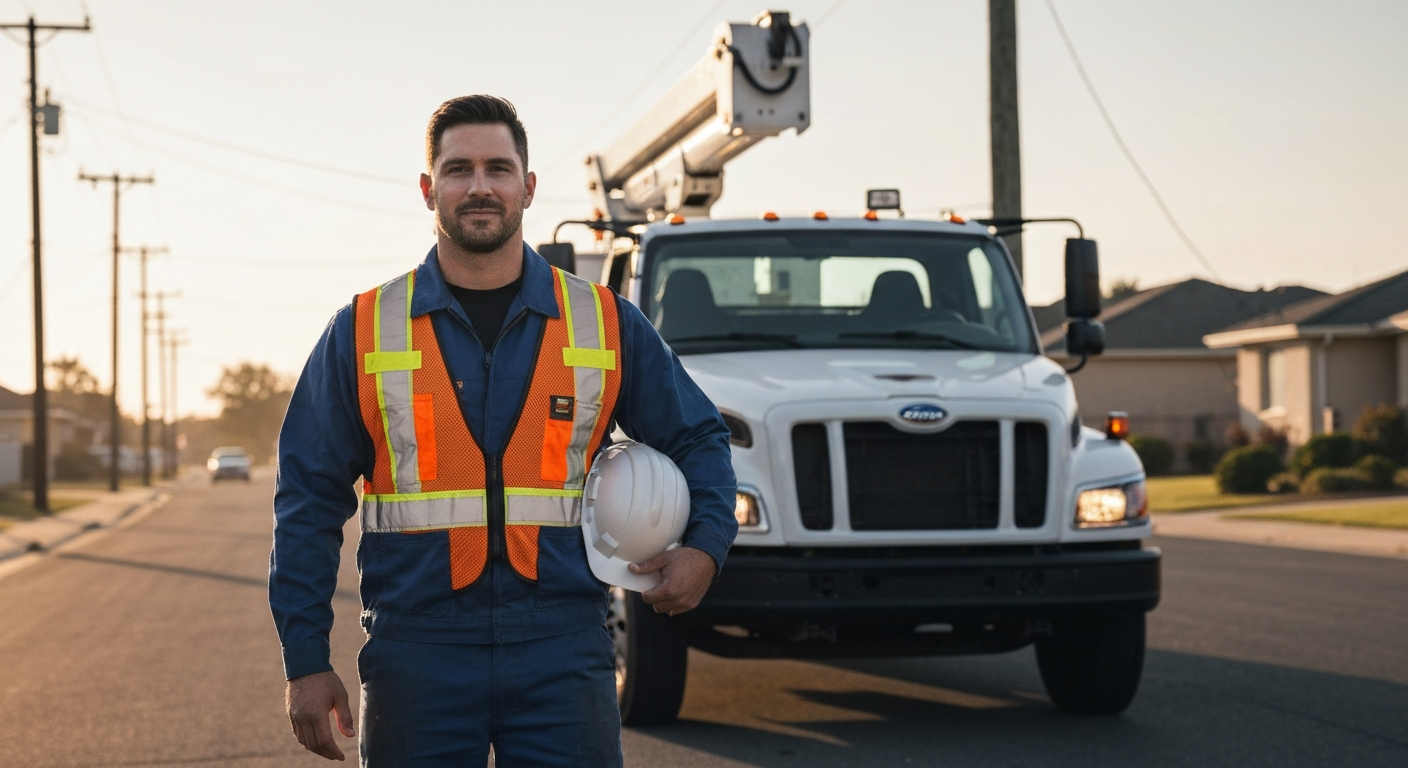
- Class B CDL: Many electricians will find a Class B CDL is the most relevant. A Class B CDL for electricians is typically required for a single vehicle with a GVWR of 26,001 pounds or more. This category includes many larger service trucks, boom trucks, and bucket trucks, though not all bucket trucks exceed that threshold.
- Class A CDL: This license is for combination vehicles, such as a truck pulling a trailer, where the combined GVWR exceeds 26,001 pounds and the trailer’s GVWR is over 10,000 pounds. This might be necessary for jobs requiring the transport of large generators, transformers, or other heavy equipment.
Beyond the license class, endorsements and restrictions are important. For example, an air brake knowledge test is commonly required when a vehicle uses an air brake system; depending on the state, failing that test may place an air-brake restriction on your license rather than an “endorsement.” Another endorsement to consider is HazMat. It is required when you transport materials that meet placarding thresholds under the DOT Hazardous Materials Regulations. Lithium batteries are regulated as hazardous materials and may require placarding and a HazMat endorsement depending on the battery type, quantity, and packaging — do not assume an exemption applies; consult the DOT/PHMSA rules for the specific battery and shipment conditions.
What to Expect on the CDL General Knowledge Test
The first major hurdle to obtaining your CDL is the General Knowledge test. This written exam is designed to ensure you have the foundational knowledge to operate a commercial vehicle safely. While the exact number of questions can vary by state, many tests use about 50 multiple-choice questions. Many states use an 80% passing threshold (commonly 40 correct answers), but the exact passing score and question count are state-determined — check your state DMV for the official requirements. Don’t underestimate its difficulty; proper preparation is essential.
For professionals like linemen, passing the CDL test for lineman work is often a necessary career step. The knowledge tested is directly applicable to daily tasks, from pre-trip inspections to navigating challenging road conditions. The exam covers a broad range of topics, and a solid understanding is necessary, especially for operating specialized equipment. The principles of CDL general knowledge for boom trucks and other heavy vehicles are all rooted in the core concepts of this exam.
Core Knowledge Areas for Electrical Professionals
While the CDL manual covers everything, electricians should pay special attention to these areas:
- Vehicle Inspection: A deep understanding of how to conduct a thorough pre-trip, en-route, and post-trip inspection is paramount. This is especially true for the proper vehicle inspection for electrical service trucks, which may have unique components like aerial lifts or power take-offs (PTOs).
- Vehicle Control: This includes managing space, speed, and sightlines, as well as understanding how vehicle weight and height affect maneuverability.
- Transporting Cargo Safely: This section is critical. Electricians are responsible for securing heavy and often expensive equipment. The exam covers proper loading, balancing, and securing techniques relevant to hauling electrical equipment regulations.
- Safe Driving Rules: This covers everything from distracted driving and hazard awareness to handling emergencies on the road.
A 5-Step Strategy to Pass the CDL General Knowledge Test
Passing the test requires more than just reading the manual. It requires a strategic approach similar to the discipline needed during electrician training or when studying the NEC code book. Follow these steps to maximize your chances of success.
- Obtain and Study the Official CDL Manual: Your state’s official CDL driver’s manual is the ultimate source of truth. Do not rely on third-party guides as your primary resource. Read it cover-to-cover at least once.
- Focus on High-Stakes Sections: Dedicate extra study time to Vehicle Inspection, Transporting Cargo Safely, and Air Brakes (if applicable). These sections are dense with technical information and often make up a significant portion of the exam.
- Utilize Quality Online Practice Tests: After studying the manual, use online practice tests to gauge your knowledge. These tests help you get accustomed to the question format and identify your weak areas. Many platforms offer tests that mimic the real exam’s structure.
- Develop a Consistent Study Routine: Treat studying for your CDL like an apprenticeship task or preparing for your NCCER certification. Set aside specific times each day or week to study chapters and take practice quizzes. Consistency is more effective than cramming.
- Simulate Real Test Conditions: Before your exam date, take several full-length, timed practice tests. This builds mental stamina and ensures you can answer all questions accurately within the allotted time.
By following this structured plan, you will be well-prepared to earn your permit. Ready to take the next step? Get your CDL permit. Study the topics you need for the knowledge test and expand your career opportunities.
Advanced Preparation for Your Electrical Career
For those just starting at an electrician school or as an apprentice, pursuing a commercial driver’s license for electrical apprentices early on can provide a significant career advantage. It makes you a more valuable new hire and sets the stage for future advancement. Specialized electrical utility truck driver training can further enhance your qualifications, making you a prime candidate for high-demand roles.
Even if you’re not planning to immediately drive a Class B vehicle, the knowledge gained from studying for the CDL is invaluable. It enhances your understanding of vehicle safety, compliance, and professional responsibility—qualities that every successful master electrician embodies.
Frequently Asked Questions (FAQ)
Do I need a CDL as an electrical apprentice?
While not always required on day one, obtaining a commercial driver’s license for electrical apprentices is a highly strategic career move. It makes you more versatile to employers and can lead to more opportunities and higher pay much earlier in your career, especially if the company’s work involves vehicles over 26,001 lbs GVWR.
What are the typical bucket truck CDL requirements?
Many bucket truck CDL requirements mandate at least a Class B license because many bucket trucks exceed the 26,001-pound GVWR threshold; however, some smaller bucket trucks are below that threshold and do not require a CDL. Additionally, because many larger bucket trucks use air brakes, an air brake knowledge test (and resulting endorsement or restriction depending on the state) is commonly required. Some states may have additional requirements related to the aerial lift itself — check your state regulations and the vehicle’s GVWR and equipment documentation.
Are there specific utility service vehicle regulations I should know?
Yes, beyond standard traffic laws, utility service vehicle regulations often involve specific rules for worksite safety and vehicle operation. Some utility drivers may qualify for narrowly defined exemptions under FMCSA rules in certain emergency or utility-response conditions, but exemptions are limited and specific — consult FMCSA guidance and your state’s enforcement policies. Worksite safety, including the proper placement of cones and signage, is governed by standards like the Manual on Uniform Traffic Control Devices (MUTCD) and OSHA regulations. The use of amber flashing lights is subject to both federal guidance and state laws, which are crucial for compliance. Check your state’s CDL manual and the FMCSA/PHMSA regulations for details.
Continuing Education by State
Select your state to view board-approved continuing education courses and requirements:

Disclaimer: The information provided in this educational content has been prepared with care to reflect current regulatory requirements for continuing education. However, licensing rules and regulations can vary by state and are subject to change. While we strive for accuracy, ExpertCE cannot guarantee that all details are complete or up to date at the time of reading. For the most current and authoritative information, always refer directly to your state’s official licensing board or regulatory agency.
NEC®, NFPA 70E®, NFPA 70®, and National Electrical Code® are registered trademarks of the National Fire Protection Association® (NFPA®)
You may also like

Colorado Electrical Licensing Requirements and Reciprocity Guide
Standby Generators in DE: Navigating Coastal Storm Regulations

 Login with Google