
How to Check and Adjust Slack Adjusters for the CDL Test
How to Check and Adjust Slack Adjusters for the CDL Test
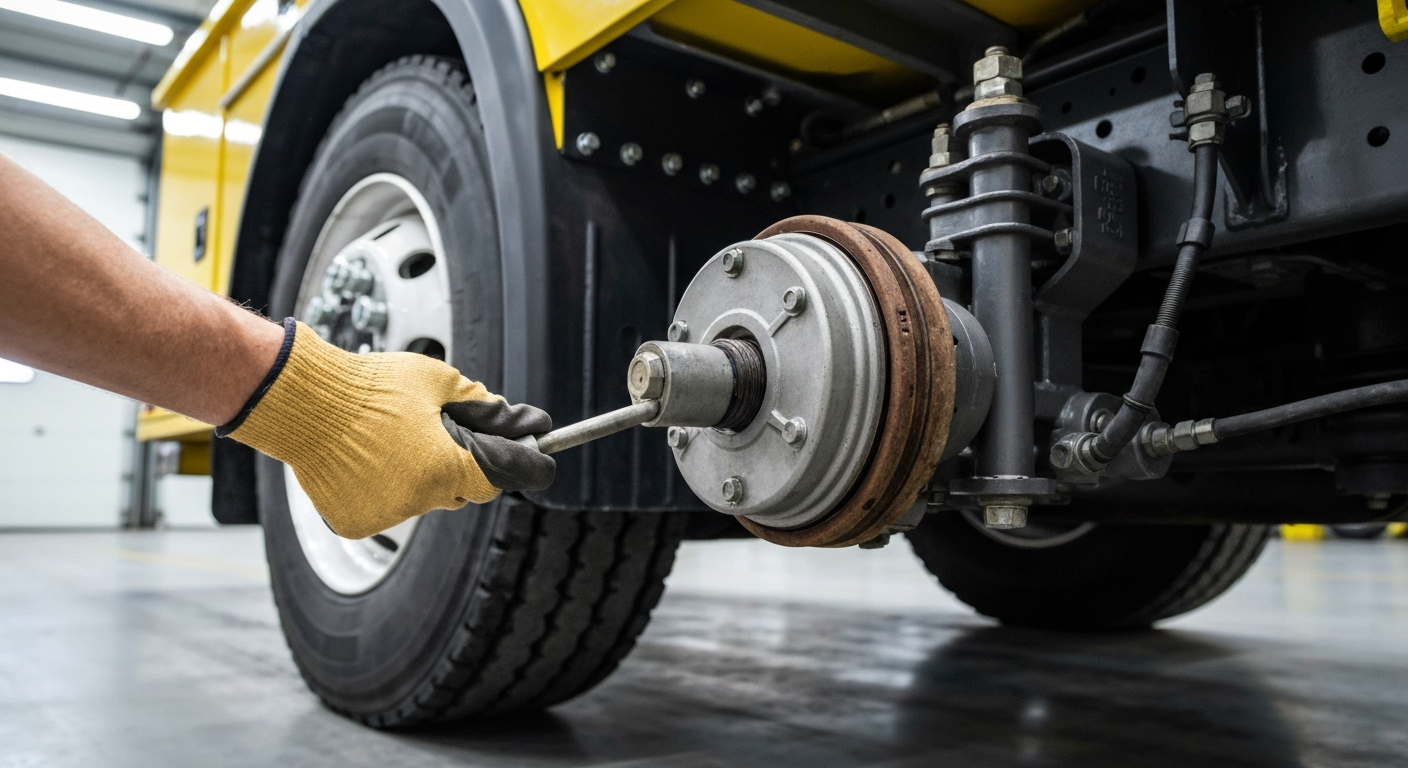
To properly check and adjust slack adjusters for the CDL test, you must first identify whether they are automatic or manual. For many modern utility vehicles, which are equipped with automatic slack adjusters, the process is an inspection, not an adjustment. With the vehicle chocked and air pressure built, release the parking brakes and pull firmly on the pushrod. It should not move more than about one inch when checked by hand — a common pre-trip guideline. If it does, this indicates a potential problem requiring a mechanic, as the automatic slack adjuster function may be failing. Manually adjusting an automatic slack adjuster is a dangerous practice that masks underlying issues. This skill is a critical component of the Class B CDL air brake test procedure and is essential for any journeyman lineman or electrician operating heavy equipment. Proper brake checks are a cornerstone of utility fleet safety compliance and a key part of any comprehensive electrician training program involving mobile equipment.
Why a CDL is Essential for the Modern Electrician
For many professionals in the electrical trade, from a journeyman electrician to a master electrician, career growth extends beyond the job site and into the driver’s seat. Specialized work in the utility, commercial, and industrial sectors often requires operating vehicles with a GVWR of 26,001 pounds or more, making a Commercial Driver’s License (CDL) a common legal requirement. The days of every service vehicle being a simple van are long gone. Today, tasks often demand the use of a bucket truck, digger derrick, or boom truck, all of which typically necessitate at least a Class B CDL. This is especially true for roles like a power lineman, where journeyman lineman CDL requirements are standard for employment.
Holding a CDL demonstrates an advanced level of professionalism and a commitment to safety, aligning with the rigorous standards taught in any reputable electrician school or NCCER curriculum. It opens doors to higher-paying roles and makes you a more versatile asset to any company focused on utility fleet safety compliance. For electricians looking to advance, pursuing a CDL is as crucial as mastering the latest edition of the NEC code book.
Understanding Slack Adjuster Types: Automatic vs. Manual
The core of the air brake system check revolves around slack adjusters, which transmit force from the brake chamber to the S-cam, pushing the brake shoes against the drum. Understanding the two types is fundamental for any driver, especially when preparing for the CDL test.
The Automatic Slack Adjuster Function
Many commercial vehicles manufactured since the 1990s are equipped with automatic slack adjusters (ASAs). Their purpose is to automatically compensate for brake lining wear, maintaining a constant, safe distance between the brake shoe and drum. An ASA is designed to self-adjust during full, firm service brake applications rather than by hand. For the driver and CDL applicant, your job is not to adjust it but to verify it is working correctly. Manually adjusting an ASA can mask underlying issues with the foundation brake system and is strongly discouraged; it may be considered improper maintenance and could contribute to a vehicle being placed out-of-service during an inspection.
Manual Slack Adjuster Maintenance
While increasingly rare, manual slack adjusters may still be found on older equipment or specialized trailers. These require periodic manual adjustment to compensate for lining wear. The adjustment process involves using a wrench to turn a worm gear, which rotates the S-cam and brings the shoes closer to the drum. While knowledge of manual slack adjuster maintenance is valuable, the CDL test and modern pre-trip inspections primarily focus on the inspection of automatic systems, as they represent the majority of vehicles on the road.
The Official Pre-Trip Inspection: How to Check Slack Adjusters
The Class B CDL air brake test procedure for checking slack adjusters is a critical part of the vehicle inspection test. This process is identical whether you are conducting a bucket truck pre-trip inspection or inspecting a large electrical service truck. It is a test of applied knowledge in utility vehicle air brakes.
Follow these steps precisely:
- Secure the Vehicle: Ensure the vehicle is on level ground, the transmission is in neutral, and the wheels are securely chocked.
- Build Air Pressure: Start the engine and let the air compressor build the system pressure to its normal operating range (governor cut-out varies by vehicle, commonly around the 120 psi area).
- Release the Brakes: Shut off the engine, turn the key to the “on” position, and then release the parking brakes (push in the yellow and red knobs). This action uses air pressure to overcome the springs and release the parking brakes, allowing you to check for excessive free play.
- Check the Pushrod Travel: Go to the brake chamber you are inspecting. Pull firmly by hand on the slack adjuster and pushrod assembly.
- Measure the Travel: Observe the amount of movement, or “free play,” in the pushrod. The “about 1 inch” rule is a common guideline for a pre-trip manual check taught in many CDL training manuals, but it is a quick driver-level check rather than a regulatory measurement. The FMCSA regulation (49 CFR part 393) addresses brake adjustment and measurement requirements; maximum allowable pushrod travel depends on brake chamber size and manufacturer specifications, and precise regulatory measurement techniques and limits should be confirmed with the regulation text and the brake manufacturer.
- Identify a Problem: If the pushrod moves more than an inch by hand, the automatic slack adjuster may not be functioning correctly or there may be a problem in the foundation brake components. This is a serious safety concern — do not drive the vehicle until repaired. On a CDL test, you should be prepared to identify and explain this as a defect.
Proper brake adjustment is critical for safety. Learn how to check it.
Brake Checks and Utility Fleet Safety Compliance
For companies managing a fleet of service vehicles, a robust electrical service truck maintenance program is paramount. Brake-related violations are consistently among the top reasons vehicles are placed out-of-service during roadside inspections. The Commercial Vehicle Safety Alliance (CVSA) reports that brake-related violations are among the most common reasons vehicles are placed out-of-service during Brake Safety Week campaigns. This highlights a critical area of focus for any professional involved in heavy equipment electrical and mechanical repair or fleet management.
A failed brake check not only results in fines and downtime but also poses a significant safety risk. For a journeyman electrician operating a high-reach boom truck, brake reliability is just as important as electrical safety protocols. This is why comprehensive mobile equipment electrician training must include detailed modules on vehicle mechanics and inspections, reinforcing the non-negotiable standards of DOT regulations.
Key Takeaways for Checking Slack Adjusters
- Many modern trucks used by electricians, including the power lineman vehicle inspection for digger derricks and bucket trucks, have automatic slack adjusters.
- Your job as a driver is to check, not adjust, automatic slack adjusters. Excessive pushrod travel (over 1 inch by hand) indicates a defect that requires a qualified mechanic.
- Never manually adjust an automatic slack adjuster to pass a pre-trip inspection. This is a dangerous practice that masks a deeper mechanical fault.
- The slack adjuster check is a mandatory part of the CDL air brake test and a daily responsibility for any commercial driver.
- Proper brake system knowledge is a key part of both CDL for electricians training and broader utility fleet safety compliance programs.
Frequently Asked Questions (FAQ)
What is the correct procedure to check and adjust slack adjusters on a boom truck?
The procedure is to check, not adjust. For a modern boom truck brake system with automatic slack adjusters, you must chock the wheels, build air pressure to full, release the parking brakes, and then manually pull on the pushrod. If it travels more than one inch by hand, it has failed the pre-trip driver-level inspection and needs mechanical repair. Do not attempt to manually adjust it.
As an electrician, do I really need a CDL for my electrical service truck?
It depends on the vehicle’s Gross Vehicle Weight Rating (GVWR). If your electrical service truck maintenance duties include driving a vehicle with a GVWR of 26,001 pounds or more, such as a large bucket truck or digger derrick, then yes, a Class B CDL is typically required by law. This is a common requirement for a journeyman lineman or advanced field electrician.
What’s the difference between an automatic slack adjuster function and manual adjustment?
The automatic slack adjuster function is an internal mechanism that automatically maintains the proper brake stroke as linings wear. It works during full, firm brake applications. Manual slack adjuster maintenance, on the other hand, requires a technician to physically turn a bolt on the adjuster to move the brake shoes closer to the drum. The two are not interchangeable.
How does the air brake test relate to overall utility fleet safety compliance?
The air brake test is a fundamental part of utility fleet safety compliance and the federal DOT air brake inspection for utility trucks. Because brake failures are a leading cause of accidents and out-of-service violations, demonstrating proficiency in this check is essential for both individual driver safety and a company’s safety rating.
Continuing Education by State
Select your state to view board-approved continuing education courses and requirements:

Disclaimer: The information provided in this educational content has been prepared with care to reflect current regulatory requirements for continuing education. However, licensing rules and regulations can vary by state and are subject to change. While we strive for accuracy, ExpertCE cannot guarantee that all details are complete or up to date at the time of reading. For the most current and authoritative information, always refer directly to your state’s official licensing board or regulatory agency.
NEC®, NFPA 70E®, NFPA 70®, and National Electrical Code® are registered trademarks of the National Fire Protection Association® (NFPA®)
You may also like
Colorado Electrical Licensing Requirements and Reciprocity Guide
Standby Generators in DE: Navigating Coastal Storm Regulations

 Login with Google