
Identifying and Mitigating Hazards in Electrical Substations
The Unseen Dangers: Core Electrical Hazards in Substations
While the hum of transformers is a constant reminder of the immense power within a substation, the most severe dangers are often invisible. Electrical energy is unforgiving, and understanding the primary electrical hazards is the first step toward a safe work environment.
High Voltage, Step and Touch Potential
The defining characteristic of a substation is the presence of high voltage electrical equipment. Direct contact with energized components is almost instantly fatal. However, even proximity can be deadly. A phenomenon known as step and touch potential is a critical hazard during ground fault conditions. When a fault occurs, current flows into the earth and creates a voltage gradient across the ground surface.
- Step Potential is the voltage difference between the feet of a person standing near an energized object. A large enough voltage difference can cause a lethal current to flow through the body.
- Touch Potential is the voltage difference between an energized object (like a switchgear cabinet or fence) and the feet of a person in contact with it. This can send a deadly current through the arm and torso.
The design of a proper substation grounding grid is engineered to minimize these potential differences, but electricians should always be aware of this risk, especially during wet conditions which lower ground resistance.
Arc Flash and Arc Blast: The Violent Threat
An arc flash is a violent, explosive release of energy caused by an electrical fault. An arc flash is a violent, explosive release of energy caused by an electrical fault. It can produce temperatures reaching tens of thousands of degrees Fahrenheit (commonly cited up to about 35,000 °F), a blinding flash of light, and a concussive blast wave. The severity of a potential arc flash is determined through an Arc flash analysis, a study that calculates the potential incident energy calculation at various points in an electrical system. The methodology for this analysis is detailed in IEEE 1584, Guide for Performing Arc-Flash Hazard Calculations, and NFPA 70E requires employers to evaluate arc-flash hazards and implement appropriate controls and PPE selection based on an incident energy assessment. This analysis is essential for selecting the appropriate personal protective equipment (PPE) for electricians. Without this data, electricians are working blind to the true level of risk. The requirements for arc flash hazard warnings are continually updated, and staying current with standards like the 2023 NEC is crucial.
Beyond Shock and Arc: Secondary Substation Hazards
While electrical hazards are paramount, a substation environment contains numerous other risks that demand attention from any professional performing electrician training or on-site work.
Mechanical and Physical Hazards
Substations contain heavy machinery and equipment. High-voltage switchgear maintenance can involve handling powerful springs and pressurized components that store significant mechanical energy. Other physical hazards include working at heights on structures, potential for falling objects, and confined space entry into vaults or trenches.
Chemical and Environmental Risks
Many pieces of equipment in a substation contain hazardous materials:
- Transformer Oil: Older transformers may contain oil with polychlorinated biphenyls (PCBs), a carcinogen regulated under the EPA’s Toxic Substances Control Act (TSCA) and 40 CFR Part 761. Proper transformer oil testing is required to identify its contents before handling, as specific protocols apply to PCB-containing equipment.
- SF6 Gas: Sulfur hexafluoride is an excellent insulating gas used in modern switchgear. While non-toxic in its pure state, it can form highly toxic byproducts (such as fluorinated sulfur compounds and hydrogen fluoride) when exposed to an electrical arc. Proper SF6 gas handling procedures are critical. The gas is also heavier than air and can displace oxygen in enclosed spaces, creating an asphyxiation hazard.
- Battery Banks: Large battery installations, used for backup power, can present several dangers. Lead-acid batteries can leak corrosive acid. During charging, they release hydrogen gas, which is highly explosive. Adequate battery room ventilation hazards must be addressed to prevent gas accumulation.
Other Noteworthy Dangers
Qualified electricians must also be aware of less obvious risks, including high levels of electromagnetic field (EMF) exposure, noise from equipment, and even pests like snakes or wasps that may nest inside equipment enclosures.
The Pillars of Substation Safety: Mitigation and Control
Identifying hazards is only half the battle. A systematic approach to mitigation, rooted in established safety protocols, is essential for protecting personnel.
Engineering Controls and Safe Work Practices
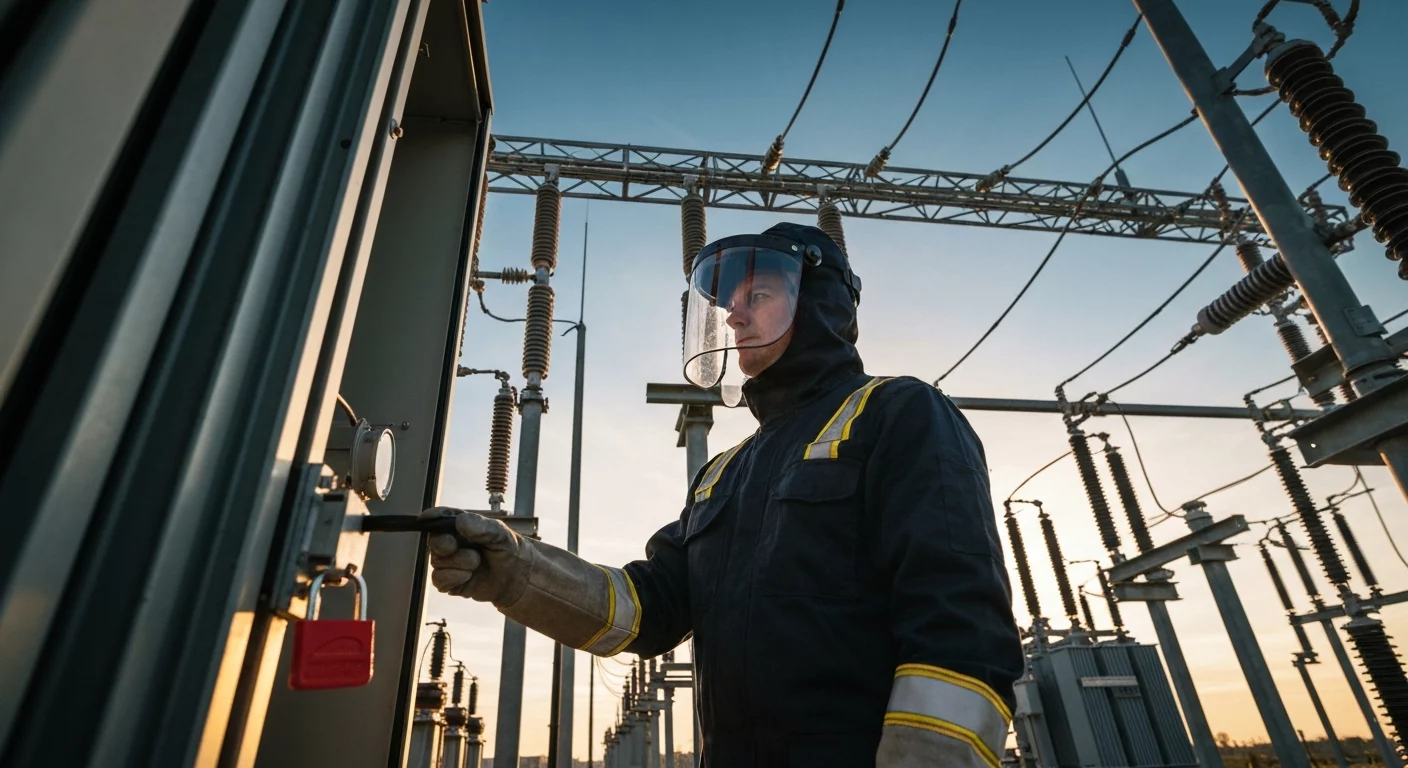
The most effective safety measures are engineered into the system. This includes proper equipment guarding, a well-designed substation grounding grid, and clear labeling. At the procedural level, nothing is more important than the control of hazardous energy. Robust Lockout/Tagout (LOTO) procedures are the backbone of electrical safety, ensuring that equipment is fully de-energized and cannot be unexpectedly re-energized during maintenance.
Step-by-Step Guide to a Safe Lockout/Tagout (LOTO) Procedure
Executing a proper LOTO is a foundational skill for any journeyman electrician or master electrician. While site-specific plans will vary, the core process follows these steps, adapted specifically from OSHA’s standards for general industry (29 CFR 1910.147) and the more detailed requirements for electric power systems (29 CFR 1910.269(l)):
- Preparation: Identify all energy sources (electrical, mechanical, pneumatic, etc.) feeding the equipment. Review the procedure and notify all affected employees of the impending shutdown.
- Shutdown: Turn off the equipment using its normal operating controls.
- Isolation: Physically operate all energy isolating devices (e.g., circuit breakers, disconnect switches) to isolate the equipment from its energy sources.
- Lock and Tag: Apply locks and tags to each isolating device. Each authorized employee working on the equipment should apply their own personal lock.
- Stored Energy Release: Relieve all stored energy. This may involve grounding conductors to dissipate static charge, discharging a capacitor bank discharge, or bleeding pneumatic lines.
- Verification: This is the most critical step. Attempt to start the equipment using its normal controls to verify that it is isolated and will not operate. Use a properly rated meter to test for the absence of voltage. This step ensures the lockout was successful and should be done by a qualified person using appropriate PPE and test instruments.
Only after verification is it safe to begin work. The process is reversed to restore energy, with the person who applied the lock being the only one authorized to remove it.
The Last Line of Defense: Personal Protective Equipment (PPE)
When hazards cannot be eliminated through engineering or administrative controls, personal protective equipment (PPE) for electricians becomes the last line of defense. The results of the Arc flash analysis dictate the required level of arc-rated (AR) PPE.
- Arc-rated clothing (shirts, pants, coveralls)
- Arc flash suit hoods or face shields with balaclavas
- Voltage-rated gloves with leather protectors
- Hard hats and safety glasses
- Electrical hazard (EH) rated footwear
The Regulatory Framework: Codes and Standards Every Electrician Must Know
Substation work is governed by a strict set of codes and standards designed to protect workers and the public.
- OSHA 29 CFR 1910.269: This is the primary OSHA standard covering the operation and maintenance of electric power generation, transmission, and distribution systems. It details requirements for training, job briefings, LOTO, and working on or near energized parts. See OSHA 29 CFR 1910.269 for the full standard.
- National Electrical Safety Code (NESC): Published by the IEEE, the NESC sets the ground rules for the practical safeguarding of persons during the installation, operation, and maintenance of electric supply and communication utility systems. It primarily covers utility-owned installations up to the service point. See IEEE C2 – NESC.
- National Electrical Code (NEC/NFPA 70): While the NESC covers the utility side, the nec code book generally covers premises wiring. This includes industrial facilities with their own substations. Understanding where NESC rules end and NEC rules begin is vital. NEC high-voltage requirements are detailed in their own articles.
The Role of Continuous Training and Advanced Testing
The complex environment of a substation demands more than just initial licensing. Continuous electrician training is essential to stay current on evolving technologies and safety standards. Both journeyman and master electricians benefit from advanced online electrical courses that cover specialized topics. Furthermore, advanced diagnostic techniques are a part of ensuring substation reliability and safety. This includes skills in high-voltage switchgear maintenance, circuit breaker and relay testing, using tools like a megohmmeter for insulation testing, and performing routine transformer oil testing.
Substation work requires the highest level of caution. Know the risks. Investing in your knowledge is investing in your safety and career longevity.
Primary Sources
- OSHA 29 CFR 1910.269 – Electric Power Generation, Transmission, and Distribution
- IEEE C2 – National Electrical Safety Code® (NESC®)
- NFPA 70E® – Standard for Electrical Safety in the Workplace®
- IEEE 1584-2018 – Guide for Performing Arc-Flash Hazard Calculations
- EPA – Summary of the Toxic Substances Control Act (TSCA)
- eCFR – 40 CFR Part 761 — Polychlorinated Biphenyls (PCBs)
Frequently Asked Questions (FAQ)
What are the three main types of hazards in an electrical substation?
The three primary categories of hazards in electrical substations are electrical, physical, and chemical. Electrical hazards include shock, electrocution, arc flash, and dangers from step and touch potential. Physical hazards involve falls, rotating machinery, and pressurized equipment. Chemical hazards include exposure to transformer oil, toxic byproducts from SF6 gas handling, and explosive gases from battery banks.
How does an Arc Flash Analysis help mitigate risks?
An Arc flash analysis is a critical engineering study that calculates the potential incident energy at different locations within the substation. This incident energy calculation determines the specific arc flash boundary and the level of PPE required to protect a worker from a potential arc flash event. The recognized method for the calculation is provided by IEEE 1584 and NFPA 70E requires employers to perform these assessments and implement controls. Without this analysis, it is impossible to know the true hazard level and select the correct arc-rated clothing and equipment.
Why are Lockout/Tagout (LOTO) procedures critical for substation safety?
Lockout/Tagout (LOTO) procedures are the most important administrative control for preventing unexpected energization of equipment during maintenance. These procedures, detailed in OSHA 29 CFR 1910.269 and 29 CFR 1910.147 for general industry, ensure that all energy sources are isolated and secured before work begins. The final verification step—testing for the absence of voltage with a properly rated test instrument—confirms that the equipment is in a zero-energy state, protecting workers from severe injury or death.
What is the difference between the NESC and the NEC (nec code book)?
The National Electrical Safety Code (NESC) primarily governs utility systems, including generation stations, substations, and the transmission and distribution lines that bring power to a property. The National Electrical Code (NEC), often called the nec code book, generally covers electrical installations within and on buildings and structures from the “service point” (where the utility’s responsibility ends) inward. While their scopes are distinct, there can be overlap in industrial settings with privately owned substations.
Continuing Education by State
Select your state to view board-approved continuing education courses and requirements:

Disclaimer: The information provided in this educational content has been prepared with care to reflect current regulatory requirements for continuing education. However, licensing rules and regulations can vary by state and are subject to change. While we strive for accuracy, ExpertCE cannot guarantee that all details are complete or up to date at the time of reading. For the most current and authoritative information, always refer directly to your state’s official licensing board or regulatory agency.
NEC®, NFPA 70E®, NFPA 70®, and National Electrical Code® are registered trademarks of the National Fire Protection Association® (NFPA®)
You may also like
Colorado Electrical Licensing Requirements and Reciprocity Guide
Standby Generators in DE: Navigating Coastal Storm Regulations

 Login with Google