
EMT vs. PVC Conduit: A Beginner’s Guide to Common Raceways
EMT vs. PVC Conduit: A Beginner’s Guide to Common Raceways
In the debate of EMT vs. PVC conduit, the best choice hinges on the installation environment and performance requirements. Electrical Metallic Tubing (EMT), a thin-walled steel raceway, is a common choice for indoor commercial and industrial applications where mechanical protection and a metallic raceway are useful. Its metallic nature allows it to function as part of the equipment grounding path when installed with proper fittings and bonding, simplifying some installations when done correctly. In contrast, PVC (Polyvinyl Chloride) conduit, a plastic raceway system, excels in environments where corrosion resistance is paramount, such as in underground installations and many wet-location applications. While PVC is generally lighter and often less expensive, the conduit itself is non-conductive and does not provide an equipment grounding path by itself; a separate equipment grounding conductor is required unless the cable assembly installed in the conduit provides an effective grounding path. The decision also impacts installation: EMT conduit bending requires skill, whereas PVC sections are joined with solvent cement and may need expansion fittings for long runs. Both must be installed in compliance with the National Electrical Code (NEC), especially concerning conductor fill, support intervals, corrosion protection, and listed product suitability.
What is a Conduit and Raceway System?
Before diving into the specifics of EMT vs. PVC, it’s important to understand the fundamental roles they play. In electrical work, a conduit definition is a tube or trough used to protect and route electrical wiring. A collection of conduit, fittings, boxes, and other components forms a raceway system. The primary goals of any raceway system are to shield conductors from physical damage, impact, moisture, and chemical vapors, while also simplifying future wiring changes. The National Electrical Code (NEC) provides extensive guidelines on the proper use and installation of all conduit types to ensure safety and reliability.
What is EMT Conduit? (Electrical Metallic Tubing)
Electrical Metallic Tubing, commonly known as EMT, is a thin-walled, typically galvanized steel raceway (stainless or aluminum versions exist for special conditions). Because of its metallic construction, EMT provides good impact resistance while remaining lighter and more manageable than heavier metallic conduits such as RMC or IMC.
Key Characteristics and Applications of EMT
- Mechanical Protection: EMT’s steel construction offers solid mechanical protection against impact, making it suitable for exposed work in commercial buildings and industrial settings.
- Grounding: EMT is a metallic raceway and can be part of the equipment grounding path where the installation provides continuity (secure fittings, appropriate bonding). That can streamline installations by avoiding a separate continuous metallic grounding wire in some cases, but the installer must ensure proper bonding and listed fittings are used.
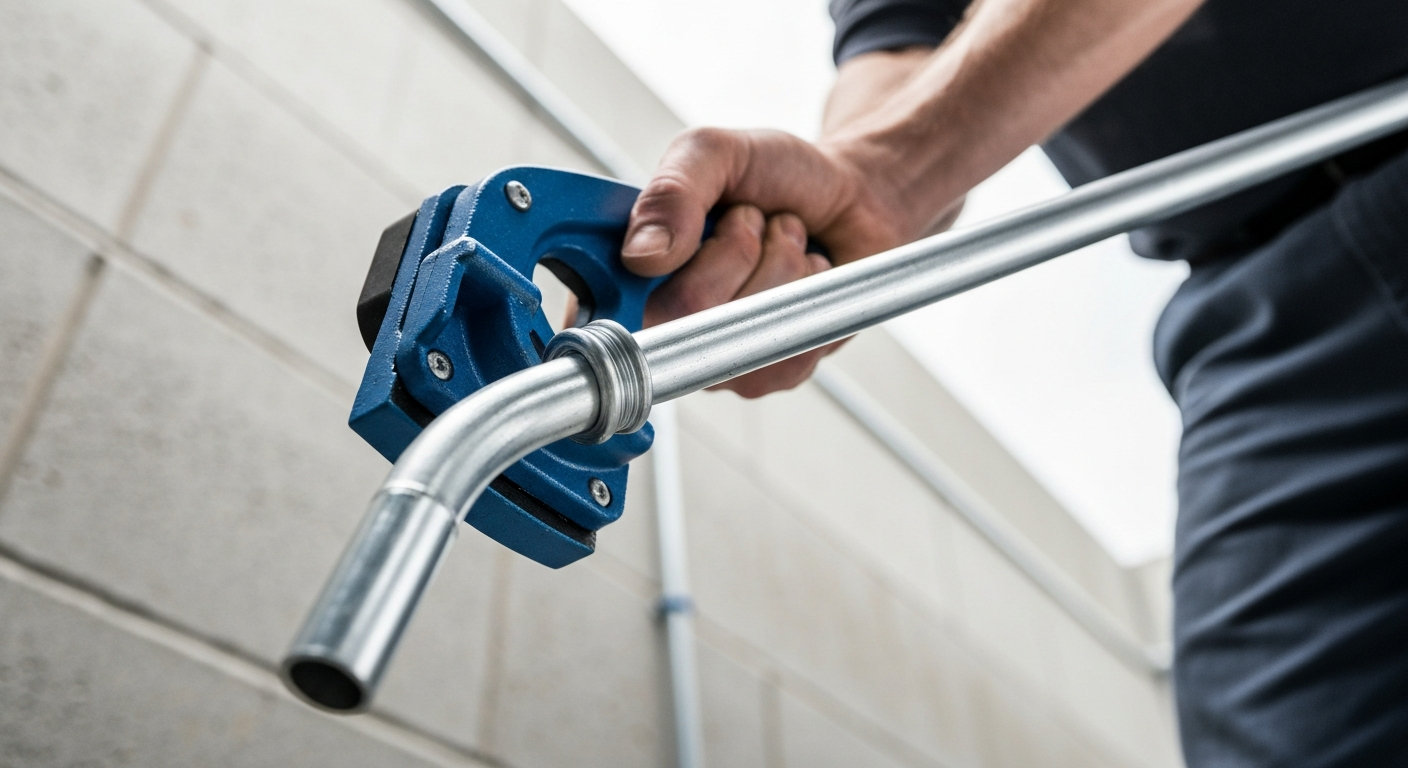
- Installation: Standard EMT is not threaded; sections are joined using appropriate fittings (compression or set-screw). Bending EMT to navigate corners and offsets is a fundamental skill for electricians. For electricians looking to improve this skill, learning how to bend EMT conduit is a valuable part of professional development.
- Limitations: Standard EMT is not the first choice for extremely corrosive environments or for unprotected direct burial unless the product and fittings are listed and approved for those specific applications and additional corrosion protection is provided.
What is PVC Conduit? (Polyvinyl Chloride)
Polyvinyl Chloride (PVC) conduit is a rigid, nonmetallic raceway made from plastic. It is widely used for underground installations and many wet or corrosive environments because it is not subject to rust. Products intended for outdoor use should be used only when they are listed for that exposure.
Key Characteristics and Applications of PVC
- Corrosion Resistance: PVC’s primary strength is its resistance to corrosion from moisture and many chemicals, making it an excellent choice for underground installations, concrete encasement, and corrosive environments.
- Wet Locations: PVC conduit is commonly used in wet locations when the complete system (conduit, fittings, and boxes) is installed and equipped to prevent water entry.
- Grounding: Because PVC is a nonmetallic raceway, it does not provide an equipment grounding path on its own. A separate equipment grounding conductor must be installed unless the cable assembly inside the conduit provides an effective equipment grounding path (for example, certain MC or other listed cable assemblies).
- Installation: PVC sections are typically joined with primer and solvent cement to make a permanent, watertight joint. Bends can be formed using heat. For long runs that will experience significant temperature change, the NEC requires expansion fittings where expected length change is on the order of a few millimeters (the code provides thresholds for when expansion fittings are needed).
- Limitations: Schedule 40 PVC offers less mechanical protection than metal conduit; in locations where physical damage is likely, the heavier Schedule 80 PVC is commonly used, or another raceway type offering greater mechanical protection is selected.
Head-to-Head Comparison: EMT vs. PVC Conduit
| Feature | EMT Conduit | PVC Conduit |
|---|---|---|
| Material | Typically galvanized steel (also stainless steel or aluminum in some types) | Polyvinyl Chloride (plastic) |
| Mechanical Protection | Excellent (for a thin-walled metallic conduit) | Fair (Schedule 40) to Good (Schedule 80) |
| Corrosion Resistance | Good with galvanization; special materials or protection needed for very corrosive environments | Excellent (does not corrode; suitable for many corrosive environments when listed for that purpose) |
| Equipment Grounding Path | Can serve as part of the equipment grounding path when installed with proper fittings and bonding | Does not provide a grounding path by itself; a separate equipment grounding conductor is normally required unless the cable assembly provides an effective path |
| Common Applications | Exposed indoor commercial, industrial, residential garages (where mechanical protection is desired) | Underground burial, concrete encasement, many wet locations, and corrosive environments |
| Installation | Bending tools, compression/set-screw fittings; support intervals per the EMT article (maximum spacing) | Solvent cement priming and joining; heat forming; use expansion fittings when required for thermal expansion; support per the PVC article (closer spacing for smaller sizes) |
NEC Code Considerations for Conduit Installation
Whether you are a seasoned journeyman electrician or in the middle of your electrician training, strict adherence to the National Electrical Code (NEC) is essential. Properly applying these NEC rules for raceway systems is a hallmark of a professional electrician.
Conductor Fill and Calculations
One of the most critical aspects of conduit installation is calculating conductor fill. The NEC limits the percentage of a conduit’s interior that can be filled with wires to prevent heat buildup and to allow pulling conductors without damaging insulation. Use NEC Chapter 9 tables or a conduit-fill calculator for compliance. Common fill percentages are 53% for one conductor, 31% for two conductors, and 40% for three or more conductors; the full procedures and tables are in NEC Chapter 9.
Support Intervals
The NEC mandates maximum support intervals that vary by raceway type. For EMT, support spacing is set by EMT’s article and is commonly a maximum of 10 ft between supports; consult the EMT article for exact requirements. For PVC conduit, the code requires support close to terminations (for example, within 900 mm / 3 ft of an outlet, junction, or conduit termination) and then at maximum intervals specified in the PVC article (smaller trade sizes have closer support spacing to limit sagging). Always consult the current NEC for the exact support requirements for the raceway type and trade size you are installing.
Conduit Bodies and Fittings
Conduit bodies (e.g., LBs, LLs, Ts) are fittings used to provide access to conductors for pulling, splicing, and bending. All fittings, from couplings to conduit bodies, must be listed and approved for the specific type of conduit and environment (for example, listed for wet locations when used outdoors).
Key Takeaways for Choosing the Right Conduit
- Environment is Everything: Use EMT in dry, indoor locations where a metallic raceway and mechanical protection are desired. Use PVC for underground, outdoor, or many corrosive applications, using products listed for the intended exposure.
- Grounding is Different: EMT can be part of the equipment grounding system when installed and bonded properly; PVC does not provide grounding continuity by itself and requires an equipment grounding conductor unless the installed cable assembly provides one.
- Don’t Overstuff: Always perform a conductor fill calculation based on NEC Chapter 9 tables to ensure safety and compliance.
- Know Your Raceway Options: EMT and PVC are common, but there are many raceway choices (IMC, RMC, ENT, cable trays, cable bus, etc.) and the correct choice depends on mechanical needs, corrosion resistance, and listing for the environment.
- Installation Skills Vary: Conduit bending is a trained skill for EMT; PVC joining is solvent-based and installers must plan for thermal expansion on long runs.
Frequently Asked Questions (FAQ)
- Can you mix EMT and PVC conduit in the same run?
- Yes. Transitions between EMT and PVC are common (for example, indoor EMT to underground PVC). Use an appropriate transition fitting and ensure continuity of the grounding path across the transition if a metallic grounding path is being relied upon; the installation must meet NEC bonding and grounding requirements.
- What is the main difference in installation for EMT vs PVC conduit?
- The primary installation difference is the method of joining and bending. EMT typically uses mechanical compression or set-screw fittings and requires proper conduit bending tools. PVC sections are solvent‑cemented (usually primer and cement per manufacturer instructions) and may require expansion fittings for longer runs to accommodate thermal movement.
- Does PVC conduit provide enough mechanical protection for exposed work?
- When exposed to potential physical damage, Schedule 40 PVC may be acceptable in some locations, but where significant impact or damage is likely the code or local practice often requires Schedule 80 PVC or a metallic raceway. Always select a raceway that meets the mechanical protection requirements for the installation and check local amendments.
- Why is a conduit fill chart so important for both EMT and PVC?
- A conduit fill chart, derived from NEC Chapter 9, is crucial for safety. Overfilling a conduit prevents heat from dissipating, which can degrade wire insulation and create a fire hazard. It also makes pulling conductors difficult and can cause abrasion and damage to the wires.
Continuing Education by State
Select your state to view board-approved continuing education courses and requirements:

Disclaimer: The information provided in this educational content has been prepared with care to reflect current regulatory requirements for continuing education. However, licensing rules and regulations can vary by state and are subject to change. While we strive for accuracy, ExpertCE cannot guarantee that all details are complete or up to date at the time of reading. For the most current and authoritative information, always refer directly to your state’s official licensing board or regulatory agency.
NEC®, NFPA 70E®, NFPA 70®, and National Electrical Code® are registered trademarks of the National Fire Protection Association® (NFPA®)
You may also like
Colorado Electrical Licensing Requirements and Reciprocity Guide
Standby Generators in DE: Navigating Coastal Storm Regulations

 Login with Google