
What Are Electrical Receptacles?
Introduction
This guide provides essential knowledge for a safe and efficient electrical receptacle installation. Electrical receptacles are critical for connecting devices to a wiring system, ensuring safe power access. Professional electricians must master receptacle types, functions, and installation to ensure safety and compliance with NFPA 70 (NEC) and NFPA 70E standards. This guide covers these essentials for reliable electrical systems.
What Is a Receptacle and How Does It Work?
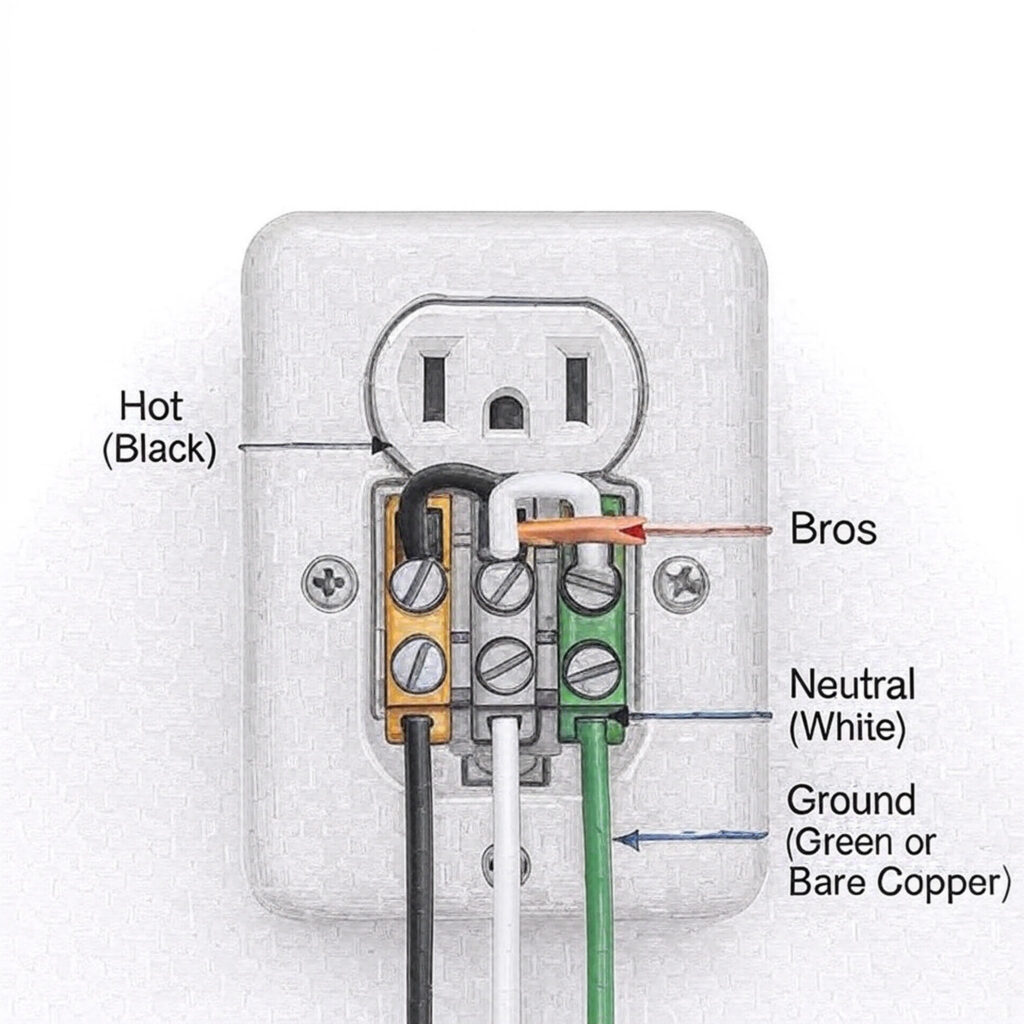
An electrical receptacle (outlet) connects devices to a building’s circuit. The NEMA 5-15R, a standard 15-amp, 125-volt grounded outlet, has three slots: neutral (wide), hot (narrow), and ground (U-shaped). When plugged in, prongs contact terminals, completing a circuit for current flow. The ground pin provides an equipment grounding path that helps carry fault current to facilitate breaker trip and reduce shock risk (see NEC Article 250 for grounding fundamentals), while surge protective devices (SPDs) are used to mitigate voltage surges and are applied in coordination with the overcurrent protection strategy.
Common Types of Receptacles
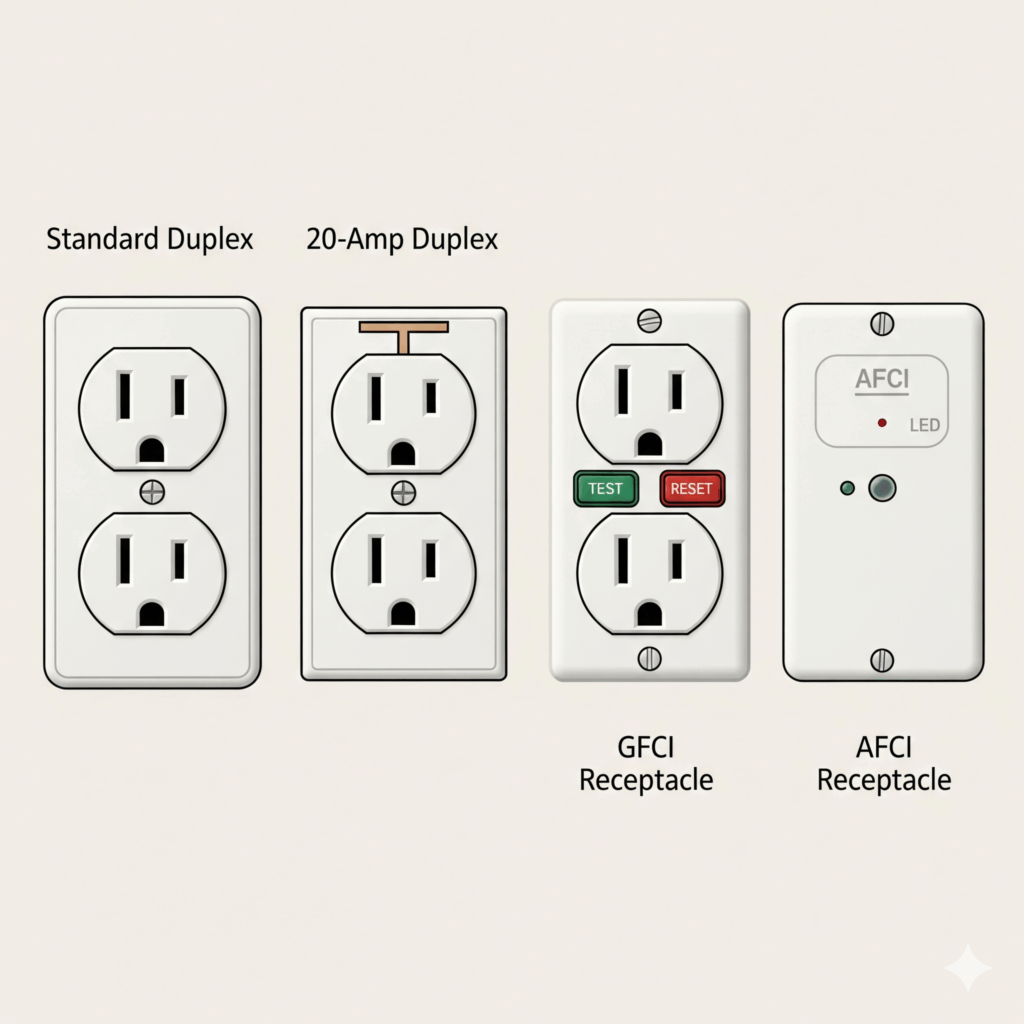
Standard Duplex: 15A, common in homes/offices (see NEC Article 210 for branch-circuit and receptacle provisions).
20-Amp: Identified by a T-slot (which accepts a 20A plug); used for some higher-power receptacles and circuits (refer to NEC Article 210 for application rules).
GFCI: Ground Fault Circuit Interrupter; protects people from ground faults in wet or damp areas such as bathrooms and outdoors (NEC requires GFCI protection in specific locations—see NEC Article 210.8 for details).
AFCI: Arc-Fault Circuit Interrupter; helps reduce the risk of fires caused by arcing faults (NEC requires AFCI protection in many dwelling branch circuits—see NEC Article 210.12).
Dedicated Purpose: Receptacles can be dedicated to specific appliances (e.g., ranges, dryers, microwaves) with required voltage and ampacity per the appliance and NEC rules.
How to Install and Troubleshoot Electrical Receptacles Safely
Mastering electrical receptacle installation and troubleshooting ensures NEC-compliant and safe systems. By following NFPA 70 (NEC) and NFPA 70E standards and manufacturers’ instructions, electricians can install outlets correctly and resolve issues like power loss or nuisance trips while protecting people and equipment.
Installation & Troubleshooting
Installation: Follow NFPA 70 (NEC) for safe installation:
- De-energize: Turn off the circuit at the breaker and verify the circuit is de-energized with an appropriate voltage tester, following NFPA 70E safe-work verification procedures.
- Mount Box: Secure the electrical box to the framing or supporting structure using the correct hardware and support practices in NEC Article 314 (see Article 314 for box support requirements).
- Strip Wires: Follow device manufacturer strip-length instructions (commonly about ½ inch), form proper hooks or pigtails as required, and ensure terminations meet NEC requirements and device instructions (see NEC 110.14 for proper terminations and temperature considerations).
- Connect Wires: Neutral (white) to the neutral terminal (typically silver), hot (black/red) to the hot terminal (typically brass), and equipment grounding conductor (green or bare) to the green grounding terminal; follow the device and GFCI/AFCI manufacturer instructions for specific wiring details.
- Secure: Carefully fold or route conductors into the box without sharp bends, secure the receptacle to the box, and install the faceplate.
- Test: Re-energize and use a receptacle tester or meter to confirm correct wiring, polarity, grounding, and proper operation of GFCI/AFCI devices.
Troubleshooting: Always follow NFPA 70E for safe work practices and verify de-energized condition before invasive troubleshooting.
- No Power: Check overcurrent protection and breakers, test for voltage at the device, and inspect for loose or open connections; replace or tighten connections as needed.
- GFCI Tripping: Repeated tripping indicates a ground fault or leakage—test the GFCI per manufacturer instructions and isolate loads to find the faulty appliance or wiring (NEC requires GFCI protection in specified locations; see Article 210.8).
- AFCI Tripping: Recurrent AFCI trips may indicate an arcing condition or damaged insulation—inspect for damaged cables, loose terminations, or cords; follow NEC AFCI guidance for branch circuits (see Article 210.12).
- Scorched/Melted: Evidence of overheating requires immediate correction—replace the receptacle and verify conductor size and overcurrent protection meet ampacity requirements (see NEC Article 310 for conductor ampacity rules).
- Loose Plugs: Replace worn or loose receptacles and ensure correct mounting and terminal tightness.
- Humming/Buzzing: Often a sign of loose or high-resistance connections—tighten connections or replace the device if needed.
Safety Protocols
- De-energize: Always verify a circuit is de-energized using appropriate testers and procedures per NFPA 70E before performing contact work.
- PPE: Use task-appropriate PPE such as voltage-rated gloves, eye protection, and clothing per NFPA 70E guidance.
- LOTO: Use lockout/tagout procedures and documented steps to establish an electrically safe work condition in line with NFPA 70E practices.
- Wire Sizing: Confirm conductor ampacity and overcurrent protection coordination using NEC conductor ampacity guidance (NEC Article 310) and select conductors and breakers accordingly.
- Code Compliance: Follow NEC articles and local jurisdiction rules for receptacle selection, GFCI/AFCI placement, and installation methods.
Conclusion
Mastering receptacles requires deep knowledge of types, installation, troubleshooting, and safety per NFPA 70 (NEC) and NFPA 70E. By using manufacturer instructions, ampacity charts, and safe-work procedures, electricians deliver safe, code-compliant installations that protect people and equipment.
Take the next step in your professional growth! Visit Expert CE (https://expertce.com/) for all your continuing education needs.
Continuing Education by State
Select your state to view board-approved continuing education courses and requirements:

Disclaimer: The information provided in this educational content has been prepared with care to reflect current regulatory requirements for continuing education. However, licensing rules and regulations can vary by state and are subject to change. While we strive for accuracy, ExpertCE cannot guarantee that all details are complete or up to date at the time of reading. For the most current and authoritative information, always refer directly to your state’s official licensing board or regulatory agency.
NEC®, NFPA 70E®, NFPA 70®, and National Electrical Code® are registered trademarks of the National Fire Protection Association® (NFPA®)
You may also like

Colorado Electrical Licensing Requirements and Reciprocity Guide
Standby Generators in DE: Navigating Coastal Storm Regulations

 Login with Google