
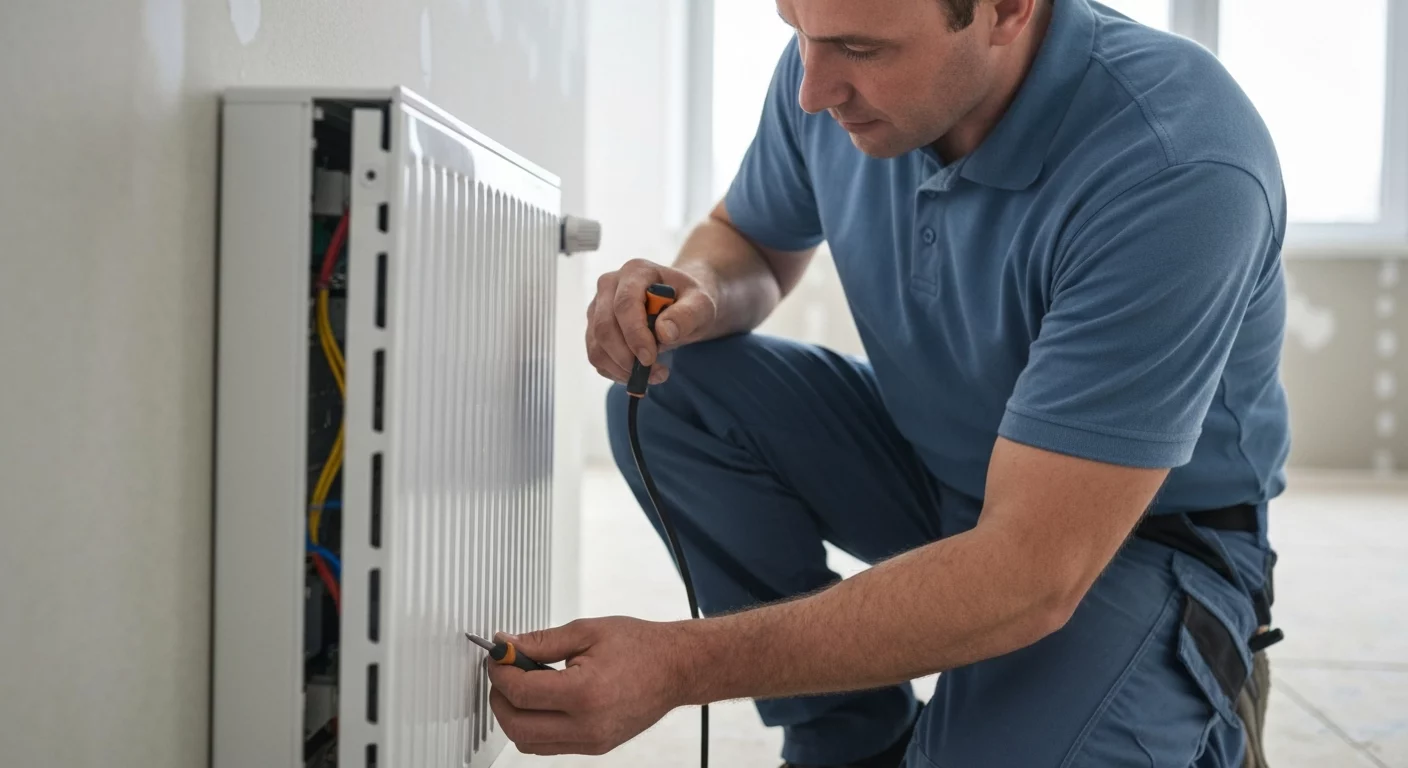
Disconnecting Means for Electric Baseboard Heaters: NEC 424.19
Disconnecting Means for Electric Baseboard Heaters: A Guide to NEC 424.19
For any journeyman electrician or master electrician, ensuring a safe and compliant installation of fixed electric space-heating equipment is a fundamental responsibility. According to National Electrical Code (NEC) Article 424, Part III, a proper disconnecting means for heaters is not just a best practice—it’s a requirement. NEC 424.19 mandates that a method to safely and simultaneously disconnect all ungrounded conductors for electric baseboard heaters and other fixed units must be provided. This can be achieved in one of three ways: using the branch-circuit overcurrent device (like a circuit breaker) if it is lockable or within sight of the heater; installing a separate lockable switch or breaker within sight; or, for certain units, utilizing an integral unit switch with a marked “off” position. Understanding these options is critical for service, maintenance, and adherence to the NEC, preventing hazards like a breaker that keeps tripping or more serious electrical dangers.
Understanding NEC 424.19: The Core Requirements for Disconnecting Means
The primary goal of NEC 424.19 is to ensure that a person servicing an electric heater can de-energize the unit and have confidence that it will not be accidentally turned back on. The code applies to all fixed electric space-heating equipment, which includes permanently installed electric baseboard heaters, wall heaters, and heating cables—not portable plug-in models. The general rule requires a disconnecting means that simultaneously opens all ungrounded conductors supplying the heater and any associated motor controllers or supplementary overcurrent protective devices, where applicable. For a standard 240-volt heater circuit, this means both hot legs must be disconnected at the same time.
What is “Within Sight From” the Heater?
A recurring and critical concept in this section is the term “within sight from.” The NEC defines this in Article 100. A disconnecting means is considered “within sight from” the heater if it is visible and located no more than 15 m (50 ft) away from the equipment it controls. This ensures that a technician working on the heater can maintain a direct line of sight to the disconnect, providing an essential layer of safety.
Three Compliant Methods for Disconnecting Means for Heaters
NEC 424.19 provides three distinct paths for compliance. The choice often depends on the heater’s location relative to the panelboard and whether the heater itself has built-in controls. Most electric baseboard heaters have no motors or only small fans/controls that are typically under 1/4 hp and generally do not include supplementary overcurrent devices, which simplifies the choices of disconnecting means.
Method 1: The Branch-Circuit Overcurrent Device
For most residential and small commercial installations, the most common method is to use the branch-circuit overcurrent device as the disconnecting means. This is typically the circuit breaker in the panelboard that protects the dedicated branch circuit for the heater. This method is compliant if one of two conditions is met:
- The circuit breaker is within sight from the heater (visible and within 50 feet).
- The circuit breaker is capable of being locked in the open (off) position in compliance with the applicable lockout/tagout requirements.
Since heaters are often installed in rooms far from the electrical panel, the “within sight” option is rare. Therefore, using a lockable disconnecting means is the most practical solution. A permanently installed breaker lock-out device that meets the code’s lockout requirements fulfills this condition; a portable lock that can be removed may not meet the required lockout provisions. This is a frequent point of emphasis for both journeyman electrician and master electrician exam questions.
Method 2: A Switch or Breaker “Within Sight From” the Heater
If the panel’s circuit breaker cannot be locked or is not within sight, a separate disconnecting means must be installed. This is often a non-fused disconnect switch or an additional circuit breaker in an enclosure located within sight of the baseboard heater. This switch must simultaneously disconnect all ungrounded conductors. This approach is common in large commercial spaces or when servicing requires a clear, local point of disconnection. For more information on switch types, you can explore the differences between fused and non-fused disconnects.
Method 3: The Unit Switch with a Marked “Off” Position
Some fixed electric space-heating units come equipped from the factory with a built-in switch. NEC 424.19(C) allows this unit switch with a marked “off” position to serve as the disconnecting means, provided it meets specific criteria. The switch must be an integral part of the unit and simultaneously disconnect all ungrounded conductors. Many modern double-pole line-voltage thermostats function this way, offering both temperature control and a compliant disconnecting means. To learn more about their wiring, see this guide on how to wire a line-voltage thermostat. This is often a cost-effective and convenient solution for controlling individual electric baseboard heaters.
Practical Application for Journeyman and Master Electricians
Beyond simply choosing a disconnect method, professional electricians must properly size the circuit components. This starts with understanding that electric heat is treated as a continuous load for sizing purposes.
Continuous Load Calculation for an Electric Baseboard Heater
NEC treats fixed electric space-heating equipment as a continuous load; branch-circuit conductor ampacity for fixed electric space-heating equipment is required to be not less than 125% of the load (see NEC Article 424.4(B)), and 424.19 also requires disconnecting means to be rated at least 125% of the total load where specified. Therefore, the branch circuit conductors and the overcurrent protection device are commonly sized using a 125% factor. A miscalculation here is a common reason a breaker keeps tripping.
Step-by-Step Calculation Example
Let’s calculate the circuit requirements for a 3,000-watt, 240-volt electric baseboard heater.
- Calculate the Full Load Amperage: Current (I) = Power (P) / Voltage (V).
I = 3,000W / 240V = 12.5A
- Apply the 125% Continuous Load Factor: Multiply the amperage by 125% to determine the minimum ampacity for the conductors.
Minimum Ampacity = 12.5A x 1.25 = 15.625A
- Select the Overcurrent Device: Based on the calculated 15.625A, you step up to the next standard-sized breaker; the common choice is a 20 amp breaker according to NEC standard ampere ratings. That combination (12 AWG copper on a 20 A breaker) is the usual trade practice consistent with NEC sizing for continuous heating loads.
- Select the Conductor Size: Based on the 20A overcurrent device and NEC ampacity tables, a 12 AWG copper conductor is required for that 20A circuit.
Wiring Considerations: Dedicated Branch Circuit and Thermostats
Each fixed electric baseboard heater or system of heaters should be on a dedicated branch circuit. This prevents overloading circuits that also supply lighting and receptacles. Properly wiring the heater is just as crucial as selecting the correct disconnect. For detailed instructions, refer to our guides on how to wire electric baseboard heaters and how to approach a similar project like wiring a 240V garage heater.
Adhering to these code requirements is a hallmark of professional electrical work. To deepen your expertise, consider exploring advanced topics and formal training. Installing heating systems safely and to code is non-negotiable. Explore our online electrical courses to stay current with the latest NEC updates and best practices.
Primary Sources
- National Fire Protection Association (NFPA) for the National Electrical Code (NEC), including:
- NEC Article 100 for the definition of “In Sight From (Within Sight From).”
- NEC Article 424.19 for the primary rules on disconnecting means for fixed electric space-heating equipment.
- NEC Article 424.4(B) for the branch-circuit conductor sizing requirement (125% for fixed electric space-heating equipment).
- NEC Article 240.6 for standard ampere ratings of circuit breakers.
- NEC Article 310.16 for conductor ampacity tables.
Frequently Asked Questions (FAQs)
1. Can a wall thermostat be used as the disconnecting means for heaters?
Yes, a line-voltage thermostat can serve as the disconnecting means if it has a marked “off” position and simultaneously opens all ungrounded conductors (i.e., it’s a double-pole switch for a 240V circuit). A low-voltage thermostat that only controls a relay cannot be used as the required safety disconnect.
2. What should I do if my electric baseboard heater’s breaker keeps tripping?
If a breaker keeps tripping, it indicates a problem. First, verify the continuous load calculation was done correctly and that the breaker and wire are sized to at least 125% of the load for a continuous heating application. If the sizing is correct, inspect the electric baseboard heater wiring for loose connections, damage, or a short circuit. The issue could also be a faulty thermostat or a failing heating element. A circuit breaker replacement might be necessary if the breaker itself is old or defective.
3. Does every electric baseboard heater need its own lockable disconnecting means?
Not necessarily. The branch-circuit overcurrent device (the breaker in the panel) can serve as the disconnect if it is lockable or within sight. This is a common and compliant setup. If a single lockable breaker controls multiple heaters on the same circuit, it serves as the disconnecting means for all of them. A separate disconnect is only needed at the unit if the breaker is not lockable and is not within sight of the heater.
Continuing Education by State
Select your state to view board-approved continuing education courses and requirements:

Disclaimer: The information provided in this educational content has been prepared with care to reflect current regulatory requirements for continuing education. However, licensing rules and regulations can vary by state and are subject to change. While we strive for accuracy, ExpertCE cannot guarantee that all details are complete or up to date at the time of reading. For the most current and authoritative information, always refer directly to your state’s official licensing board or regulatory agency.
NEC®, NFPA 70E®, NFPA 70®, and National Electrical Code® are registered trademarks of the National Fire Protection Association® (NFPA®)
You may also like

Colorado Electrical Licensing Requirements and Reciprocity Guide
Standby Generators in DE: Navigating Coastal Storm Regulations

 Login with Google