
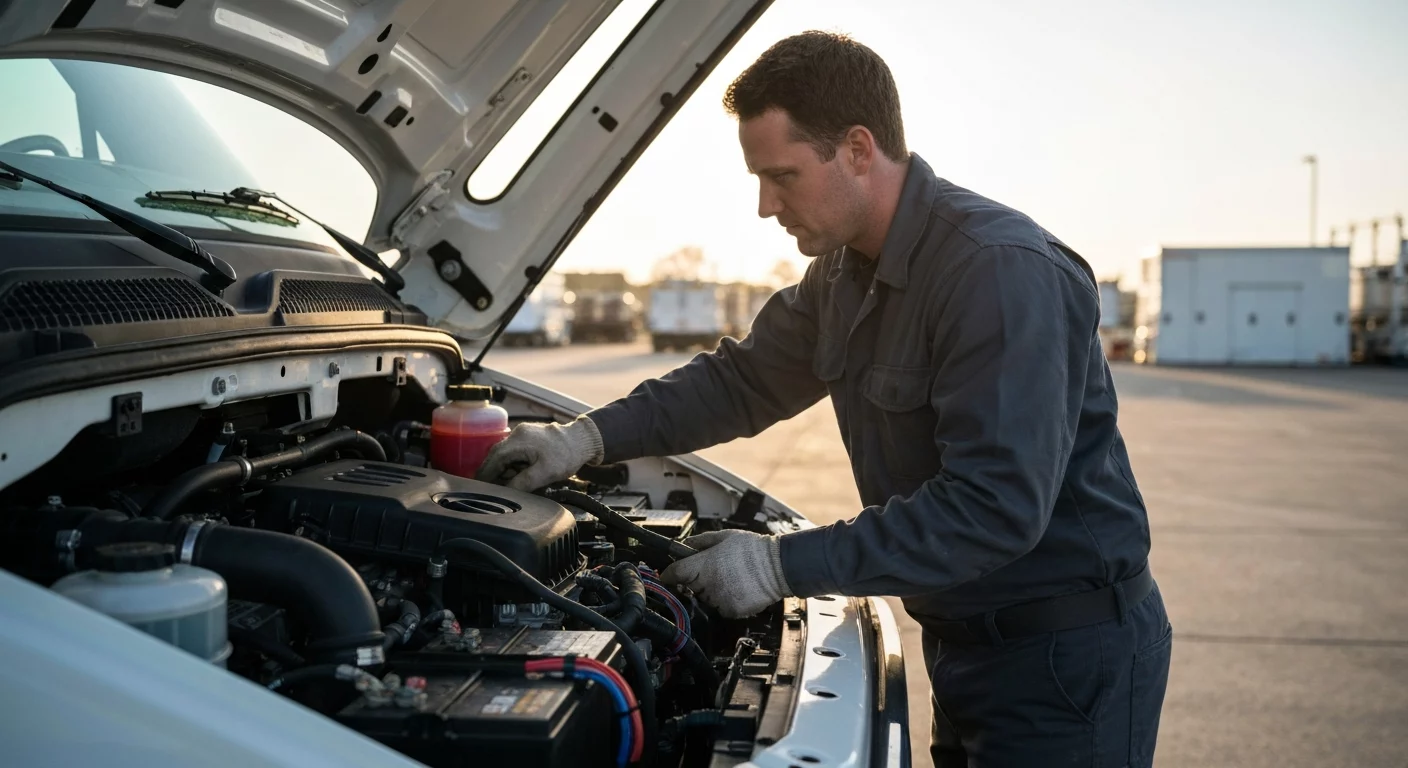
CDL Pre-Trip: How to Inspect the Engine Compartment
CDL Pre-Trip: How to Inspect the Engine Compartment for Electricians
To properly inspect the engine compartment of a commercial vehicle, an electrician must perform a systematic check that goes beyond standard fluid levels to include the integrity of critical commercial vehicle electrical systems. A thorough utility vehicle pre-trip involves examining the alternator, starter, and all wiring for security and damage, with a special focus on battery and cable integrity to prevent power failures. This process includes verifying belts are in proper condition and tension per manufacturer guidance, checking the Engine Control Module (ECM) wiring for secure connections, and ensuring accessible distribution equipment such as fuse/relay panels or a Power Distribution Module (PDM) is free from issues. For specialized equipment, this inspection extends to the auxiliary power unit (APU) check and the power take-off (PTO) electrical inspection. Mastering this routine is a core component of responsible operation and a key part of the training for electricians operating utility vehicles over 26,001 lbs Gross Vehicle Weight Rating (GVWR) that require a standard Commercial Driver’s License (CDL), safeguarding both the driver and the public by preventing roadside breakdowns and electrical failures.
Why the Engine Compartment Inspection is Critical for Electricians
For any professional holding a Commercial Driver’s License (CDL), the pre-trip inspection is a non-negotiable daily ritual. However, for a licensed journeyman electrician or master electrician, this process carries added weight. FMCSA analysis of large-truck crashes indicates vehicle-related factors are among the contributors in a portion of crashes, underscoring that vehicle condition is a preventable risk factor. Your service vehicle—whether it’s a bucket truck electrical maintenance rig, a utility van, or a service body truck—is not just transportation; it’s a mobile workshop packed with valuable equipment and complex power systems. A failure in the engine compartment could strand you, damage expensive tools, or, worse, lead to a serious accident.
The daily service body vehicle inspection is your first line of defense against preventable breakdowns. It ensures the vehicle’s core mechanical and electrical systems are sound before you hit the road. For electricians, this inspection requires a more trained eye, capable of spotting subtle signs of electrical wear and tear that another driver might miss. This specialized knowledge is a crucial part of comprehensive electrician training for field-based roles.
The Systematic Approach: Your 7-Step Engine Compartment Inspection Script
Follow this step-by-step guide to confidently and thoroughly inspect the engine compartment. This systematic process is aligned with typical pre-trip inspection requirements from FMCSA and the Commercial Vehicle Safety Alliance (CVSA) North American Standard Inspection and ensures you cover all critical components, with a special focus on the electrical systems vital to your work.
-
Safety First: Secure the Vehicle
Before you even pop the hood, ensure the vehicle is on level ground, the parking brake is set, the wheels are chocked, and the engine is off. Your personal safety is the priority. Announce you are beginning the inspection to anyone nearby.
-
Check Fluids and Look for Leaks
Check oil, coolant, power-steering (if equipped), and washer-fluid levels according to the vehicle manufacturer’s service locations and procedures, and inspect the ground beneath the vehicle for any fluid leaks. On vehicles with hydraulic systems (for example boom trucks), include hydraulic fluid reservoirs and lines in the check.
-
Inspect Belts, Hoses, and Wiring
Visually inspect belts for cracks, frays, glazing, or missing ribs and verify proper tension per the vehicle or equipment manufacturer’s specification (a common rule of thumb is roughly 1/2 to 3/4 inch of deflection on many drive belts, but always follow the manufacturer’s published spec). Check all hoses for leaks, cracks, or bulges. Pay close attention to the integrity of all wiring harnesses, especially the engine control module (ECM) wiring. Ensure all wires are securely mounted, not rubbing against moving parts, and show no signs of melted or cracked insulation. A proper vehicle electrical grounding connection is crucial, so check that main ground straps are tight and free of corrosion.
-
Analyze the Core Electrical System: Battery, Alternator, and Starter
This is where an electrician’s expertise shines. These three components form the heart of the vehicle’s conventional electrical system.
- Alternator Inspection: Verify the alternator is securely mounted to the engine block and that the manufacturer’s specified connections and belt routing are intact. Check that electrical connections are tight and free of corrosion.
- Battery and Cable Integrity: Batteries must be securely mounted and terminals and cables kept clean and tight. Inspect battery boxes and hold-downs, any venting arrangements, and look for signs of electrolyte leakage or heavy corrosion.
- Starter Motor Check: Ensure the starter motor is securely mounted and that all its electrical connections are tight and clean.
-
Examine Auxiliary Systems and Specialized Equipment
Your work vehicle often has systems beyond a standard truck. Check accessible fuse/relay panels, a Power Distribution Module (PDM), and distribution blocks for signs of overheating, melted insulation, loose terminals, or corrosion. A logical approach to diagnostics here is key, much like when you troubleshoot other electrical equipment like a water heater. If your truck is equipped with an auxiliary power unit (APU), check its fuel, coolant, and exhaust paths and wiring per the manufacturer’s checklist. For trucks with lifts or cranes, a power take-off (PTO) electrical inspection should verify wiring and control integrity before use.
-
Inspect DC Motors and Low Voltage Systems
Many service vehicles use DC motors to power lifts, pumps, or other tools. Visually inspect the wiring and connections to these motors and check that protective devices are in place and serviceable. Likewise, examine all low-voltage wiring for lights, control panels, and diagnostics to ensure secure terminations and intact insulation.
-
Acknowledge High-Voltage Component Safety
As the industry moves toward hybrid and fully electric commercial vehicles, your inspection must adapt. CVSA and FMCSA offer awareness resources and training related to high-voltage electric-drive commercial vehicles; however, manufacturer-prescribed procedures remain the authoritative source for any component-specific inspection or maintenance steps. If you operate one of these advanced trucks, your pre-trip must include the manufacturer-specified protocol for high-voltage component safety. Look for intact, brightly colored (typically orange) high-voltage cable insulation, secure connectors, and no signs of damage to the battery pack enclosures or inverters. Never touch or attempt to repair these components without specialized training and proper personal protective equipment (PPE).
Open the hood with confidence. Learn the engine inspection script.
Beyond the Daily Check: Onboard Generators and Power Systems
Many electricians’ vehicles are outfitted with onboard power generation to run tools at a job site. These systems also require inspection and, when present, must be installed, marked, and serviced per the generator manufacturer’s instructions and applicable electrical installation codes.
Onboard Power: Standby Generator and RV Generator Maintenance
If your truck has a built-in standby generator or a modified recreational vehicle-style (RV) generator adapted for commercial use, include it in your pre-trip check. Verify secure mounting, fuel and vent lines, cooling and exhaust paths, and that electrical outputs and terminal housings are clean and protected. Start the generator only if you follow the manufacturer’s pre-run checklist and local safety rules; many manufacturers recommend controlled short runs for verification when and where it is safe to do so.
Key Takeaways for a Flawless Inspection
To ensure your vehicle is safe and compliant every day, remember these essential points:
- Be Systematic: Always perform your inspection in the same order to avoid missing a step. Start from one side of the engine bay and work your way around.
- Look and Listen: Your inspection is not just visual. Listen for air leaks and be aware of any unusual smells, like burning rubber or electrical odors.
- Focus on Security: A primary goal of the pre-trip is to find anything that is loose or rubbing. Vibration is the enemy of all vehicle components, especially electrical wiring.
- Know Your Vehicle: Every truck is different. Be intimately familiar with the specific components of your vehicle, including any specialized equipment related to a bucket truck electrical maintenance setup or a boom truck hydraulic and electrical system.
- Document Everything: If you find an issue, document it on your Driver Vehicle Inspection Report (DVIR). Do not operate a vehicle with a safety defect.
Primary Sources
The information regarding vehicle safety and inspection practices is based on guidance and resources from transportation safety organizations and equipment manufacturers. For vehicle electrical installations and dedicated electrical equipment (generators, motors and control equipment) refer to the manufacturer’s literature and applicable electrical installation standards for safe, code-compliant installations.
- Federal Motor Carrier Safety Administration (FMCSA), U.S. Department of Transportation — resources on vehicle inspection and crash causation analysis.
- Commercial Vehicle Safety Alliance (CVSA) resources and training for pre-trip and targeted inspections.
- Manufacturers’ instructions for any on-board generators, APUs, or high-voltage electric-drive components.
Frequently Asked Questions (FAQs)
What are the most common electrical failures found when I inspect the engine compartment?
The most frequent electrical issues discovered during an engine compartment inspection tend to be related to poor battery and cable integrity, such as loose terminals, corrosion, or poor cable routing. Failed alternators and loose or damaged wiring harnesses are also common causes of no-start or intermittent electrical problems.
How does electrician training prepare you for a utility vehicle pre-trip?
Formal electrician training provides a deep understanding of electrical theory, including low voltage systems and troubleshooting. This knowledge is directly applicable to diagnosing a vehicle’s electrical system, helping you spot potential issues with wiring, fuses, grounding, and connections that a driver without an electrical background might overlook during a utility vehicle pre-trip.
What’s the difference between a standard service body vehicle inspection and one with a boom truck hydraulic and electrical system?
While a standard service body vehicle inspection focuses on the chassis and engine, inspecting a boom truck requires additional, specialized checks. You must perform a PTO electrical inspection to ensure the Power Take-Off unit that drives the hydraulics is electrically sound, check hydraulic lines for leaks, and verify electrical controls for the boom are serviceable and secure — all critical for safe operation.
Continuing Education by State
Select your state to view board-approved continuing education courses and requirements:

Disclaimer: The information provided in this educational content has been prepared with care to reflect current regulatory requirements for continuing education. However, licensing rules and regulations can vary by state and are subject to change. While we strive for accuracy, ExpertCE cannot guarantee that all details are complete or up to date at the time of reading. For the most current and authoritative information, always refer directly to your state’s official licensing board or regulatory agency.
NEC®, NFPA 70E®, NFPA 70®, and National Electrical Code® are registered trademarks of the National Fire Protection Association® (NFPA®)
You may also like

Colorado Electrical Licensing Requirements and Reciprocity Guide
Standby Generators in DE: Navigating Coastal Storm Regulations

 Login with Google