
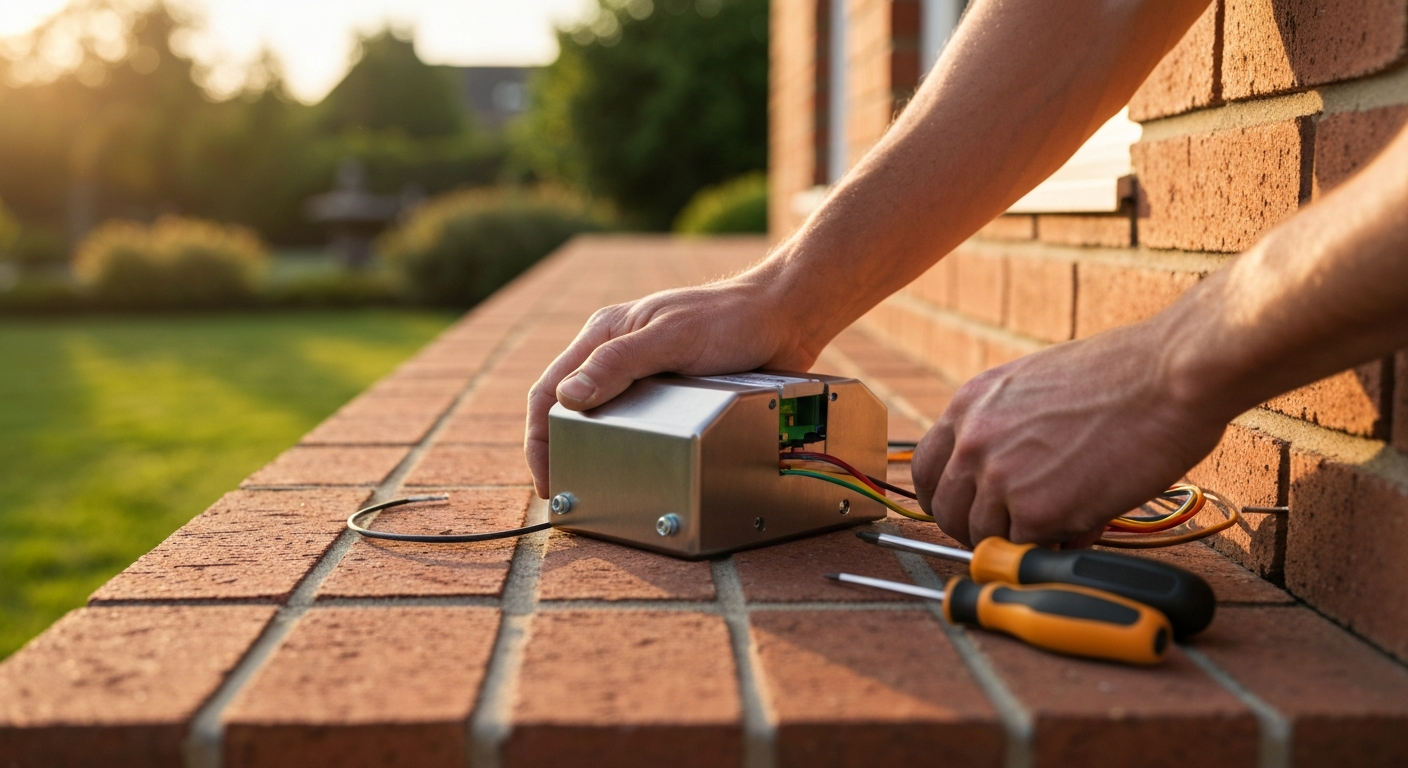
Calculating Transformer Size for Low Voltage Landscape Lighting
Calculating Transformer Size for Low Voltage Landscape Lighting: A Professional Guide
Answer-First: The Core Calculation
Properly calculating the transformer size for landscape lighting is essential for system longevity and performance. The process begins with determining the total load of your low voltage landscape lighting system. First, sum the wattage of all fixtures you plan to install. Because transformers are rated in volt-amperes (VA), you must then convert the total fixture wattage to a total VA load. For modern LED fixtures, wattage and VA are often nearly identical, but it’s crucial to use the VA rating if provided by the manufacturer. The next step in your transformer load calculation is applying a “derating” factor. A common industry practice is to size a transformer so continuous loads do not exceed about 80% of its VA rating; therefore, divide your total VA load by 0.8 to find the minimum required transformer size for systems you expect to operate as continuous loads. For example, a system with 240 VA of fixtures requires at least a 300 VA transformer (240 / 0.8 = 300) when applying that industry guideline.
Why Accurate Transformer Sizing is Critical for Low Voltage Landscape Lighting
In the world of professional electrical work, precision is paramount. This holds especially true for low voltage landscape lighting, where the electrical transformer serves as the heart of the entire system. An undersized transformer will be constantly overloaded, leading to overheating, premature failure, and a potential fire hazard. Conversely, a grossly oversized transformer can be inefficient and unnecessarily expensive. For a deeper dive into voltage classifications, you can review the differences between high, medium, and low voltage systems.
The goal is to select an isolating power supply that can safely and efficiently handle the cumulative load of all fixtures while leaving a buffer for safety and potential future expansion. Correctly sizing the transformer ensures consistent light output, protects the fixtures from damaging power fluctuations, and guarantees a reliable, long-lasting installation for your clients.
Key Concepts: VA Ratings, Wattage, and Transformer Load
Before performing a transformer load calculation, it’s vital to understand the difference between Watts (W) and Volt-Amperes (VA).
- Wattage (W): This measures the “real” power consumed by a device to produce work (in this case, light).
- Volt-Amperes (VA): This measures the “apparent” power, which is the product of voltage and current (Amps). It represents the total power the transformer must supply to the circuit.
For simple resistive loads like old incandescent bulbs, Watts and VA were virtually interchangeable. However, with modern LED drivers, a small difference called the “power factor” exists. While often close to 1.0 for high-quality LEDs, it’s always best practice to use the fixture’s specified VA rating for calculations. If only wattage is listed, you can generally use that figure as a close approximation for the amperage load calculation on LED systems.
Step-by-Step: How to Calculate Your Transformer Load
Follow this instructional process to accurately determine the correct transformer size for landscape lighting projects. This calculation is a fundamental part of any professional low voltage lighting installation.
- Sum Total Fixture Load: List every fixture planned for the system. Record the fixture wattage or, preferably, the Volt-Ampere (VA) rating for each one. Sum these values to get the total system load. For example, 20 fixtures at 7 VA each equals a total load of 140 VA.
- Apply Transformer Derating: Because many landscape-lighting installations operate 3 or more hours, treat them as continuous loads when applicable. A common industry practice is to size the transformer so that continuous load does not exceed about 80% of its VA rating to provide a safety margin — but remember that NEC provisions for continuous loads require conductors and overcurrent protective devices to be sized at 125% of the continuous load. Use the 80% transformer guideline together with NEC conductor and overcurrent requirements and the transformer’s listing.
- Calculate Minimum Transformer Size: Divide your total VA load by 0.8 to determine the minimum required transformer capacity when using the common industry derating approach.Formula: Total System VA / 0.8 = Minimum Transformer VA Rating
Example: 140 VA / 0.8 = 175 VA
- Select the Appropriate Transformer: Based on the calculation, select the next available standard transformer size that meets or exceeds your minimum requirement. In our example, a 175 VA minimum would necessitate choosing a 200 VA or 300 VA transformer, as 175 VA is not a common stock size. This also provides room for adding a few fixtures in the future without recalculating the entire system.
Navigating NEC Article 411 for Compliant Installations
For any professional electrician, adherence to the nec code book is non-negotiable. NEC Article 411 specifically governs lighting systems operating at low voltages; Article 411 limits operating voltages for low-voltage lighting (see Article 411 for the exact wording and limits). For installations near pools and spas, also consult NEC Article 680 — that article contains the pool- and fountain-specific requirements that interact with low-voltage lighting rules. Always consult the latest edition of the NEC, the listing on the power supply or transformer, and any local amendments or AHJ interpretations for full compliance.
Mastering Voltage Drop Calculation to Ensure Fixture Performance
Proper transformer sizing is only half the battle. The other critical component is managing voltage drop. Voltage drop calculation is essential because voltage diminishes over the length of a wire run. Excessive drop results in dim or non-functional lights, particularly at the end of a long circuit length. This is a common issue that a professional must anticipate and mitigate.
The Voltage Drop Formula
While a precise voltage drop calculator is helpful, understanding the formula provides insight:
Voltage Drop = (Wire Resistance x Amperage Load x 2 x Circuit Length) / 1000
The key variables are the amperage load on the run, the circuit length (one-way), and the wire gauge resistance (ohms per 1,000 feet). To combat voltage drop, you can decrease the load, shorten the run, or, most commonly, use a thicker gauge wire (lower AWG number) which has less resistance. Using a size electrical wire calculator can simplify this process. For landscape lighting, fixtures should always be wired in a parallel circuit, not a series circuit, to ensure that if one light fails, the others remain lit.
Using a Multi-Tap Transformer to Compensate for Voltage Drop
A professional-grade multi-tap transformer is an indispensable tool for managing voltage drop. These transformers offer multiple output terminals with varying voltages (e.g., 12 V, 13 V, 14 V, 15 V). The common tap is used for one side of the circuit, while the other side is connected to a specific voltage tap at the terminal block.
If you calculate or measure a significant voltage drop on a long run, you can connect that run to a higher voltage tap (e.g., 14 V) to provide a secondary voltage adjustment. This boosts the initial voltage, helping ensure that the fixtures at the end of the line receive adequate power to operate within their optimal range (typically 10.5 V–12 V), but only if the transformer and fixture listings permit such use.
Important Considerations for Professional-Grade Installations
- Wiring Configuration: Always use a parallel circuit for landscape lighting. In a series vs parallel circuit setup, a series connection causes voltage to be divided among the fixtures and a single bulb failure will take down the entire circuit.
- Inrush Current: LED drivers can create a momentary high inrush current when first energized. This is higher than the steady-state FLA (Full Load Amps). Quality transformers are built to handle this, but it’s another reason why a conservative sizing approach (and relying on listed transformer capacities) is important to prevent nuisance tripping of breakers.
- Load Balancing: On larger systems with transformers exceeding common single-circuit sizes, you’ll often find multiple common tap terminals for separate circuits. Distribute your fixture loads as evenly as possible across these circuits to prevent overloading one part of the transformer.
- Wire Sizing: Never skimp on wire. Using a thicker gauge wire (e.g., 12-AWG instead of 14-AWG) is one of the most effective ways to minimize voltage drop over a long circuit length.
Expand your services with low voltage lighting expertise. Explore our courses.
Related Resources
Frequently Asked Questions
What is the 80% rule for transformer size for landscape lighting?
The 80% guideline, often used in the field as a transformer derating, is a practical industry practice for continuous loads: it means you size the transformer such that continuous load is about 80% or less of the transformer’s VA rating. This provides a margin for inrush and service life. Remember that the NEC handles continuous-load requirements primarily by requiring conductors and overcurrent protective devices to be sized at 125% of continuous load, so use both the NEC rules and manufacturer listings together when designing a system.
How does a multi-tap transformer help with voltage drop?
A multi-tap transformer provides multiple voltage outputs (e.g., 12 V, 13 V, 14 V, 15 V). For a long wire run with significant voltage drop, you can use a higher voltage tap to boost the power, ensuring fixtures at the end of the line receive the correct operating voltage. This allows for precise secondary voltage adjustment for each circuit when the transformer and fixtures are listed for that practice.
Why is Volt-Ampere (VA) rating more important than wattage for transformer load calculation?
The VA rating represents the total “apparent power” an electrical transformer must supply, which includes both the real power (watts) and any reactive power in the circuit. Using the VA rating from the fixture manufacturer provides the most accurate figure for your transformer load calculation and ensures you are correctly sizing the power supply. When only watts are available, using that value as a close approximation is acceptable for many LED fixtures, but the manufacturer’s VA rating is the authoritative figure.
Primary Sources
- National Fire Protection Association (NFPA) for the National Electrical Code (NEC), specifically Article 411 and Article 680 for pool/fountain-related requirements.
Continuing Education by State
Select your state to view board-approved continuing education courses and requirements:

Disclaimer: The information provided in this educational content has been prepared with care to reflect current regulatory requirements for continuing education. However, licensing rules and regulations can vary by state and are subject to change. While we strive for accuracy, ExpertCE cannot guarantee that all details are complete or up to date at the time of reading. For the most current and authoritative information, always refer directly to your state’s official licensing board or regulatory agency.
NEC®, NFPA 70E®, NFPA 70®, and National Electrical Code® are registered trademarks of the National Fire Protection Association® (NFPA®)
You may also like

Colorado Electrical Licensing Requirements and Reciprocity Guide

Standby Generators in DE: Navigating Coastal Storm Regulations

 Login with Google