
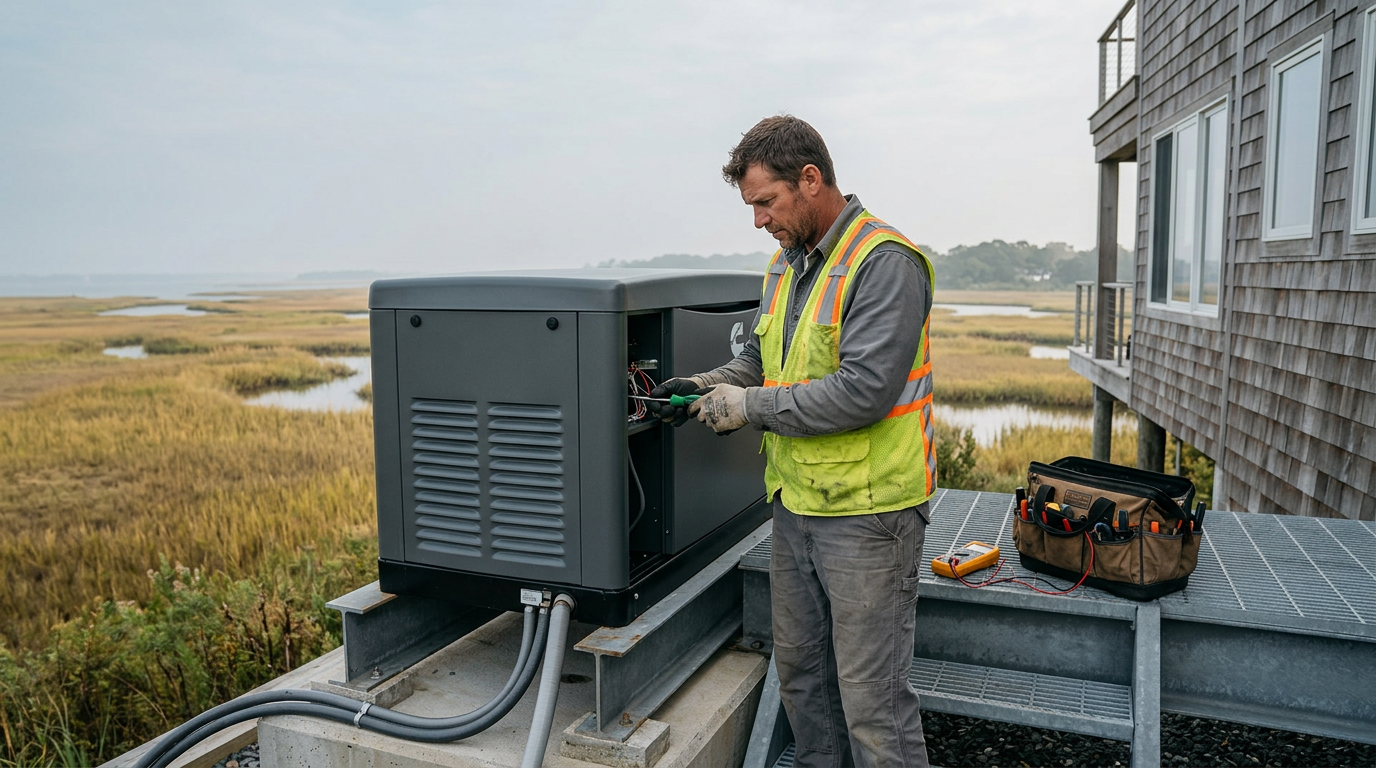
Standby Generators in DE: Navigating Coastal Storm Regulations
The Surging Demand for Whole-House Generator Wiring
The market for standby generators in Delaware is driven by a convergence of factors. Increasingly frequent and intense coastal storms, coupled with an aging electrical grid, leave homeowners and businesses vulnerable to prolonged power outages. This has shifted the perception of generators from a luxury to a necessity, especially for coastal properties. A strong compound annual growth rate for the U.S. residential market underscores a clear trend: clients are willing to invest in energy resilience. This is not just about keeping the lights on; it’s about protecting property, ensuring the operation of critical medical equipment, and maintaining a sense of normalcy during emergencies. For the skilled electrical professional, this trend represents a stable and growing source of revenue through both installation and ongoing service contracts.
Code is King: Delaware’s Shifting Electrical Landscape
Performing any generator installation in Delaware first requires proper Delaware electrical contractor licensing. According to the Delaware Board of Electrical Examiners, work governed by the adopted edition of the National Electrical Code is within their purview; this explicitly includes generator installations and associated electrical wiring. It is crucial for professionals to stay current: Delaware enforces the edition of the NEC adopted by the State Fire Prevention Commission, and the adopted edition can change. Many professionals rely on Delaware electrician continuing education to stay ahead of code updates.
Permitting is another critical layer of regulation. Local electrical permits are generally required for wiring, and environmental agencies regulate fuel storage and air emissions. Delaware’s Department of Natural Resources and Environmental Control (DNREC) may require generator registration and, depending on generator size, fuel type and intended use, may require an air-quality permit or fuel-storage registration. Specific thresholds and requirements vary and are administered by DNREC and local authorities, so contractors should check DNREC guidance and the local building and floodplain office before proceeding.
The Critical Role of Flood Zones: BFE and Coastal Electrical Codes DE
For electricians working along Delaware’s coast, floodplain rules and local building codes are some of the most important regulations to apply. Local ordinances throughout coastal Delaware are generally based on FEMA flood maps and commonly reference standards such as ASCE 24, Flood Resistant Design and Construction, for elevation and flood-resistance measures. These coastal electrical codes in DE are not optional; they form the basis for required storm-hardening and floodproofing of electrical systems.
The core principle for Delaware flood zone generator requirements is elevation and anchoring. In special flood hazard areas, critical parts of the generator system—including the unit itself, electrical service equipment, and fuel tanks—are frequently required by local floodplain and building codes to be elevated above the Base Flood Elevation (BFE) plus any local freeboard. Exact freeboard amounts and elevation details differ by jurisdiction, so before designing an installation verify the local ordinance and the applicable BFE. Placing a generator or a breaker panel on a simple concrete pad at ground level in a flood-prone area may violate local floodplain and building codes and can result in extensive damage and liability; follow ASCE 24 guidance and local regulations for on-grade equipment, required anchoring to resist flotation and hydrostatic forces, and any allowable exceptions.
Essential Components for Safe and Compliant Installations
A compliant installation is a safe installation. Ensuring the system is properly designed involves several key components and considerations that every electrician must master.
Preventing Backfeed: Transfer Switch vs. Interlock Kit
The single most important safety function of a generator installation is preventing dangerous electrical backfeed into utility lines, which can endanger line workers. This is accomplished using either an automatic or manual transfer switch for generator systems or a generator interlock kit on the main panel. An automatic transfer switch (ATS) service offers seamless power transition, which is ideal for clients with critical needs. Manual switches and interlock kits are more cost-effective solutions that are also fully compliant when installed correctly and when they meet listing and local code requirements. Understanding the regulations surrounding each is vital. ExpertCE offers detailed guidance on both how to install a manual transfer switch and how to install a generator interlock kit.
Load Calculations, Grounding, and Outdoor Inlets
Properly sizing the generator is fundamental. A thorough standby generator load calculation ensures the unit can handle the intended circuits without being overloaded, which could lead to damage or failure. You can learn more about this crucial step through our in-depth guide on residential load calculations. Additionally, strict adherence to generator grounding requirements in the NEC is non-negotiable for safety. NEC Article 250 and the generator-specific provisions in Article 445 set grounding and bonding principles; Article 110 addresses working space, enclosure selection, and signage, and Article 220 covers load calculations. The 2023 NEC introduced clarifications and changes that affect some outdoor inlet and grounding practices; staying informed about the edition adopted by your jurisdiction is key. For details on how recent NEC changes affect outdoor generator inlets, see our lesson on how 2023 NEC rules for outdoor generator inlets are impacting installations.
Building Your Business Beyond the Install
The opportunity in the standby generator market extends far beyond the initial installation. Offering services for generator maintenance for coastal homes provides a steady, recurring revenue stream. Coastal environments are harsh, and regular service is essential to ensure reliability. Furthermore, by mastering the complexities of Delaware generator installation permits and code—for both residential and commercial projects—you position yourself as a trusted expert. You can expand your services to include comprehensive storm-hardening electrical systems, making your business indispensable to property owners in the First State. Offer your clients safe and compliant generator solutions with our expert training and online electrical courses.
Frequently Asked Questions
- What is the most common mistake when installing standby generators in Delaware’s coastal areas?
The most critical and frequent mistake is failing to verify local floodplain elevation and anchoring requirements. Installing a generator, transfer switch, or fuel system without confirming the property’s Base Flood Elevation (BFE) and required freeboard with the local floodplain administrator can lead to code violations and a system that will not be resilient during a storm. - Do I need a separate permit for a standby generator in Delaware?
Yes. Typically, a project requires a local electrical permit from the county or city building or electrical office. In addition, DNREC may require generator registration or an air-quality permit depending on generator size, fuel type, and whether it operates for emergency or non-emergency power. Fuel-storage tanks (aboveground or underground) also have separate registration/permit requirements. Always check DNREC and local permitting offices for the current thresholds and application steps. - What is the difference between a Master Electrician and a Journeyman Electrician in Delaware regarding generator work?
While both can perform electrical work, a Master Electrician has met higher experience and testing requirements and generally may hold an electrical contractor license, supervise journeymen, and pull permits for work done by their license. A Journeyman typically works under the supervision of a Master and may not be authorized to pull permits or contract independently. Confirm exact privileges and permit authority with the Delaware Board of Electrical Examiners.
Delaware Continuing Education Courses
Explore our board-approved continuing education courses for Delaware professionals:
View CE Requirements


Disclaimer: The information provided in this educational content has been prepared with care to reflect current regulatory requirements for continuing education. However, licensing rules and regulations can vary by state and are subject to change. While we strive for accuracy, ExpertCE cannot guarantee that all details are complete or up to date at the time of reading. For the most current and authoritative information, always refer directly to your state’s official licensing board or regulatory agency.
NEC®, NFPA 70E®, NFPA 70®, and National Electrical Code® are registered trademarks of the National Fire Protection Association® (NFPA®)
You may also like

Upgrading to a Master Electrician License in Delaware
Electrical Needs in DE’s Chemical & Coastal Industries
 Login with Google