
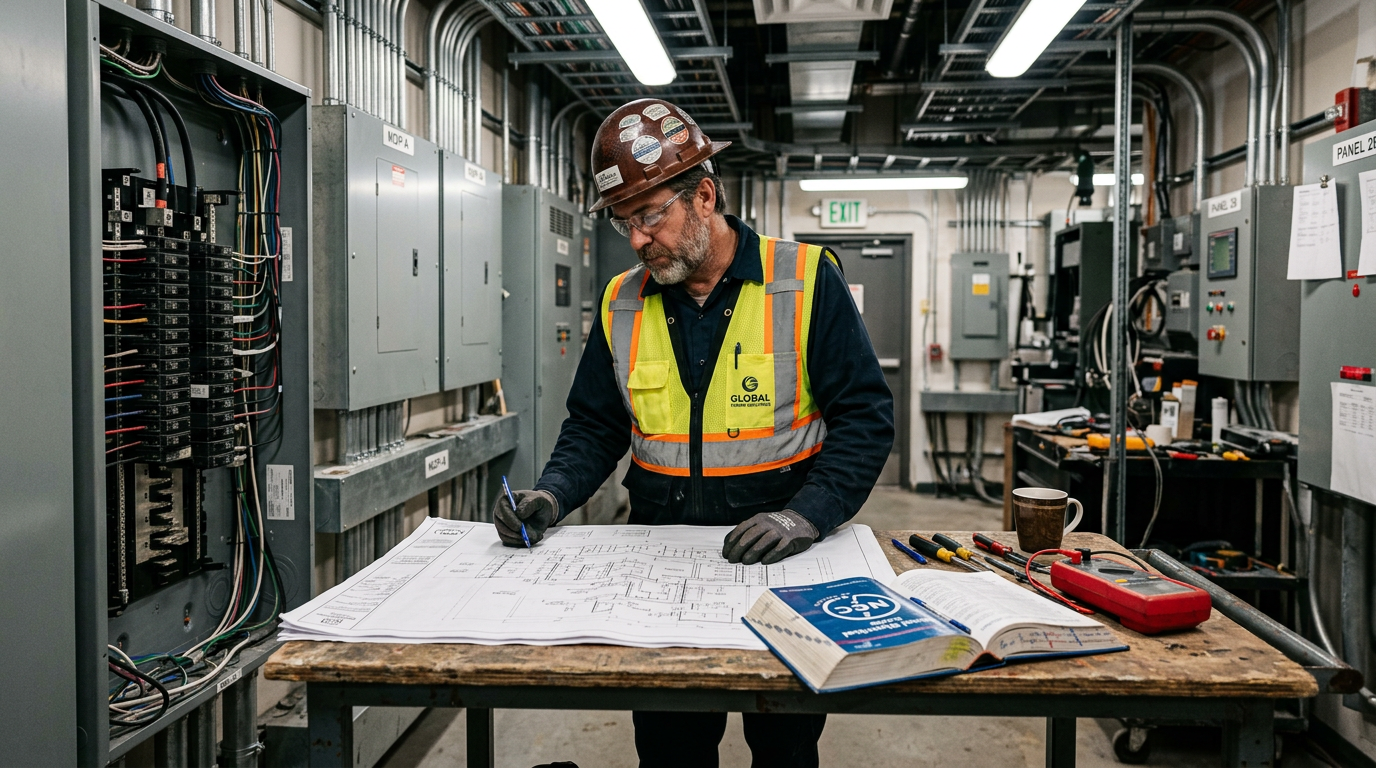
Upgrading to a Master Electrician License in Delaware
Upgrading to a Delaware Master Electrician License: Your Path to the Top
For any ambitious journeyman electrician in Delaware, the title of “Master Electrician” represents the pinnacle of the trade. It’s a career milestone that signifies not just technical expertise, but also leadership, business ownership, and a higher earning potential. With the demand for skilled electricians projected to grow nationally and the mean annual wage for electricians in Delaware being $66,080 as of May 2023, the incentive to advance has never been stronger; master electricians can potentially earn more based on their extensive experience. But what does it really take to make the leap? Upgrading your license is more than just logging more hours; it’s a strategic process of documented experience, advanced testing, and new professional responsibilities. This guide explores the roadmap to obtaining your Delaware master electrician license, a credential that opens the door to leading major projects and building a lasting business in the First State.
Why Aim for a Delaware Master Electrician License? The View from the Top
Transitioning from a journeyman electrician to a master electrician is a game-changer for your career. The most significant advantage is the authority to operate as an independent electrical contractor. As a master, you can pull your own permits, bid on larger and more complex projects, and legally supervise a team of journeyperson and apprentice electricians. This autonomy is the foundation for starting your own business and scaling your operations.
The financial rewards are substantial, but the scope of work is where the role truly expands. Delaware’s commitment to renewable energy and grid modernization is creating a surge in demand for electricians skilled in solar installations and smart grid technology. A master license positions you as a credible leader on these advanced projects. You are no longer just executing the plan; you are the one authorized to plan, lay out, and estimate the entire job, ensuring it complies with every aspect of the National Electrical Code (NEC).
The Journey from Journeyperson to Master: Key Milestones
The Delaware Board of Electrical Examiners has established a clear pathway for advancement. While a journeyperson electrician is a skilled professional, they are required to work under the supervision of a higher-level licensee. The master license elevates you beyond that, and achieving it requires meeting specific benchmarks in experience, knowledge, and professional standing.
The Experience Requirement: Moving Beyond the 8,000-Hour Mark
While becoming a journeyperson requires approximately four years (8,000 hours) of documented work, the master license demands a greater depth of experience. The Board provides two distinct pathways for candidates:
- Option 1 (Experience-Focused): A total of six (6) years of full-time, practical work experience supervised by a licensed master electrician.
- Option 2 (Hybrid Path): A combination of four (4) years of full-time work experience under a master electrician, supplemented by an official transcript showing two years of relevant electrician training from a technical school or college.
In all cases, this experience must be formally documented. Applicants are required to submit a verification of employment form for each employer through Delaware’s DELPROS online portal. This isn’t just about time served; the Board wants to see a comprehensive background in the trade.
Proving Your Knowledge: The Master Electrician Exam
Once your experience is verified, the next major hurdle is the master electrician exam. This challenging test is designed to assess your deep understanding of electrical theory, project planning, and, most importantly, the currently adopted NEC code book. Success on this exam is non-negotiable and requires dedicated preparation beyond the knowledge needed for day-to-day work. A structured approach is key, which is why developing a master electrician exam prep study plan is so crucial for success.
The Business Side of Mastery: Liability Insurance Requirement
A key distinction that separates a master electrician from other license types is the responsibility of being an independent contractor. To protect the public and legitimize your business, Delaware requires all master electrician applicants to provide proof of general liability insurance that meets the Board’s minimum coverage requirements; applicants should confirm the current minimum amounts with the Delaware Division of Professional Regulation. This requirement is a clear signal that you are now operating at a level where you hold ultimate responsibility for the safety and compliance of your work and your team.
Understanding Delaware’s Full Licensing Landscape
While the path to a full master license is a common goal, the Board of Electrical Examiners recognizes that careers can be specialized. Delaware offers other licenses that may fit specific career paths, including:
- Limited Electrician License: For electricians with 6,000 hours (approximately three years) of experience who can pull permits and supervise work within a specific, limited scope, but cannot engage in general electrical contracting.
- Master Electrician Special License: This license is for masters who work exclusively in niche fields like elevators, HVAC systems, pools, or electric signs.
Acknowledging these different tiers is important. Always verify the specific requirements for your desired license type directly with the Delaware Board of Electrical Examiners, as the scope of work and prerequisites can vary significantly.
Staying on Top: License Renewal and Continuing Education
Once you achieve your master license, maintaining it requires an ongoing commitment to professional development. Electrician licenses in Delaware are maintained through biennial renewal cycles handled via the DELPROS portal; applicants should verify the exact renewal date and cycle for their particular license with the Delaware Board of Electrical Examiners.
The continuing education units (CEU) requirements differ by license type. The Board requires completion of approved CE prior to renewal and often mandates NEC update hours, but the exact number of CE hours and first-renewal rules vary by license and are set by the Board. Verify the current hourly requirements and any first-renewal NEC-hour rules with the Delaware Board of Electrical Examiners. You can also learn about the CE requirements here – Delaware CE requirements. Finding the right electrical courses is essential for staying compliant and competitive. To ensure your coursework meets state standards, you should always pick a state-approved Delaware CE course.
Related Resources
Delaware Continuing Education Courses
Explore our board-approved continuing education courses for Delaware professionals:
View CE Requirements
Delaware – NEC 2023 Code Changes Update (Part 1)


Disclaimer: The information provided in this educational content has been prepared with care to reflect current regulatory requirements for continuing education. However, licensing rules and regulations can vary by state and are subject to change. While we strive for accuracy, ExpertCE cannot guarantee that all details are complete or up to date at the time of reading. For the most current and authoritative information, always refer directly to your state’s official licensing board or regulatory agency.
NEC®, NFPA 70E®, NFPA 70®, and National Electrical Code® are registered trademarks of the National Fire Protection Association® (NFPA®)
You may also like
Standby Generators in DE: Navigating Coastal Storm Regulations

Electrical Needs in DE’s Chemical & Coastal Industries
 Login with Google