
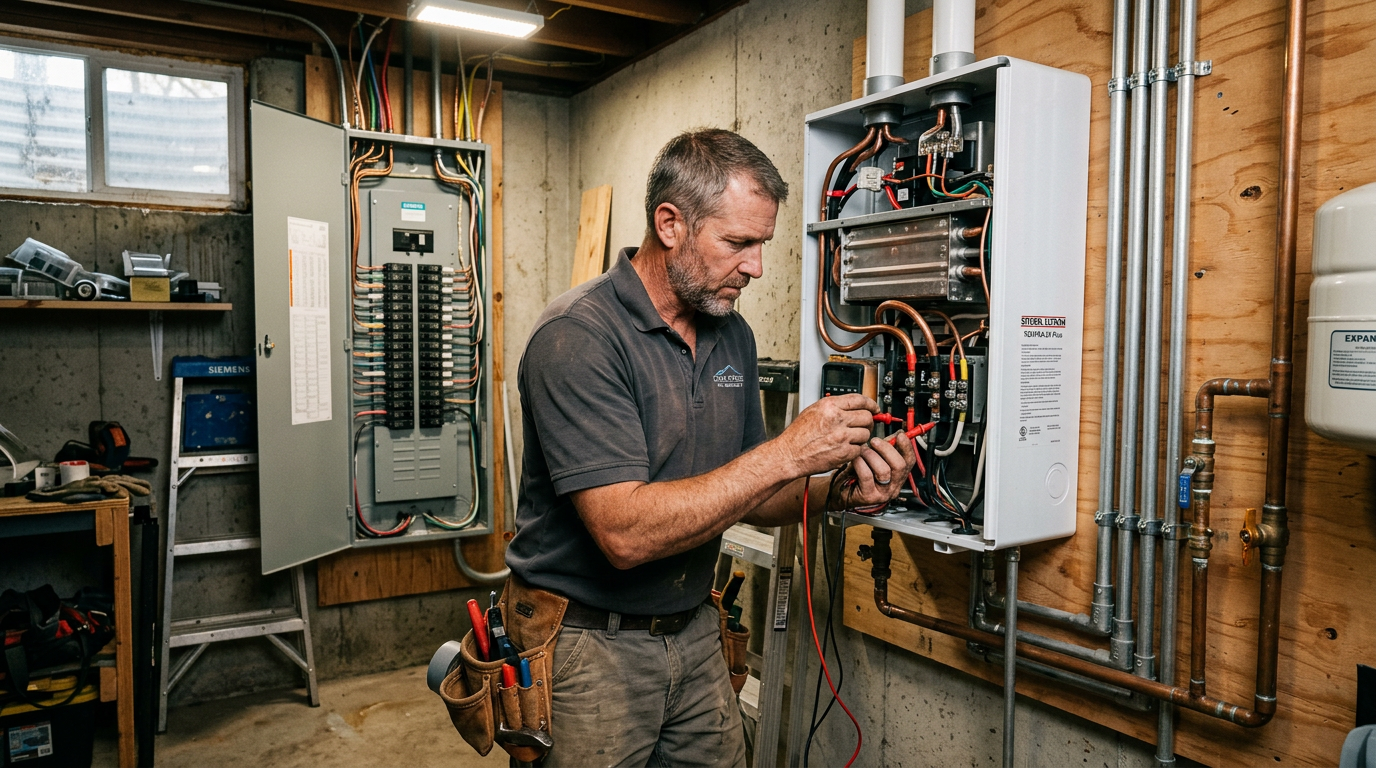
The Shift to Electric Tankless Water Heaters in Colorado Homes
What’s Driving the Tankless Trend in Colorado?
The move toward an electric tankless water heater in Colorado homes is fueled by a combination of consumer desires, technological advancements, and state- and local-level initiatives. Homeowners are attracted to the promise of energy savings – since these units only heat water on demand, they eliminate the standby energy loss of a traditional tank. Furthermore, Colorado has active programs and policies that support decarbonization and electrification, and local building departments and utilities are increasingly promoting high-efficiency electric appliances. This creates a ripe market for electricians who can confidently navigate these installations. While the global market for non-storage water heaters is seeing rapid growth, the real story for electricians lies in the unique electrical demands these units place on a home.
More Than a Swap: The Electrical Realities of Tankless Installations
Replacing an old, tank-style electric water heater with a new tankless model is rarely a simple swap. An on-demand tankless water heater electric unit requires a very large instantaneous power draw to heat water as it flows. This creates several critical electrical considerations that every journeyman electrician or residential wireman must address to ensure a safe and functional installation.
Decoding the Demand: Load Calculations and Amperage Rating
The single most critical step is performing comprehensive load calculations for the entire dwelling. Many whole-home electric tankless units require 240-volt supply (s) and can demand very high currents – often hundreds of amps total when all heating elements are operating. Some whole-home setups will exceed the capacity of typical 100 A or 150 A services, and large units can require service capacities in the 200 A range or higher. Always consult the appliance nameplate and perform the NEC-compliant load calculation (see the NEC appliance and load calculation guidance) before concluding whether an existing service will suffice. Whether demand factors can be applied depends on the NEC load calculation rules (Articles 220 and 422) and local AHJ interpretation, so confirm the approach with the inspector or authority having jurisdiction.
The Frequent Necessity: Electrical Panel Upgrade
The high power requirement often leads to an unavoidable conclusion: the home needs an electrical panel upgrade. Many older Colorado homes have panels that are maxed out, have no physical space for new breakers, or simply lack the busbar rating to handle the additional load. This is a prime opportunity for electricians to not only complete the water heater installation but also to bring the home’s entire electrical system up to modern safety standards. This can involve a service upgrade – commonly to 200 A in many retrofits – and replacement of the main panel so it provides the necessary capacity and breaker spaces. When performing this work, it’s crucial to adhere to clearance rules to ensure the new panel is safe and accessible, a topic you can explore further in our article on why NEC panel clearance is critical.
Non-Negotiable: The Dedicated Branch Circuit
An electric tankless water heater cannot share power. It requires its own dedicated branch circuit (or multiple dedicated circuits depending on the unit’s design) to operate safely and effectively. Depending on the unit’s specifications, this might mean running two, three, or even more separate circuits from the panel to the heater location. Properly sizing these circuits and using the correct wiring methods is essential for managing the electrical load and heat. Understanding when and why these are required is a fundamental skill, as detailed in our guide on when to use dedicated circuits. This often involves a significant amount of new wiring and potentially a circuit breaker replacement for multiple circuits at the panel.
Navigating Code and Compliance in Colorado
Successfully installing an electric tankless water heater means staying current with both national and local regulations. For electricians in Colorado, this involves a commitment to safety, proper permitting, and adherence to the latest code standards.
Staying Current with the NEC
The National Electrical Code (NEC) governs load calculations, conductor sizing, overcurrent protection, and grounding and bonding for the equipment and circuits involved. Colorado and its local jurisdictions adopt model codes on their own timelines and may include state or local amendments, so electricians should verify the current adopted NEC edition and any state amendments with the Colorado State Electrical Board and their local AHJ. Proper grounding and bonding remain critical with these powerful units to ensure safety against faults. To get a deeper insight into recent changes and how they affect work practices, check out our breakdown of the NEC 2023 key changes.
The Importance of Permits and Inspections
Permitting for water heater replacements and any associated electrical upgrades is enforced by local jurisdictions rather than by the NEC itself. Many Colorado jurisdictions require permits for replacing water heaters or for electrical work such as service upgrades, and inspections are typically required to verify compliance with the adopted codes. A professional Colorado licensed electrician understands that pulling a permit protects both the homeowner and their own business. It verifies that the work, especially significant electrical modifications like a panel upgrade or adding new circuits, has been done correctly and will be signed off by a qualified inspector.
The Business Opportunity for Electricians
The trend towards an electric tankless water heater in Colorado is more than just a new type of installation; it’s a gateway to more comprehensive and profitable electrical work. Each inquiry about a tankless heater is an opportunity to perform a full assessment of the client’s electrical system. This consultative approach positions you as an expert, not just an installer.
This trend is part of a larger movement towards electrification and smart home technology, which is reshaping our industry. To learn more about what’s on the horizon, read about the top electrical work trends for 2025. By educating homeowners on the necessity of a panel upgrade or the benefits of incorporating demand-responsive controls, you can expand the scope of a project significantly. This shift from a simple appliance installation to a full system upgrade represents a major growth area for electricians who are prepared to meet the demand.
As home technology evolves, your skills and knowledge must evolve with it. Staying educated on the latest codes, technologies, and installation practices is the best way to capitalize on these new opportunities.
Frequently Asked Questions
- Does every electric tankless water heater installation require a panel upgrade?
Not always, but very often. It depends entirely on the home’s existing service capacity and the result of a thorough NEC-compliant load calculation and nameplate review. Smaller point-of-use units can sometimes be accommodated without an upgrade, while whole-home systems on services under 200 A commonly require an upgrade or other significant electrical changes. - What is the biggest mistake made when installing a tankless water heater electric unit?
The most common and dangerous mistake is underestimating the electrical load. Failing to perform a detailed load calculation and assuming the existing panel can handle the unit can lead to overloaded services, nuisance tripping, and potential safety hazards. Follow NEC load calculation methods and the appliance manufacturer’s instructions. - Are there rebates for these high-efficiency water heaters in Colorado?
Yes – but incentives and amounts vary over time and by program. Colorado and federal incentive programs often prioritize heat pump water heaters and other high-efficiency technologies; standard electric-resistance tankless models typically do not qualify for incentives targeted to heat pump technology. Homeowners should consult current state and federal program administrators to determine eligibility and current rebate or tax credit amounts.
Colorado Continuing Education Courses
Explore our board-approved continuing education courses for Colorado professionals:
View CE Requirements
Colorado 2023 NEC – 24 hours Electrical License Renewal Package

Disclaimer: The information provided in this educational content has been prepared with care to reflect current regulatory requirements for continuing education. However, licensing rules and regulations can vary by state and are subject to change. While we strive for accuracy, ExpertCE cannot guarantee that all details are complete or up to date at the time of reading. For the most current and authoritative information, always refer directly to your state’s official licensing board or regulatory agency.
NEC®, NFPA 70E®, NFPA 70®, and National Electrical Code® are registered trademarks of the National Fire Protection Association® (NFPA®)
You may also like
Standby Generators in DE: Navigating Coastal Storm Regulations

Upgrading to a Master Electrician License in Delaware
 Login with Google