
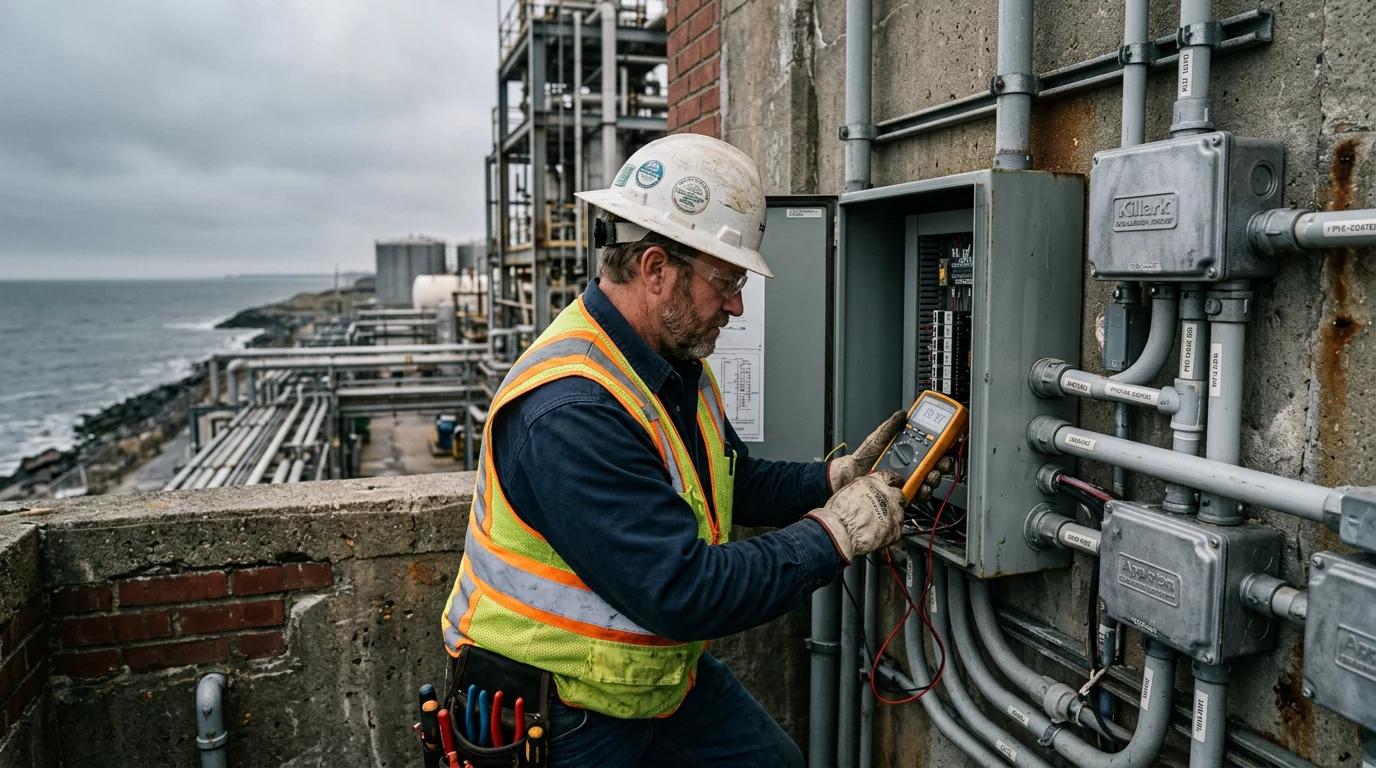
Electrical Needs in DE’s Chemical & Coastal Industries
Electrical Needs in DE’s Chemical & Coastal Industries
Powering the Chemical Corridor: Skills for Hazardous Environments
Delaware’s legacy in the chemical industry requires a deep understanding of complex and often dangerous electrical systems. Ensuring electrical safety in chemical plants is paramount, and it goes far beyond standard commercial wiring. This specialized field demands expertise in environments where flammable gases, vapors, or combustible dusts can be present and where NEC hazardous-location rules apply.
Mastering Hazardous Location Wiring (NEC Chapter 5)
The cornerstone of this work is a thorough knowledge of the NEC (NFPA 70), specifically Article 500 and related articles found in Chapter 5 (Special Occupancies) of the Code. These articles govern installations in hazardous locations, defining the requirements for areas classified as Class I Division 1—where explosive atmospheres are expected under certain operating conditions. Expertise here is non-negotiable and involves mastering techniques for explosion-proof installations, including the correct use of rigid conduit and specialized sealing methods. Understanding the nuances of these environments is critical, which is why it is vital to know how NEC 2023 has changed wiring requirements in hazardous locations. Proper industrial electrical grounding and bonding are also life-and-death concerns, demanding a precise understanding of grounding requirements in Class I locations.
Instrumentation, Control (I&C), and Automation
Modern chemical plants are heavily automated, creating a massive need for electricians skilled in instrumentation and control (I&C). This involves installing and maintaining the complex nervous systems of a plant, from sensors and transmitters to the sophisticated logic of a motor control center (MCC) maintenance program. A key component of this is the Variable Frequency Drive, or VFD. Proficiency in VFD programming and repair is one of the most valuable skills for an industrial electrician today, allowing for precise control over motor speeds, saving energy, and reducing mechanical stress on equipment. See Article 430 (Motors) for the NEC’s guidance on motors, VFDs, and related protection and conductor-sizing principles.
Weathering the Coast: Electrical Resilience Against Salt and Storms
Just miles from the industrial plants, a different battle is being waged—this one against nature. Delaware’s extensive coastline presents a constant threat of saltwater corrosion mitigation to electrical infrastructure. From seasonal storms to the humid, salt-laden air, every outdoor installation requires a specialized approach to ensure longevity and safety.
The Fight Against Corrosion: Conduits and Enclosures
The first line of defense is choosing the right materials. Electricians working in coastal regions must be experts in specifying and installing corrosion resistant conduits like PVC-coated rigid metal, stainless options, or nonmetallic raceways where appropriate. These systems are designed to prevent the premature failure that standard metal conduits would face. Pairing them with corrosion-resistant enclosures, which are designed to be watertight and resistant to environmental damage, is essential for protecting sensitive components. For any electrician working near the shore, a deep dive into wiring systems in corrosive environments is critical for building resilient installations.
Grid Modernization and High Voltage Expertise
Delaware is actively working to enhance grid resilience, particularly in coastal areas. This includes projects involving undergrounding power lines and building infrastructure for renewable energy sources like offshore wind. These initiatives create demand for electricians with high voltage experience, capable of working on systems involving large electrical transformers and complex distribution equipment. Furthermore, buried infrastructure often requires specialized cathodic protection systems to prevent galvanic corrosion of metallic components. Versatile wiring methods using products like MC cable are also common in these complex industrial and commercial projects. Adherence to safety standards is crucial, and contractors should be familiar with federal safety guidance; for example, consult OSHA requirements for electrical contractors when planning safety and site compliance.
Building Your Career as an Industrial Electrician in Delaware
The demand for skilled electricians in Delaware is strong; industry trends indicate positive long-term growth. For those willing to invest in specialized skills, the financial rewards are competitive. According to the U.S. Bureau of Labor Statistics (BLS), the national median annual wage for electricians is competitive, and specialized industrial roles frequently command even higher rates.
From Journeyman to Master Electrician
The career path in Delaware is well-defined by the Delaware Board of Electrical Examiners. The state specifically requires documented supervised work under a licensed master electrician, master electrician special, or limited electrician to qualify for journeyman status. The ultimate goal for many is achieving the Delaware Master Electrician license, which requires passing the Delaware master electrician examination and meeting experience and eligibility requirements established by the state board. These strict licensing pathways and qualifying experience combinations ensure that all professionals meet the high safety standards enforced by the Delaware Board of Electrical Examiners.
The Value of Specialized Electrician Training
In this competitive environment, ongoing education is not just a requirement for renewal; it’s a career strategy. Engaging in focused electrician training allows you to master the high-demand skills that employers in the chemical and coastal sectors are looking for. Whether through hands-on practice or convenient online electrical courses, continuous learning is the key to advancement. Staying current with your license is essential, and finding state-approved Delaware electrician continuing education ensures you meet all state requirements while enhancing your professional knowledge. For those looking to truly stand out, specializing in hazardous locations and resilience for corrosive environments is a practical investment.
Delaware Continuing Education Courses
Explore our board-approved continuing education courses for Delaware professionals:
View CE Requirements

Frequently Asked Questions (FAQs)
What are the biggest challenges for an industrial electrician in Delaware?
The two most significant challenges are the dual threats of hazardous materials in the chemical industry and environmental corrosion along the coast. Success requires specialized knowledge in both hazardous location wiring and saltwater corrosion mitigation.
How important is NFPA 70E compliance in Delaware’s industrial sector?
NFPA 70E compliance is critically important. This “Standard for Electrical Safety in the Workplace” provides the safety protocols necessary to protect workers from electrical hazards, which is especially vital in high-energy industrial and chemical plant environments.
Is VFD programming a valuable skill for Delaware electricians?
Absolutely. With the increasing automation in manufacturing and chemical processing, VFD programming and repair is a highly sought-after skill. It is central to controlling process machinery, managing energy consumption, and maintaining complex automated systems.

Disclaimer: The information provided in this educational content has been prepared with care to reflect current regulatory requirements for continuing education. However, licensing rules and regulations can vary by state and are subject to change. While we strive for accuracy, ExpertCE cannot guarantee that all details are complete or up to date at the time of reading. For the most current and authoritative information, always refer directly to your state’s official licensing board or regulatory agency.
NEC®, NFPA 70E®, NFPA 70®, and National Electrical Code® are registered trademarks of the National Fire Protection Association® (NFPA®)
You may also like
Standby Generators in DE: Navigating Coastal Storm Regulations

Upgrading to a Master Electrician License in Delaware
 Login with Google