
The Solar Boom in Colorado: Career Opportunities for Electricians
The Solar Boom in Colorado: Career Opportunities for Electricians
Why Colorado is Ground Zero for Solar Growth
This isn’t a fleeting trend. Colorado’s solar momentum is built on a combination of state policy, utility commitments, economics, and necessity. Major utilities operating in the state have announced aggressive decarbonization targets (for example, utility commitments in some cases target substantial percentages of renewables by 2030) and the state has adopted ambitious clean energy objectives aimed at dramatically increasing renewable generation over the coming decades. To meet these goals, the state needs to add substantial new generation resources, and solar is a major contributor to those plans. Industry outlooks from organizations such as the Solar Energy Industries Association (SEIA) foresee continued multi-gigawatt growth nationally and regionally, with Colorado expected to play an important role.
Supportive state policies and ongoing grid modernization work are helping accelerate deployment. Recent and ongoing Colorado legislative and regulatory efforts have focused on grid modernization and removing barriers to integrating distributed resources and energy storage; utilities and the state are pursuing reforms and investments to improve distribution system capabilities for solar and storage interconnection. This is creating a competitive market for both utility-scale solar farms and commercial solar installation projects, all of which require the expertise of licensed electricians to connect safely and reliably to the grid.
More Than a Job: Your Role as a Licensed Electrician in the Solar Boom
The surge in solar projects has run headfirst into a critical challenge: a shortage of trained electricians relative to the pace of deployment. State and industry workforce analyses identify a need for additional trained electrical workers to support clean energy deployment and grid modernization, and they call for coordinated recruitment, training, and retention efforts to close the gap. This gap creates backlogs for projects but also presents a tremendous opportunity, putting electricians with a Colorado electrical license in strong demand.
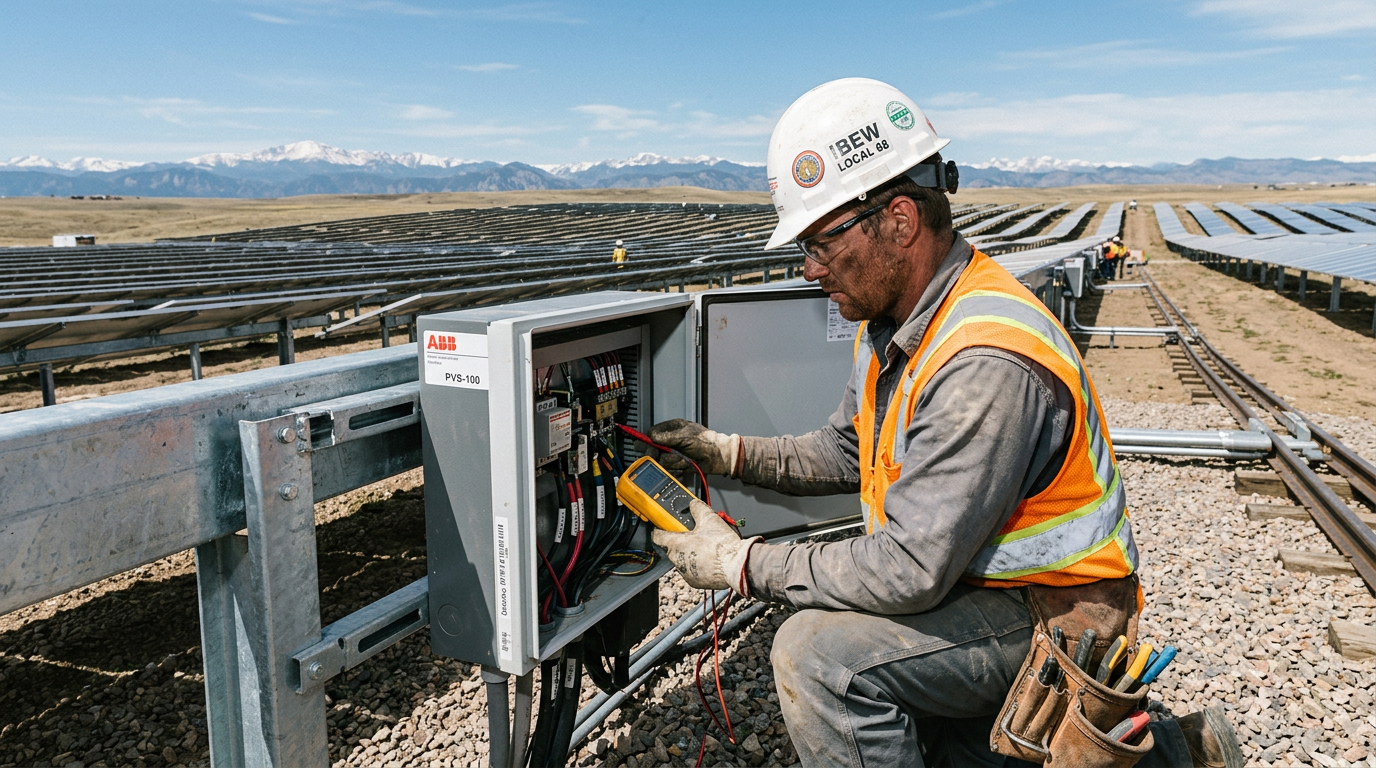
Companies are actively seeking qualified electricians, offering competitive wages and investing in training to build their teams. This is where your license and experience become invaluable. Licensed electricians are the critical link ensuring investments in photovoltaic (PV) systems perform correctly and safely, and that installations meet applicable electrical code and interconnection requirements. Your work goes far beyond simply mounting panels; it involves intricate knowledge of grid-tied inverters, complex wiring, precise conduit bending, and ensuring every connection complies with the National Electrical Code (NEC) standards that govern PV systems, especially the requirements for photovoltaic systems found in NEC Article 690 and the requirements for energy storage systems in NEC Article 706.
The Critical Difference: PV Installer vs. Licensed Solar Electrician
It’s vital to understand the distinction between a general PV installer and a licensed solar electrical contractor. While an installer may handle the mechanical mounting of panels, it’s the licensed electrician—whether a Journeyman electrician or Master electrician—who is legally qualified and trusted to handle the system’s electrical heart. You are responsible for the critical connections, from the panels to the inverter and from the inverter to the grid, including the increasingly popular energy storage systems (solar batteries). This expertise is what clients and contractors pay a premium for.
Skills That Shine: How to Specialize in Solar
Transitioning into the solar sector requires more than just general electrical knowledge. To truly capitalize on this opportunity, you need to invest in specialized skills. One widely recognized credential in the solar industry is the NABCEP certification (from the North American Board of Certified Energy Practitioners), and many employers and project owners value NABCEP-certified personnel for design, installation, and inspection roles.
Beyond certifications, staying current is key. The technology and codes are evolving rapidly. Pursuing electrical continuing education focused on solar-ready codes and new technologies is essential. Many electricians are turning to a mix of hands-on training at an electrician school and the flexibility of online electrical courses to gain these specialized skills without taking significant time off from work.
Charting Your Course: Career Paths and Earning Potential
The solar industry offers diverse career pathways for electricians at every level. A residential electrician can build a thriving business focusing on home solar and battery installations. A journeyman electrician with a valid Journeyman electrician license can find higher-paying roles on larger commercial installation projects. And a Master electrician can oversee complex, utility-scale solar farms, manage teams, or launch their own solar electrical contractor business.
The compensation reflects demand and varies by role, experience, and location. Reported compensation varies by role and region; many entry-level solar installers earn in the low-to-mid tens of thousands annually, while specialized solar electricians and licensed electricians working on solar and storage projects commonly earn higher wages — often into the mid-$50k to mid-$70k range or higher depending on experience, certifications, and project type. For a broader look at compensation, our Electrician Salary Guide and analysis of the top-paying states for electricians provide additional context; you can also consult national labor data such as the Bureau of Labor Statistics for median electrician wages.
Future-Proof Your Career with Solar and Beyond
Aligning your career with solar is a strategic move to future-proof your skills. The industry is rapidly expanding beyond basic panels into integrated solutions. Expertise in energy storage systems is becoming increasingly important as more homeowners and businesses seek resilience and energy independence. Understanding how to integrate storage with PV systems and how to apply relevant NEC requirements is a valuable skill.
The solar boom is a key component of the larger electrification trend. As demand grows for electric vehicles, heat pumps, and smart buildings, the need for electricity—and for skilled electricians who can manage clean energy generation and storage—will continue to rise. Staying on top of these electrical work trends ensures your career remains relevant and prosperous for decades to come.
Get Started on Your Colorado Solar Career Path
The solar expansion in Colorado is more than just an industry trend; it’s an important opportunity for licensed electricians. The state’s policy goals, combined with identified workforce needs, create favorable conditions for career growth, specialization, and increased earning potential. By investing in specialized training, pursuing credentials such as NABCEP where appropriate, and staying current with the National Electrical Code (NEC) and utility interconnection requirements, you can position yourself at the forefront of this energy transition.
Ready to power up your career and take advantage of the solar opportunity? ExpertCE offers a wide range of state-approved courses to keep your skills sharp and your license current. Browse our courses today and take the next step in your professional journey.
Colorado Continuing Education Courses
Explore our board-approved continuing education courses for Colorado professionals:
View CE Requirements


Colorado 2023 NEC – 24 hours Electrical License Renewal Package
Disclaimer: The information provided in this educational content has been prepared with care to reflect current regulatory requirements for continuing education. However, licensing rules and regulations can vary by state and are subject to change. While we strive for accuracy, ExpertCE cannot guarantee that all details are complete or up to date at the time of reading. For the most current and authoritative information, always refer directly to your state’s official licensing board or regulatory agency.
NEC®, NFPA 70E®, NFPA 70®, and National Electrical Code® are registered trademarks of the National Fire Protection Association® (NFPA®)
You may also like
Delaware’s EV Charging Growth: A Guide for Pro Electricians

Starting an Electrical Business in Delaware: A Contractor’s Guide
 Login with Google