
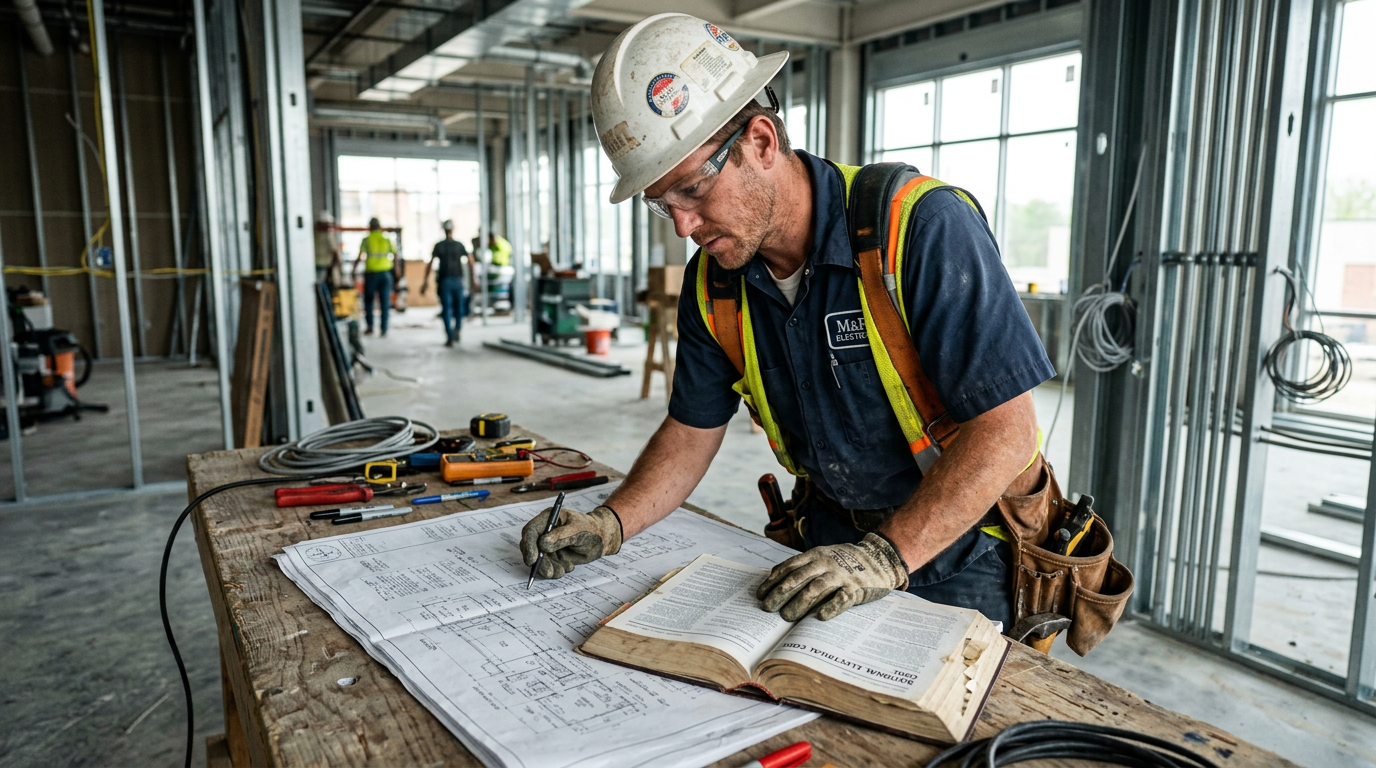
Colorado Electrician License: A Guide to DORA Requirements
Navigating the Colorado State Electrical Board
In Colorado, all electrical work is regulated by the Colorado State Electrical Board, which operates under the umbrella of the Department of Regulatory Agencies (DORA). DORA is responsible for setting the standards, issuing licenses, and ensuring compliance to protect public safety. From registering as an apprentice to renewing a master electrician license, every step of your professional journey will involve interacting with DORA’s processes and requirements. This includes everything from documenting your work history on experience verification forms prepared and furnished by the Board to passing the required state exams.
Your Career Blueprint: Colorado Electrician License Tiers
Colorado offers a tiered licensing system that allows electricians to advance their careers as they gain experience and expertise. Each level has a distinct scope of work and a specific set of requirements for licensure. Understanding these distinctions is fundamental for anyone looking to enter the trade or advance to a higher level. The path often begins at an electrician school or through a direct apprenticeship, leading to one of the three primary license types.
Residential Wireman
The residential wireman license is a common entry point for electricians focusing on the housing sector. It is associated with work in residential dwellings (one- to four-family). Note that the Board’s rules require a residential electrician working on a commercial job site to be registered as an apprentice, so residential licensees working outside their residential scope must comply with applicable registration requirements.
Journeyman Electrician
A journeyman electrician license authorizes a broader scope of practice than a residential license. The Board requires documented experience for a journeyman license of 8,000 hours earned in no less than four years. Separately, for applicants who entered apprenticeship or registered on or after January 1, 2011, the rules require documented completion of 288 hours of electrical training during the last four years of apprenticeship.
Master Electrician
The master electrician license represents the highest level of certification for an individual electrician in Colorado. The Board requires 10,000 hours earned in no less than five years for master licensure. Applicants may also seek educational credit or foreign-education evaluation under the Board’s education provisions; consult the Board’s verification and education rules for details.
License Requirements at a Glance
| License Type | Experience & Education Requirements |
|---|---|
| Residential Wireman | 4,000 hours earned in no less than two years. The license is associated with work in one- to four-family residential dwellings. A residential electrician working on a commercial job site must be registered as an apprentice per Board rules. |
| Journeyman Electrician | 8,000 hours earned in no less than four years. Certain applicants must also provide documented evidence of at least 288 hours of electrical training conducted during the last four years of apprenticeship, as required by Board rules. |
| Master Electrician | 10,000 hours earned in no less than five years. Applicants may receive certain education or foreign-experience credit subject to the Board’s evaluation procedures. |
The Pathway to Your Colorado Electrician License
Achieving your license is a journey of documented training and rigorous testing. The state has established a clear process to ensure every licensed electrician is proficient in the National Electrical Code and safe work practices. For a detailed overview of this process, see our guide on how to become a licensed electrician.
Starting with an Electrician Apprenticeship
Your hands-on experience begins with an electrician apprenticeship. Before you can start logging hours, you must be registered with the State Electrical Board. As you work, your supervising licensed journeyman or master electrician will verify your hours and the type of work performed on the experience verification forms prepared and furnished by the Board. This documentation is the cornerstone of your application, so it’s crucial to maintain accurate records throughout your training.
Conquering the state exam
Once you have met the experience requirements for your desired license, you must pass the applicable state-administered examination(s). Candidates must present positive photo identification to be admitted to the examination area, and examination results are provided in a pass-or-fail format. Thorough preparation is key to success on exam day.
Keeping Your License Active: Renewal and Continuing Education
Obtaining your license is a major milestone, but maintaining it is an ongoing responsibility. Colorado requires all licensed electricians—Residential Wireman, Journeyman, and Master—to renew their licenses every three years. A core part of this renewal is completing continuing education.
According to the Colorado Division of Professions and Occupations (DPO), electricians must complete 24 hours of continuing education during each three-year license cycle. These are continuing education hours (not termed ‘PDUs’) and ensure you stay current with evolving technology and safety standards. The requirements for these continuing education hours include:
- A minimum of 4 hours on National Electrical Code changes each renewal cycle.
- The remaining hours can be selected from the Board’s core competencies such as Grounding and Bonding, Wiring Methods, Theory/Calculations, and Safety-related subjects (subject to the Board’s limits on safety-credit hours).
The Board maintains an Attesting Providers list for continuing education; providers must attest that their courses and instructors meet Board requirements. Online courses are acceptable when they meet Board criteria (for example, interactive delivery and comprehension checks). For more advice on this, check out our electrician license renewal tips.
Understanding that electrician continuing education is crucial is key to a long and successful career.
Beyond the Individual License: Opportunities and Advancement
For many electricians, a personal license is just the beginning. Colorado’s framework provides pathways for business ownership and allows experienced professionals to bring their skills from other states.
Becoming an Electrical Contractor
If your goal is to own and operate an electrical business, you must register as an electrical contractor with the state. This is a business registration, not a personal license. The contractor must have a responsible master electrician; Board rules provide a 20-day period for a contractor to hire another master if the responsible master is lost. Contractors must follow registration and permitting rules established by the Board and Division.
License Portability and Reciprocity
For electricians moving to Colorado, the state allows reciprocity for a journeyman electrician’s license under specific conditions: the applicant must hold a current, active journeyman (or master) license from the licensing state that allows the individual to work as a journeyman, and that licensing state must be a member in good standing of the National Electrical Reciprocal Alliance (NERA) or have a reciprocity agreement with the Board. Applicants will not be granted reciprocity if the original license was granted by grandfathering without a state-administered examination. A Colorado master electrician’s license may not be granted by reciprocity. You may also find electrician license portability helpful when considering relocation.
Build Your Future in Colorado’s Electrical Industry
Colorado offers a vibrant and growing market for electricians. By understanding and adhering to the requirements set forth by DORA and the State Electrical Board, you can build a secure and prosperous career. From your first day as an apprentice to earning a master license and even starting your own company, each step is a regulated part of ensuring a safe and competent workforce. Stay on top of your continuing education, keep your license current, and you’ll be well-positioned to capitalize on the opportunities ahead.
Ready to fulfill your continuing education requirements? Browse our courses to find state-approved online options that fit your schedule.
Frequently Asked Questions
What is DORA in Colorado?
DORA stands for the Department of Regulatory Agencies. It is the main state agency that oversees professional licensing for numerous trades and professions in Colorado, including the State Electrical Board which licenses electricians.
How often do I need to renew my Colorado electrician license?
All Colorado electrician licenses (Residential Wireman, Journeyman, and Master) must be renewed every three years. The renewal process includes completing 24 hours of required continuing education.
Can I use my electrician license from another state in Colorado?
Colorado allows reciprocity for the Journeyman Electrician license under conditions set by the Board (see the reciprocity paragraph above). If you hold an active journeyman license from a state that meets the Board’s reciprocity conditions and that license was obtained by examination, you may be eligible to obtain a Colorado license without re-testing. Master electrician licenses are not included in reciprocity under the Board’s rules.
Colorado Continuing Education Courses
Explore our board-approved continuing education courses for Colorado professionals:
View CE Requirements
Colorado 2023 NEC – 24 hours Electrical License Renewal Package
Disclaimer: The information provided in this educational content has been prepared with care to reflect current regulatory requirements for continuing education. However, licensing rules and regulations can vary by state and are subject to change. While we strive for accuracy, ExpertCE cannot guarantee that all details are complete or up to date at the time of reading. For the most current and authoritative information, always refer directly to your state’s official licensing board or regulatory agency.
NEC®, NFPA 70E®, NFPA 70®, and National Electrical Code® are registered trademarks of the National Fire Protection Association® (NFPA®)
You may also like
Standby Generators in DE: Navigating Coastal Storm Regulations
Upgrading to a Master Electrician License in Delaware
 Login with Google