
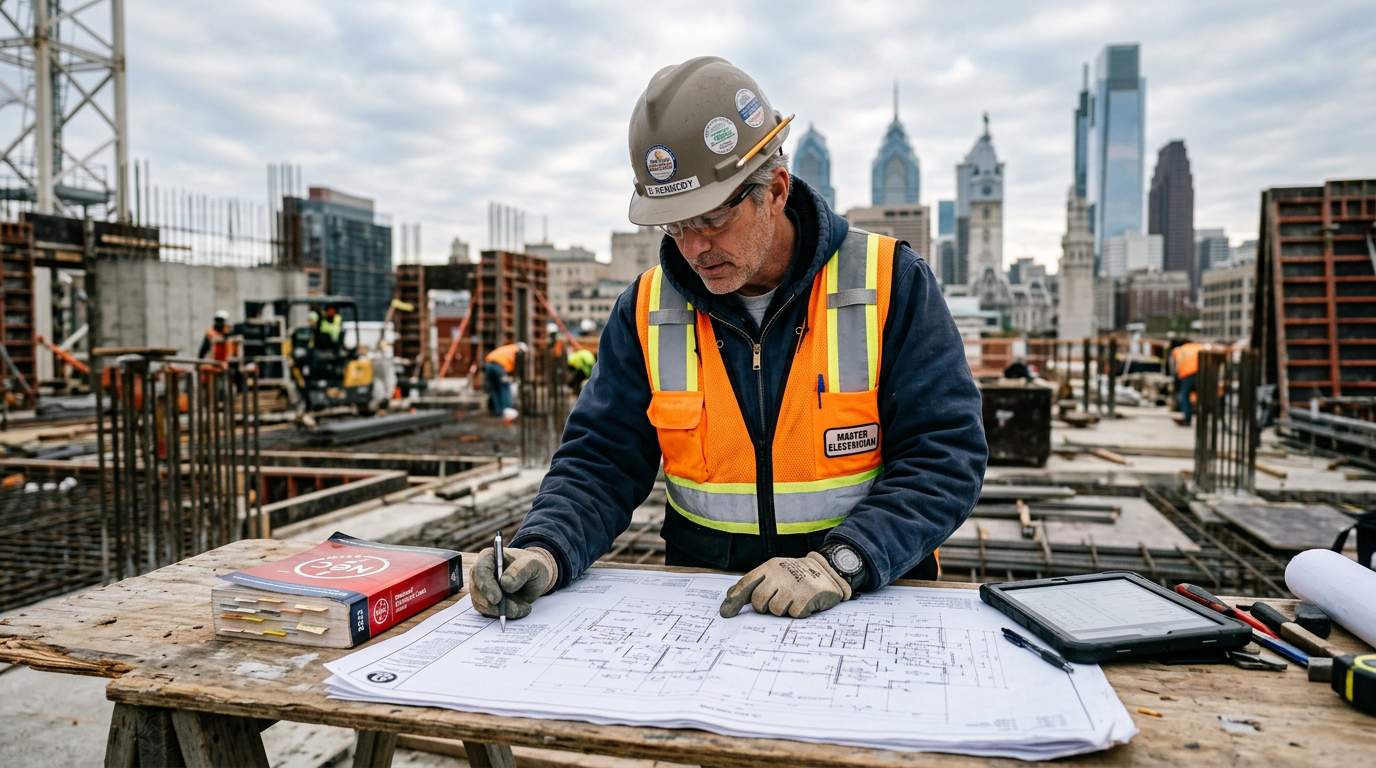
Delaware Electrical License Reciprocity with MD, PA & NJ
Understanding Electrical License Reciprocity: The Basics
Electrical license reciprocity is an agreement between two states that allows an electrician licensed in one state to obtain a license in another without having to go through the full application and examination process. The core principle is that if an electrical licensing board in one state deems another’s licensing standards to be “substantially similar,” they can streamline the process for out-of-state applicants. This is a crucial concept for any professional seeking a multi-state electrical license.
However, it’s rarely a blanket approval. Reciprocity is often conditional on a few key factors:
- License by Examination: Most states will only grant reciprocity if your original license was earned by passing an exam, not if it was obtained through a previous reciprocity agreement.
- License Type: The rules for a master electrician license are often different from those for a journeyman electrician or residential electrician, and it’s important to note that license types and availability vary by state.
- Good Standing: Your existing license must be active and in good standing, with no pending disciplinary actions.
Delaware Electrical License Reciprocity: The Official Stance
Delaware’s Board of Electrical Examiners manages licensing through its DELPROS online portal. Delaware’s Board of Electrical Examiners has determined the states that do and do not have licensure standards “substantially similar” to those of Delaware. Depending on whether your state is substantially similar or not determines what additional item(s) (if any) you are required to submit. In addition to submitting the application fee, you must also submit proof of experience if you are currently licensed in Arkansas, Colorado, D.C., Florida, Georgia, Maine, Massachusetts, Michigan, Nebraska, Nevada, New Hampshire, North Carolina, Ohio, Texas, Vermont, Virginia, West Virginia, or Wyoming – a Verification of Employment form proving and describing at least five years after licensure. These states’ licensure requirements have been determined NOT substantially similar to Delaware’s.
- If you cannot obtain the required form from the supervising licensed electrician, you may substitute tax W-2 forms showing full-time employment. Include a letter explaining why you cannot obtain the form.
- For periods of self-employment, you may submit tax form Schedule C as proof of experience.
You do not need to submit proof of experience if you are currently licensed in Maryland or New Jersey. These states’ licensure requirements have been determined to be substantially similar to Delaware’s.
Before applying, it’s wise to review the necessary continuing education for Delaware electricians to be prepared for future renewals.
Delaware to Maryland Reciprocity
Maryland accepts Delaware license via reciprocity. To simplify your licensing process, Maryland requires all reciprocal applicants, both Journeypersons and Masters, to provide a current copy of their electrical license alongside an official Letter of Good Standing from their home state. While these two documents form the core of the application for everyone, Master Electricians must fulfill one additional step by submitting a Certificate of Insurance that strictly meets Maryland’s state requirements. Ensuring you have these credentials ready will streamline your transition and help you get to work faster in your new jurisdiction.
Maryland reciprocity license applications are here:
The Complex Case of New Jersey Reciprocity
The Garden State presents a unique and often challenging scenario for electricians looking to work across state lines.
New Jersey to Delaware Reciprocity
Electricians holding a New Jersey license may apply to Delaware by reciprocity, submitting verification through DELPROS.
Delaware to New Jersey: A One-Way Street?
The New Jersey Board of Examiners of Electrical Contractors does not maintain automatic, statewide reciprocity agreements with other jurisdictions. Out-of-state applicants must meet New Jersey’s licensing requirements and have their credentials reviewed; the board evaluates such applications on a case-by-case basis rather than via a blanket reciprocity program.
The Pennsylvania Problem: No Statewide License
For electricians looking for reciprocity between Delaware and Pennsylvania, the conversation stops before it starts. The most significant barrier is that Pennsylvania has no statewide electrical license. Instead, licensing is handled at the municipal or county level, with different rules in Philadelphia, Pittsburgh, and other jurisdictions. Delaware’s reciprocity process requires a license issued by another state, territory, or the District of Columbia; municipal or local licenses (such as those issued by some Pennsylvania cities) generally are not sufficient for Delaware reciprocity. Applicants whose only credential is a Pennsylvania municipal license typically must apply to Delaware by examination and provide the required documentation.
From Apprentice to Multi-State Professional
Building a career that spans multiple states requires more than just technical skill; it demands a commitment to professional development and regulatory awareness. The journey often begins with foundational electrician training and experience. Many successful professionals started by learning how to become an electrician helper to apprentice, gaining invaluable on-the-job experience. From there, advancing through an electrician school or apprenticeship program to become a licensed journeyman is the next step.
Whether you’re seeking a journeyman electrician reciprocity agreement or a master-level license, continuous learning is paramount. Staying up-to-date with the latest edition of the NEC code book through online electrical courses is essential for compliance and safety. No matter which state you’re licensed in, staying current with the latest version of the National Electrical Code is non-negotiable. Ensure you meet all state requirements with our comprehensive code update courses.
Related Resources
- Exploring Reciprocity in Other States: The Alaska Model
- A Deep Dive into State Licensing: The Colorado DORA Guide
Delaware Continuing Education Courses
Explore our board-approved continuing education courses for Delaware professionals:
View CE Requirements

Frequently Asked Questions (FAQ)
Do I need to take another exam to get a journeyman electrician reciprocity license in Delaware?
Often, no exam is required if Delaware determines your out-of-state license is substantially similar and grants reciprocity, but this is not guaranteed. Applicants must complete the full DELPROS application, provide license verification, pay applicable fees, and supply any documentation requested by the Board; the Board may still require examinations or additional information in specific cases.
What is the difference between a master electrician license and a journeyman license for reciprocity?
A journeyman electrician is certified to perform electrical work under the supervision of a master electrician. A master electrician has more experience and has passed additional examinations, allowing them to plan, design, and supervise electrical projects and pull permits. Reciprocity agreements are always specific to the license type, so a journeyman license will only grant you a journeyman license in the new state, not a master license.
Can I get a Delaware license by reciprocity if my only license is from Philadelphia, PA?
No. Because Pennsylvania does not have a statewide licensing board, Delaware generally does not recognize municipal licenses for reciprocity. You would need to apply for a Delaware license by examination.
Disclaimer: The information provided in this educational content has been prepared with care to reflect current regulatory requirements for continuing education. However, licensing rules and regulations can vary by state and are subject to change. While we strive for accuracy, ExpertCE cannot guarantee that all details are complete or up to date at the time of reading. For the most current and authoritative information, always refer directly to your state’s official licensing board or regulatory agency.
NEC®, NFPA 70E®, NFPA 70®, and National Electrical Code® are registered trademarks of the National Fire Protection Association® (NFPA®)
You may also like

Alabama Electrical License Reciprocity: A 2025 Guide

Texas (TDLR) Electrical License Reciprocity with Other States

 Login with Google