
Why Mini-Split Installations Are a Hot Market in Arkansas
If you’ve been a licensed electrician in Arkansas for any length of time, you know the summer drill: sweltering humidity, skyrocketing energy bills, and clients desperate for relief. For years, the solution was a traditional central air conditioning unit. But a powerful shift is underway. Across the state, homeowners are increasingly demanding a more efficient and flexible solution, creating a massive opportunity for savvy electrical professionals. The market for mini split installation Arkansas is not just growing; it’s expanding, and skilled electricians are in the driver’s seat.
The Surge in Demand for the Ductless Heat Pump
So, what’s behind this trend? At its core, it’s about the superior technology of the ductless heat pump. Unlike traditional systems that can experience significant efficiency loss through long duct runs and leaky ducts (ENERGY STAR highlights that duct losses are a major factor in central-system energy use), these systems deliver conditioned air directly into a space, avoiding those distribution losses. This ductless design is especially advantageous for older homes without existing ductwork, new additions, garages, and workshops. Homeowners love the room-by-room “zoning” control, which allows them to cool the kitchen without freezing the bedrooms — a level of customization a standard central air system can’t offer.
This efficiency is measured by SEER ratings (Seasonal Energy Efficiency Ratio). Mini-splits often have very competitive SEER ratings — many high-efficiency models are in the high teens to 20+ SEER — and their higher efficiency can translate into lower monthly utility bills depending on model, installation, and usage patterns.
Financial Incentives Fueling the Mini-Split Boom
High efficiency and comfort are major draws, but a wave of financial incentives has turned the mini-split trend into a tidal wave. These programs make a professional mini split ac installation more affordable than ever, driving customer demand through the roof.
- Federal Tax Credits: The Inflation Reduction Act expanded federal tax incentives for high-efficiency heat pumps and other energy improvements, but the exact credits, percentages, and caps depend on the specific program and year. Homeowners should consult the IRS and a tax professional to confirm current eligibility and limits.
- Utility Rebates: Many utilities offer rebates and incentive programs to encourage high-efficiency HVAC installations; amounts and eligibility vary by utility, program, and equipment. Homeowners and contractors should check current programs and rebate levels directly with the customer’s local utility (for example, SWEPCO, Liberty Utilities, or others that serve parts of Arkansas) because program details and rebate amounts change frequently. These energy efficiency rebates lower the barrier to entry and can make the decision to upgrade much easier for your clients.
The Electrician’s Critical Role: More Than Just Wires
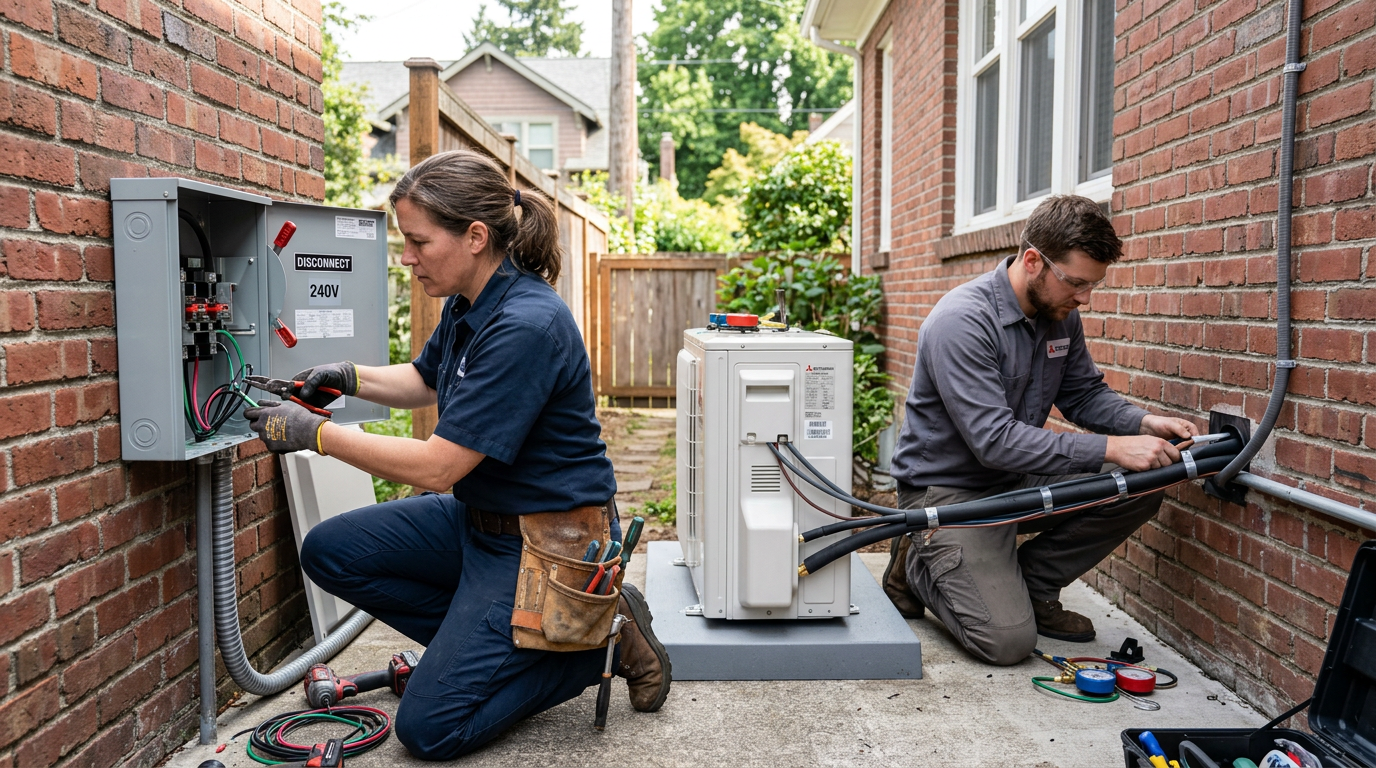
This boom is a prime opportunity for any licensed air conditioning electrician. While an HVAC technician may handle the refrigerant lines (which requires EPA Section 608 certification and any state-level HVAC licensing), the electrical scope of a mini split installation is significant and non-negotiable for safety and performance. This is where your expertise becomes invaluable, especially when clients are tempted by the perceived savings of a diy mini split project bought online.
A professional installation involves:
- Proper Load Calculation: Performing a correct load calculation ensures the new unit doesn’t overload the home’s electrical panel, a critical step covered by the NEC’s load calculation provisions.
- Dedicated Circuit and Disconnect: Installing a new, properly sized circuit and a lockable outdoor disconnect for the air conditioner condensers is a fundamental safety requirement; Article 440 of the NEC provides the specific requirements for air-conditioning equipment disconnecting means and protection.
- Code-Compliant Wiring: Ensuring all wiring, connections, and components meet or exceed all state and local codes, including conductor sizing, raceway protection, conduit terminations, and equipment grounding as addressed in NEC Articles that govern wiring installations.
By explaining these critical safety steps, you reinforce your value and protect homeowners from the significant fire and electrical hazards posed by improper DIY installations. Also remember that handling refrigerant requires EPA certification and, in most states, qualified HVAC professionals; coordinate work and permits appropriately.
Code Compliance is Non-Negotiable
Code compliance varies by state and local jurisdiction. All electrical work in Arkansas must comply with the version of the state electrical code that is currently adopted and enforced by the Arkansas Department of Labor and Licensing and the Board of Electrical Examiners; many jurisdictions adopt recent NEC editions, but adoption dates and amendments vary, so confirm the currently enforced code and effective date with the state board before starting work. The NEC contains the installation and conductor protection rules (for example, Articles addressing general wiring and conductor ampacity and protection), and mechanical codes such as the International Mechanical Code (IMC) typically govern refrigerant piping and mechanical protections where they are adopted locally. The Arkansas Department of Labor and Licensing, through its Board of Electrical Examiners, is the place to confirm licensing and code adoption in Arkansas, and as a professional, your adherence to these codes protects your license and your clients’ safety.
Career Pathways for Journeyman and Master Electricians
The rise of the mini-split air conditioner market opens new career avenues. A motivated journeyman electrician can specialize in this high-demand niche, becoming the go-to expert for these installations. Building relationships with HVAC companies that need a reliable electrical partner can create a steady stream of work.
For a master electrician, the opportunity is even greater. You can lead installation crews, manage permitting for entire projects, and build a significant portion of your business around this technology. While handling refrigerant requires EPA Section 608 certification and often state HVAC credentials, the electrical portion is substantial and often requires its own permit and inspection. Many HVAC contractors prefer to subcontract the high-voltage work to an expert like you. To master this specialty, you must be confident in your ability to power any system correctly. Learn to wire any HVAC system with ExpertCE’s technical guides.
Frequently Asked Questions (FAQ)
- Do I need a special license for mini split installation in Arkansas?
- As a licensed electrician, you are qualified to perform all the electrical work, including running the circuit, setting the disconnect, and wiring the units. However, handling the refrigerant lines requires the EPA Section 608 technician certification and, in most jurisdictions, the person performing refrigerant work will hold HVAC contractor credentials as required by state law. Often, an electrician and an HVAC technician work together on a single installation.
- What is the biggest mistake you see in a diy mini split installation?
- The most dangerous mistake is improper electrical work. This includes failing to perform a load calculation, using incorrectly sized wire or breakers, and not meeting applicable NEC requirements for outdoor disconnects and equipment grounding. These errors create serious fire hazards.
- How do SEER ratings impact homeowners in Arkansas?
- A higher SEER rating generally means the unit is more energy-efficient. For a homeowner in Arkansas, this can result in lower summer electricity bills — but actual savings depend on climate, usage, and the specific equipment. Many utility rebate programs base eligibility on minimum efficiency thresholds, so check local programs for details.
Arkansas Continuing Education Courses
Explore our board-approved continuing education courses for Arkansas professionals:
View CE Requirements
Arkansas 2023 NEC Changes (8 Hours)

COMING SOON – Arkansas 2026 NEC Changes (8 Hours)

Disclaimer: The information provided in this educational content has been prepared with care to reflect current regulatory requirements for continuing education. However, licensing rules and regulations can vary by state and are subject to change. While we strive for accuracy, ExpertCE cannot guarantee that all details are complete or up to date at the time of reading. For the most current and authoritative information, always refer directly to your state’s official licensing board or regulatory agency.
NEC®, NFPA 70E®, NFPA 70®, and National Electrical Code® are registered trademarks of the National Fire Protection Association® (NFPA®)
You may also like
Standby Generators in DE: Navigating Coastal Storm Regulations

Upgrading to a Master Electrician License in Delaware

 Login with Google