
Alabama’s EV Boom: A Guide for Residential Electricians
Alabama’s EV Boom: A Guide for Residential Electricians
The Current is Flowing: Alabama’s EV Market at a Glance
Alabama’s commitment to an electric future is clear. State entities such as the Alabama Department of Transportation (ALDOT) and agencies like the Alabama Department of Economic and Community Affairs (ADECA) participate in federal programs such as the National Electric Vehicle Infrastructure (NEVI) program to expand public charging networks. This growing infrastructure is giving more Alabamians the confidence to switch to electric, with thousands of EVs on state roads and a growing number of public charging ports across Alabama. Public ports are vitally important, but home charging remains the main venue for most owners.
Your Role in the Revolution: Mastering the Residential Installation
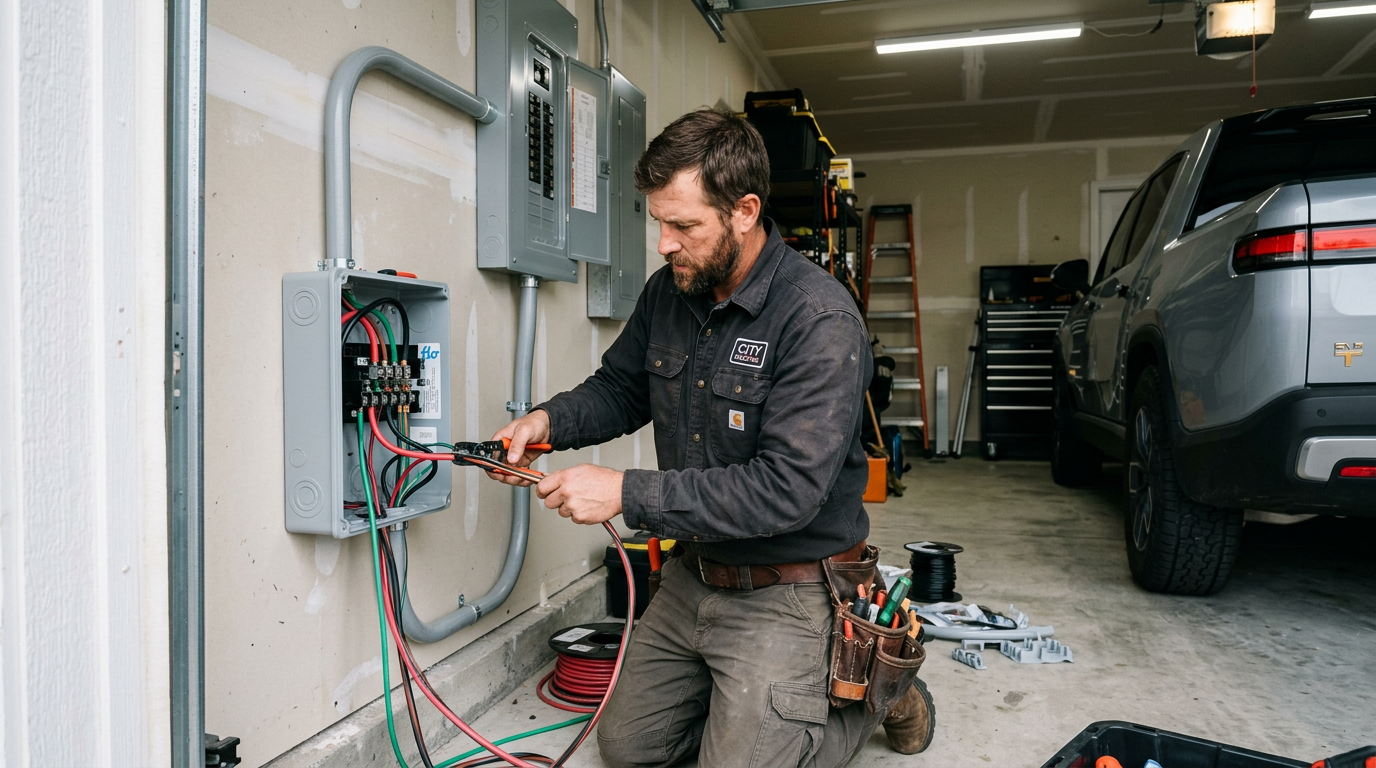
Every new EV sold in Alabama is a potential job for a qualified electrician. The included Level 1 charger that plugs into a standard wall outlet is often too slow for daily use, making a professional Level 2 EV charger installation one of the first calls a new EV owner makes. This is your chance to become the local expert.
This service goes far beyond a simple outlet swap. It involves planning and executing a safe and reliable 240V circuit installation, ensuring the home’s electrical system can handle the sustained load. For the homeowner, it’s a major quality-of-life upgrade; for you, it’s a high-value service that requires genuine expertise in residential wiring and safety protocols. Mastering the dedicated circuit installation required for EV Supply Equipment (EVSE) positions you as a critical player in the state’s green transition.
Gearing Up: Code Compliance and Technical Know-How
A professional EV charger installation is a blend of following established best practices and staying current with evolving codes. While many installations commonly use a 40A or 50A breaker, the specific breaker and conductor sizing must be determined from the charger’s nameplate continuous current and the NEC continuous-load rules. Sizing must follow NEC Article 625, including the 125% continuous-load principle, to prevent overheating and voltage drop. For longer runs, a voltage drop calculator becomes an essential tool.
Many clients will request a NEMA 14-50 outlet, a popular and versatile option for many Level 2 chargers. However, NEC 625.54 mandates that all receptacles installed for electric vehicle charging must have ground-fault circuit-interrupter (GFCI) protection. Additionally, your job as a professional is to assess the entire electrical system. This starts with a thorough residential load calculation as detailed in the NEC. Can the existing service handle an additional continuous load? If not, an electrical panel upgrade for EV or subpanel may be necessary, particularly in older homes with smaller main services.
Compliance with the nec code book is non-negotiable, particularly NEC Article 625, which governs EV charging systems. The code is constantly evolving to address new technology and safety considerations. Understanding these nuances not only ensures a safe installation but also demonstrates a level of professionalism that builds client trust. You can learn more about how 2023 NEC rules are changing charger requirements and how the code simplifies EV branch circuit rules through specialized training.
Beyond the Breaker Box: Adding Value and Boosting Profits
The most successful electricians don’t just install hardware; they provide comprehensive solutions. You can set your business apart by guiding clients toward programs and technologies that save them money and enhance their experience.
- Educate on Incentives: Inform your customers about potential rebates. Utility rebate programs change over time; some utilities in the region have offered incentives for smart chargers, so advise customers to check their utility’s website (for example, Alabama Power) for current availability and eligibility.
- Introduce Smart Charging: Recommend smart EV charging solutions that allow homeowners to schedule charging during off-peak hours. This is especially beneficial for customers on time-of-use (TOU) rates, potentially saving them hundreds of dollars per year.
- Handle the Paperwork: Offer to manage the EVSE permitting Alabama process with the local Authority Having Jurisdiction (AHJ). This white-glove service removes a major headache for the homeowner and justifies a higher service fee.
- Offer Maintenance Plans: Create recurring revenue by offering annual EV charger maintenance checks to ensure connections are secure and the equipment is functioning optimally.
Building Your Expertise and Your Business
The EV market is a specialized field. To truly capitalize on it, investing in your professional development is key. Certifications like the EVITP certification (Electric Vehicle Infrastructure Training Program) can instantly signal your expertise to potential customers. Furthermore, the rapid pace of change in this sector means that ongoing learning is essential. Staying current with code changes and new technologies through Alabama electrical contractor continuing education is not just for license renewal—it’s a vital business strategy that keeps you ahead of the competition.
The EV boom in Alabama is a golden opportunity for the state’s electricians. By understanding the market, mastering the technical requirements, and providing value-added services, you can build a thriving business niche that will be in high demand for years to come. It’s time to plug into the future. Specialize in EV charging installations. Get started with our expert-led online CE courses.
Related Resources
Alabama Continuing Education Courses
Explore our board-approved continuing education courses for Alabama professionals:
View CE Requirements
Frequently Asked Questions
What are the main electrical requirements for a Level 2 charger installation?
A typical Level 2 installation requires a dedicated 240V circuit. The breaker size, commonly 40A or 50A depending on the unit, must be selected based on the specific charger’s continuous-load rating and adhere to NEC Article 625’s 125% continuous-load rule. A proper residential load calculation must be performed to ensure the home’s main service panel can safely accommodate the additional load.
Do I need a permit for EV charger installation in Alabama?
Yes, installing a new dedicated 240V circuit is electrical work that in nearly all cases requires a permit and inspection from the local Authority Having Jurisdiction (AHJ). Local governments are responsible for adopting and enforcing codes for most residential and commercial projects, so it is essential that the licensed electrician verify and follow all local codes to ensure a safe, compliant installation.
What is the main benefit of a “smart” EV charger?
Smart EV charging solutions connect to your Wi‑Fi, allowing you to monitor and schedule charging sessions through a mobile app. This enables you to take advantage of cheaper electricity with utility time-of-use (TOU) rates and better manage your home’s overall energy consumption.

Disclaimer: The information provided in this educational content has been prepared with care to reflect current regulatory requirements for continuing education. However, licensing rules and regulations can vary by state and are subject to change. While we strive for accuracy, ExpertCE cannot guarantee that all details are complete or up to date at the time of reading. For the most current and authoritative information, always refer directly to your state’s official licensing board or regulatory agency.
NEC®, NFPA 70E®, NFPA 70®, and National Electrical Code® are registered trademarks of the National Fire Protection Association® (NFPA®)
You may also like
Standby Generators in DE: Navigating Coastal Storm Regulations

Upgrading to a Master Electrician License in Delaware
 Login with Google