
Key Alabama Amendments to the NEC: What Pros Must Know
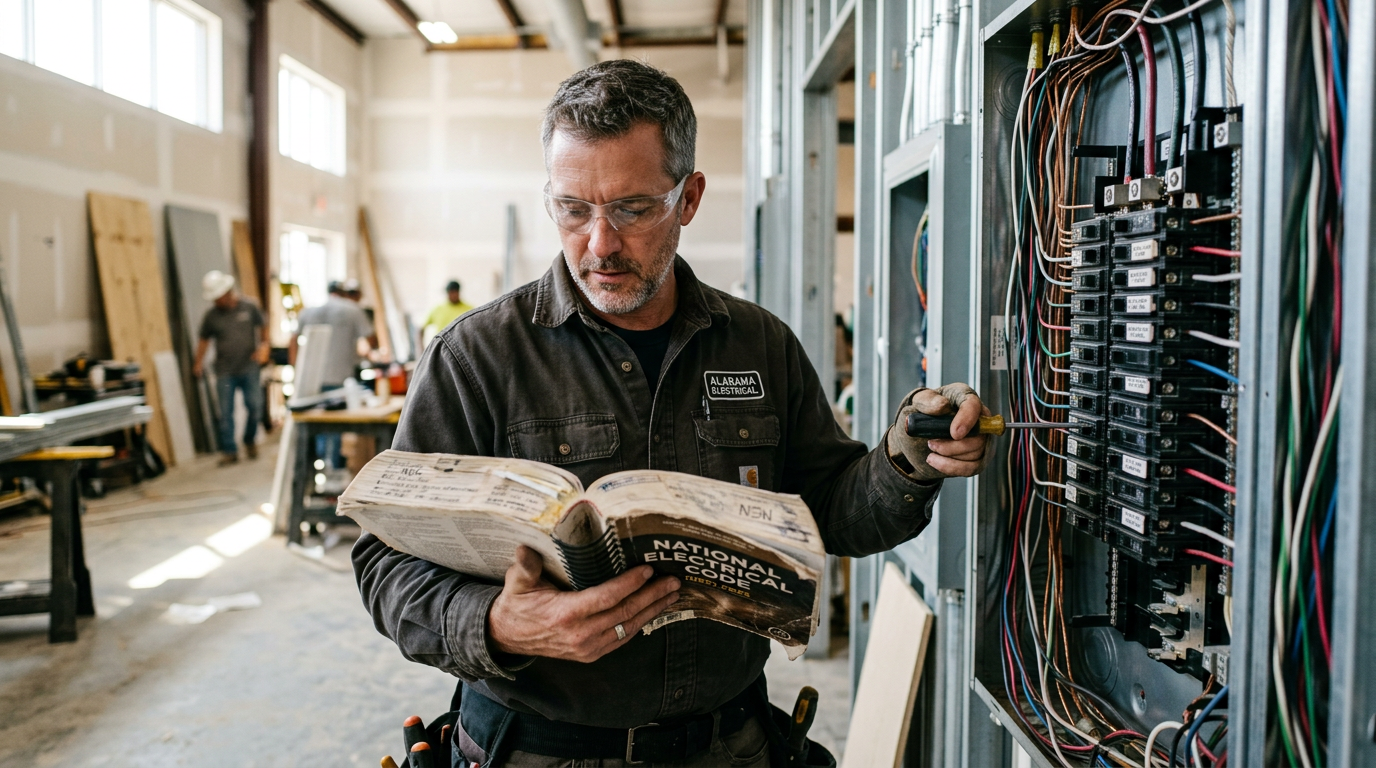
This guide cuts through the noise, providing a clear analysis of the current state of the NEC in Alabama. We’ll break down which code may apply where, highlight critical NEC changes you should watch, and explain what these updates mean for your daily work, whether you’re a Master Electrician or a Journeyman Electrician. Understanding these distinctions is crucial for compliance, safety, and career advancement in Alabama’s evolving regulatory environment.
The Official State Code: Which NEC is Enforced in Alabama?
For state-regulated construction and major state-owned projects, the primary authority is the Alabama Division of Construction Management (DCM), which sets the edition of codes used for those specific projects. The exact NEC edition enforced on a given DCM project can change over time, so electricians should confirm the edition required for each state project with DCM and the project specifications. Local building officials or other state agencies (for example, the State Fire Marshal on fire-safety matters) may also have jurisdiction on specific inspections.
Alabama does not have a single, automatically applicable statewide electrical code that overrides local AHJs in all circumstances; many municipalities and counties adopt the edition they will enforce locally. Therefore, a licensed electrician in Alabama must always verify the required code edition with the local authority having jurisdiction (AHJ) and with DCM when working on state projects.
Testing vs. Practice: Edition Differences and Licensing
Where confusion commonly arises is when the code edition used by a licensing or examination authority differs from the edition enforced by an AHJ on a jobsite. Licensing bodies may reference a particular NEC edition or exam pool for licensing exams, but the edition enforced on a project is determined by the AHJ or by the specific state authority for that project. Verify directly with the Alabama Board of Electrical Contractors (or the state licensing office) which edition or reference material is used for exams, and confirm the enforceable edition for each project with the AHJ.
Licensing boards sometimes reference newer NEC cycles in their exams so newly licensed electricians are familiar with the latest practices. That approach prepares the workforce for future adoption, but it can also create a need to be fluent in two editions at once: the edition used for examinations and the edition enforced on the job. If you’re looking to get ahead, our guide on how to navigate the 2023 NEC code book can be a valuable resource.
GFCI Protection for Outdoor Outlets — Why This Still Matters
Ground-Fault Circuit-Interrupter (GFCI) protection has been expanded in recent NEC cycles and is an area of active industry attention. The NEC’s Article 210.8 addresses GFCI protection for specified dwelling and non-dwelling outlets, including many outdoor outlets. Applying these requirements to outdoor equipment — particularly HVAC equipment with variable-speed drives and electronic controls — has raised practical concerns for contractors and AHJs.
Because this area involves both national code text and local enforcement decisions, electricians should:
- Review the current NEC text for Article 210.8 in the edition that applies to the project;
- Consult the equipment manufacturer’s installation instructions (some HVAC equipment is listed with specific GFCI guidance); and
- Confirm AHJ or DCM direction on whether GFCI protection is required for specific outdoor equipment in that jurisdiction.
For additional perspective on the NEC and related safety rationale, you can explore what is the NFPA 70.
Staying Compliant: Alabama CE and Licensing Insights
Continuing education and renewal rules are set by the state licensing authority. The Alabama Board of Electrical Contractors (or other state licensing entity that administers electrical licenses) publishes the continuing education and renewal requirements for each license class. These requirements can and do change — including the number of hours, acceptable course content, and NEC-related hour minimums — so confirm the current rules directly with the licensing authority before relying on a specific hour requirement.
Even when a license class is not mandated to submit CE hours, pursuing electrical continuing education Alabama courses remains a wise investment, since staying current on NEC changes directly affects safety and compliance. If you’re pursuing NEC study, our resources on definition changes and worker safety may be helpful: how definition changes impact work and how the NEC improves worker safety. For course options that list Alabama-specific CE offerings, see Alabama CE courses — and always verify approval status with the Board for renewal credit.
The Regulatory Outlook in Alabama
State code adoption processes sometimes change as a result of legislation or administrative rulemaking. If new state laws or administrative changes are introduced (for example, changes that alter which board adopts residential or commercial codes), electricians should consult the official Alabama legislative and regulatory sources for the exact text and effective dates. Staying engaged with DCM, the state licensing board, and local AHJs is the best way to track how these administrative shifts will affect which NEC edition is enforced for different project types.
Staying informed is the best tool an electrician has. As Alabama balances different editions used by various authorities, continued education and confirming the applicable NEC edition with the AHJ or the state agency before starting work are essential. For context on how other states handle amendments and state-specific NEC changes, you may find Alaska’s approach to NEC amendments helpful by way of comparison. If you want a structured NEC 2023 study path, see our Electrician’s Guide for NEC 2023.
Our Alabama CE courses cover the latest code updates; verify course approval with the licensing board if you intend to use a course for renewal credit. Sign up for approved, board-accepted programs to stay compliant and keep your knowledge current.
Alabama Continuing Education Courses
Explore our board-approved continuing education courses for Alabama professionals:
View CE Requirements
Disclaimer: The information provided in this educational content has been prepared with care to reflect current regulatory requirements for continuing education. However, licensing rules and regulations can vary by state and are subject to change. While we strive for accuracy, ExpertCE cannot guarantee that all details are complete or up to date at the time of reading. For the most current and authoritative information, always refer directly to your state’s official licensing board or regulatory agency.
NEC®, NFPA 70E®, NFPA 70®, and National Electrical Code® are registered trademarks of the National Fire Protection Association® (NFPA®)
You may also like
Standby Generators in DE: Navigating Coastal Storm Regulations

Upgrading to a Master Electrician License in Delaware
 Login with Google