
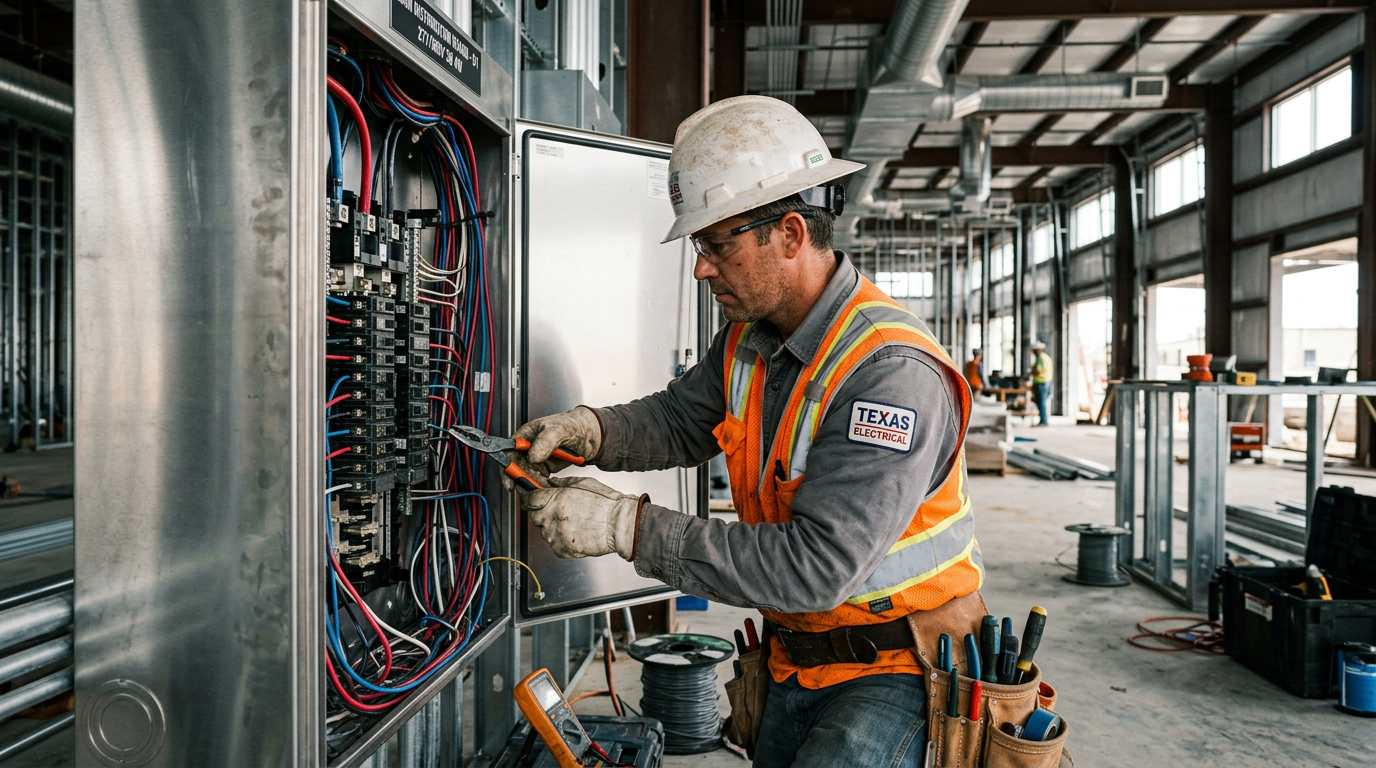
Texas Electrician Salary & Job Market Outlook for 2024
If you’re considering a career in the electrical trade or are an established professional weighing your options, Texas presents a landscape ripe with potential. Projections from the Texas Workforce Commission show an expected 21.4% increase in employment for electricians from 2020 to 2030, signaling a bright future. Let’s break down what this means for your wallet, your career, and your future in the Texas electrical industry.
The Current State of the Texas Electrical Job Market
The Texas job market for electricians is nothing short of dynamic. A convergence of factors, including massive state and federal funding for infrastructure, has created a wave of new projects across the state. In 2024, Texas is seeing a monumental boom in construction, particularly in the industrial, commercial, and technology sectors. Large-scale projects, such as the $13 billion Port Arthur LNG project and Microsoft’s huge data center expansion, are creating thousands of jobs that require specialized electrical expertise.
This rapid growth has created a persistent shortage of skilled labor, putting qualified electricians in a prime position. The demand for commercial electrician jobs in Texas is particularly high, driven by new office buildings, medical centers, and manufacturing facilities. These positive electrician job growth projections indicate that the strong demand is not a short-term trend but a sustainable career environment for years to come.
Decoding the Average Texas Electrician Salary
So, what does this demand mean for your paycheck? The average electrician hourly wage Texas can vary widely based on numerous factors, but the data clearly shows a strong earning potential. According to the U.S. Bureau of Labor Statistics (BLS), the median annual pay for an electrician in Texas is approximately $56,920, which translates to a median hourly wage of $27.36 as of May 2023.
Your license level is one of the biggest determinants of your income, with earnings increasing significantly with experience and licensure:
- Apprentice Electrician Pay Rates: Apprentices start their careers earning while they learn. Wages typically fall in the bottom 25th percentile of electrician pay, starting around $17.87 to $21.50 per hour and increasing with experience and training milestones.
- Journeyman Electrician Salary: After completing an apprenticeship and passing the state exam, a Journeyman can expect a significant pay increase, with salaries often near the state median of $56,920 annually, or about $27.36 per hour.
- Master Electrician Salary: At the top of the profession, a Master Electrician commands the highest salary. According to BLS May 2023 data, top-earning electricians in the 90th percentile earn $82,490 annually. Achieving a Master license opens the door to the highest Texas electrical contractor compensation by allowing you to own and operate your own business, with potential earnings beyond this figure.
Factors That Boost Your Electrician Earning Potential in Texas
Beyond your license, several other factors can significantly impact your salary. To maximize your electrician earning potential in Texas, consider these key areas:
1. Specialization and Industry
The type of work you do matters. While a residential electrician is always in demand, specializing in more complex fields can lead to higher pay. The industrial electrician pay scale is often higher due to the complex machinery and high-stakes environments in manufacturing plants and energy facilities. Similarly, the electrical lineman salary Texas is notably high, with the BLS reporting a median annual salary of $72,820 for Electrical Power-Line Installers and Repairers in Texas as of May 2023. Emerging fields like renewable energy, data center construction, and EV charging are creating high-paying niches. For instance, understanding how new NEC rules are changing EV charger installation can make you a valuable asset.
2. Location: Electrician Salary by City in Texas
Where you work in Texas plays a crucial role. Major metropolitan areas with high construction activity and a higher cost of living typically offer better pay. According to May 2023 BLS data, the mean hourly wages for electricians in top metro areas are highly competitive: Houston-The Woodlands-Sugar Land offers $28.33, Dallas-Fort Worth-Arlington sits at $27.38, and Austin-Round Rock provides $27.96. Researching the electrician salary by city Texas can help you identify the most lucrative markets.
3. Union vs. Non-Union
Joining an electrical union like the International Brotherhood of Electrical Workers (IBEW) can be a strategic career move. Union electricians often have a higher base pay, comprehensive family health insurance, and pension plans. For example, IBEW Local 520 in Central Texas offers fully-paid family healthcare and retirement benefits like a pension and 401k. While non-union shops may offer more flexibility, it’s worth exploring the local union electrician benefits and pay scales when planning your career path.
Maximizing Your Career: Skills and Certifications in Demand
The path from electrician school to a rewarding career is paved with continuous learning. Fulfilling the Texas electrician license requirements, managed by the Texas Department of Licensing and Regulation (TDLR), is just the first step. To truly excel and increase your earning potential, you must stay current with industry standards.
Keeping up with the latest National Electrical Code (NEC) is non-negotiable. Changes in the code can be complex, affecting everything from healthcare facilities to industrial settings. Understanding updates, such as how the 2023 NEC simplifies motor conductor sizing, is critical for compliance and efficiency. Likewise, staying informed on specialized topics, like changes to load calculations for healthcare and marinas, can open up niche opportunities.
Pursuing specialized credentials like an NFPA 70E certification for electrical safety can also set you apart. By investing in state-approved online electrical courses, you can fulfill your continuing education requirements while gaining valuable skills that employers are actively seeking. Ready to advance your knowledge? Browse our courses to find the right fit for your career goals.
Considering the Cost of Living for Electricians in Texas
While salary numbers are important, they tell only part of the story. The cost of living for electricians in Texas is generally lower than the U.S. national average, meaning your paycheck goes further. According to 2024 data from the Missouri Economic Research and Information Center (MERIC), Texas has the 19th lowest cost of living in the United States. While costs in major cities like Austin are rising, Texas remains an affordable state to build a life and career. This combination of high earning potential and reasonable living expenses makes Texas an attractive destination for electrical professionals.
Conclusion: A Powerful Future for Texas Electricians
The outlook for electricians in Texas is exceptionally bright. A booming economy, massive construction projects, and a growing population are creating a sustained demand for skilled tradespeople. Whether you are a residential electrician wiring new homes, a Journeyman on a commercial high-rise, or a Master with a specialization in industrial controls, the opportunities for growth and financial success are abundant. By obtaining your master electrician license, specializing in high-demand fields, and committing to lifelong learning, you can build a powerful and prosperous career in the Lone Star State.
Related Resources
- How Are 2023 NEC Rules Changing EV Charger Installation Requirements?
- How Does the 2023 NEC Simplify Motor Conductor Sizing?
- How Have NEC 2023 Load Calculations Changed for Healthcare and Marinas?
Texas Continuing Education Courses
Explore our board-approved continuing education courses for Texas professionals:
View CE Requirements
Texas 2023 NEC changes (Part 1), Texas Safety & Laws

Texas 2023 NEC changes (Part 2), Texas Safety & Laws

Texas 2023 NEC changes (Part 3), Texas Safety & Laws
Frequently Asked Questions (FAQs)
- What is the average journeyman electrician salary in Texas?
- The median salary for a Journeyman Electrician in Texas is around $56,920 per year, or about $27.36 an hour, based on May 2023 data from the U.S. Bureau of Labor Statistics. This can vary based on location, specialization, and experience.
- How does the Texas electrician salary compare to the cost of living?
- The cost of living in Texas is generally lower than the national average, making the competitive salaries for electricians go further. This allows for a high quality of life in many parts of the state.
- What is the job growth projection for electricians in Texas?
- The job market is very strong, with a projected employment increase of 21.4% for electricians in Texas between 2020 and 2030, according to the Texas Workforce Commission. This growth is fueled by major construction projects in the commercial, industrial, and technology sectors across the state.

Disclaimer: The information provided in this educational content has been prepared with care to reflect current regulatory requirements for continuing education. However, licensing rules and regulations can vary by state and are subject to change. While we strive for accuracy, ExpertCE cannot guarantee that all details are complete or up to date at the time of reading. For the most current and authoritative information, always refer directly to your state’s official licensing board or regulatory agency.
NEC®, NFPA 70E®, NFPA 70®, and National Electrical Code® are registered trademarks of the National Fire Protection Association® (NFPA®)
You may also like

Delaware’s EV Charging Growth: A Guide for Pro Electricians

Starting an Electrical Business in Delaware: A Contractor’s Guide
 Login with Google