
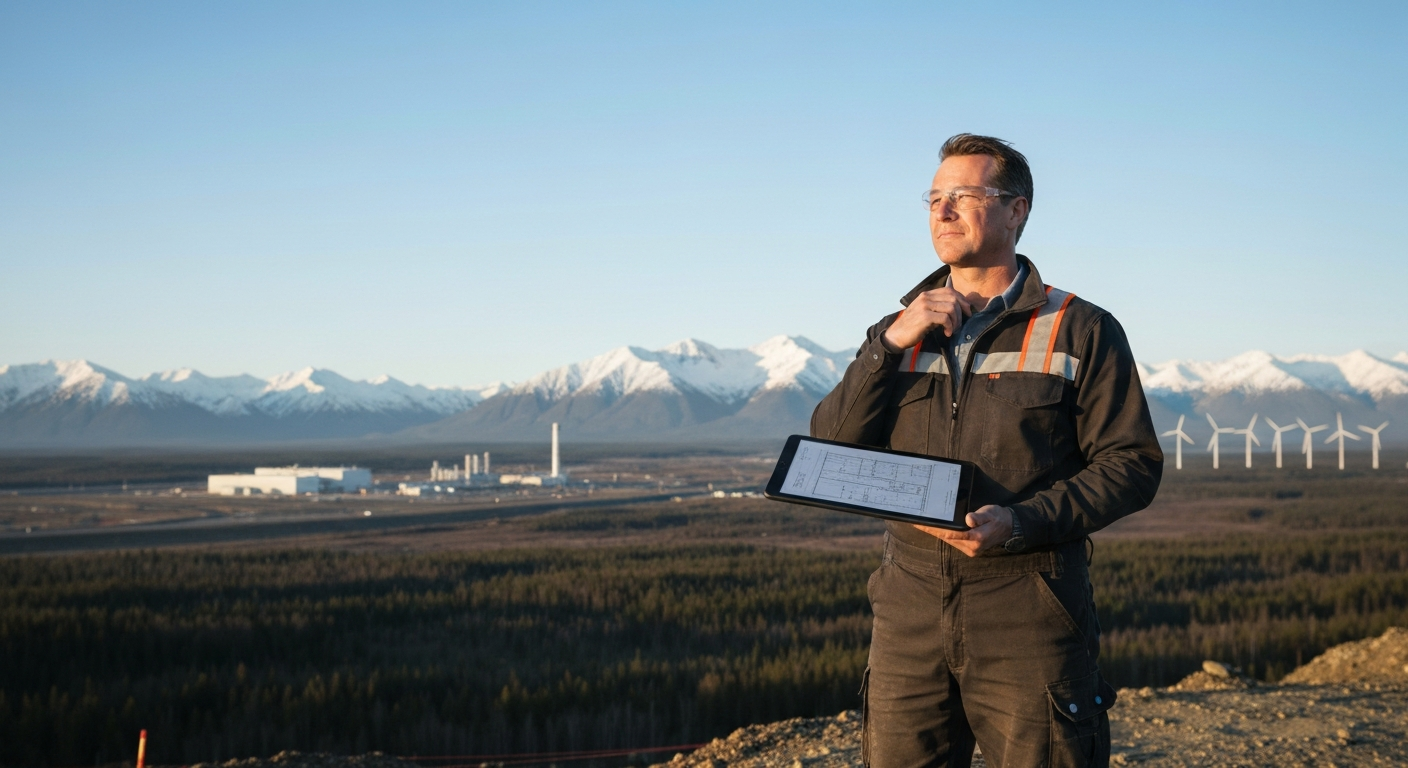
Starting an Electrical Contractor Business in Alaska: A 2025 Guide
Understanding the Alaskan Electrical Market: Trends and Opportunities
Before drafting a business plan, it’s crucial to understand the forces shaping Alaska’s economy. The state is experiencing significant construction spending fueled by the Infrastructure Investment and Jobs Act, creating a high demand for skilled trades. This impacts everything from public works to private development, opening doors for new electrical contracting businesses.
Two major sectors are driving specialized demand:
- Energy Sector: Large-scale oil and gas projects continue to be a cornerstone of the state’s economy, requiring complex industrial and commercial wiring expertise. Simultaneously, a growing focus on renewables like solar and wind offers a new and expanding market for contractors skilled in green energy solutions.
- Remote Operations: The challenge of geography in Alaska is also its opportunity. The need for remote electrical work Alaska is a constant. Contractors who can efficiently manage logistics to service remote communities, industrial sites, and infrastructure projects have a distinct competitive advantage.
The Blueprint for Your Business: Licensing and Registration
Navigating Alaska’s regulatory framework is the most critical step in establishing your business. Unlike some states, Alaska has distinct requirements for practicing electricians and the individuals who run electrical contracting companies.
Step 1: State Business and Contractor Registration
Your first stop is the Alaska Division of Corporations, Business and Professional Licensing. Here, you will complete two key tasks:
- Register Your Business Entity: Choose a structure like an LLC or corporation and register your business name.
- Obtain Your Contractor License: You must register as a construction contractor. Electrical contractors are typically licensed as “Specialty Contractors.” This registration is separate from any individual electrical certification and is required to legally operate as a contracting business.
Step 2: The Crucial Alaska Electrical Administrator License
This is where Alaska’s system differs significantly from many others. To run an electrical contracting business, the company must have an assigned Alaska Electrical Administrator License holder. This person is the legal entity responsible for ensuring all work complies with the National Electrical Code (NEC). This role is Alaska’s equivalent to a Master Electrician in other states.
It’s vital to understand the difference between the certificate required to perform work and the license required to supervise a business:
- Journeyman Electrician Certification: This Certificate of Fitness, issued by the Department of Labor and Workforce Development, allows an individual to perform electrical work. It requires 8,000 hours of experience to obtain.
- Electrical Administrator License: This is a supervisory license from the Department of Commerce, Community, and Economic Development that allows an individual to oversee a contractor’s electrical operations. An Administrator doesn’t have to be the business owner, but the business *must* have a designated Administrator. To qualify under Alaska’s 12 AAC 32 regulations, you need extensive, verified experience. For the Residential Wiring category, this includes at least 4,000 hours of residential wiring experience, including at least 2,000 hours (equivalent to one year) as a journeyman residential wireman. For the Unlimited Commercial Wiring category, it requires at least 8,000 hours of experience and evidence of having worked as a journeyman electrician for at least four of the six years preceding the application.
If you are a journeyman electrician looking to start your own company, obtaining your Electrical Administrator license is the key to becoming your own boss.
Step 3: Securing Bonding and Insurance
Protecting your business and clients is mandatory. As part of your contractor registration, you will need to secure:
- Surety Bond for Electricians: Per Alaska Statute (AS) 08.18.071, Electrical Specialty Contractors must post a $10,000 surety bond for electricians with the state. This bond acts as a financial guarantee of your compliance with regulations.
- General Liability Insurance: Proof of general liability insurance Alaska is required for all contractors to cover property damage and injury.
- Workers’ Compensation: If you plan to hire even one employee, you must have a workers’ compensation Alaska insurance policy. Sole proprietors without employees may be exempt under Alaska Statute 23.30.239.
Building a Resilient Electrical Business in the Last Frontier
With the legal framework in place, your focus can shift to building a successful enterprise. This involves a solid strategy and a commitment to continuous improvement.
Develop a Strategic Electrical Business Plan
Your electrical business plan is your roadmap. It should define your target market (e.g., residential service calls, new construction, industrial maintenance), detail your financial projections, and outline your marketing strategy. Will you specialize in residential wiring, or will you pursue lucrative commercial wiring contracts? A well-researched plan is essential for securing financing and guiding your growth.
Commitment to Code and Safety
Adherence to the National Electrical Code (NEC) is non-negotiable. As an Electrical Administrator, you are legally responsible for compliance. Staying current on code changes is critical for safety and professionalism. For example, understanding recent updates to service equipment labeling requirements is vital for passing inspections. For those managing teams, it’s equally important to keep up with safety standards, like the updates in NFPA 70E that impact job safety planning. For more detail on this, it’s worth reviewing how to comply with 2023 NEC service equipment labeling requirements and how NFPA 70E 2024 updates have changed electrical job safety planning.
Invest in Your Skills and Your Team
The skilled labor shortage means that investing in training is more important than ever. Whether you’re sending new hires to an electrician school or ensuring your experienced team stays sharp with continuing education for electricians, a knowledgeable crew is your greatest asset. Keeping up with modern practices, such as changes in how the 2023 NEC changes dwelling unit load calculations, can give your business a competitive edge. High-quality online electrical courses provide a flexible way to meet renewal requirements and stay ahead of the curve.
Starting an electrical contractor business in Alaska is a bold move that aligns with the state’s pioneering spirit. By carefully navigating the licensing process, understanding the unique market dynamics, and building a solid business strategy, you can turn your technical expertise into a thriving enterprise. The demand is there, the opportunity is real, and with the right preparation, success is within your grasp. Explore our state-approved Browse our courses to ensure you have the continuing education needed for your journey.
Frequently Asked Questions (FAQ)
What is the difference between a journeyman electrician certification and an Alaska Electrical Administrator license?
A journeyman electrician certification (Certificate of Fitness) authorizes an individual to perform hands-on electrical work. An Alaska Electrical Administrator License is a supervisory license required for a contracting business to operate, making that person legally responsible for ensuring all work meets code.
Do I need a surety bond to be an electrical contractor in Alaska?
Yes. An electrical specialty contractor is required to obtain a $10,000 surety bond for electricians as part of the statewide contractor registration process, a requirement outlined in AS 08.18.071.
Can I start a residential electrical business in Alaska?
Yes, but it’s important to understand the roles. To start a business focused on residential work, the company needs an assigned person who holds a Residential Wiring Electrical Administrator License. This requires providing proof of at least one year of experience as a journeyman residential wireman. The individual electricians performing the work for the company can hold a Residential Wireman Certificate of Fitness, which requires 4,000 hours of documented experience, as opposed to the 8,000 hours required for a standard Journeyman Electrician Certificate of Fitness.
Alaska Continuing Education Courses
Explore our board-approved continuing education courses for Alaska professionals:
View CE Requirements
Alaska 2023 NEC (Ch 1-4), 8 hours Electrical Administrators License Renewal Package

Alaska 2023 NEC (Ch 4-7), 8 hours Electrical Administrators License Renewal Package

Alaska 2023 NEC 16 Hr Electrical License Renewal Package

Disclaimer: The information provided in this educational content has been prepared with care to reflect current regulatory requirements for continuing education. However, licensing rules and regulations can vary by state and are subject to change. While we strive for accuracy, ExpertCE cannot guarantee that all details are complete or up to date at the time of reading. For the most current and authoritative information, always refer directly to your state’s official licensing board or regulatory agency.
You may also like
Standby Generators in DE: Navigating Coastal Storm Regulations

Upgrading to a Master Electrician License in Delaware

 Login with Google