
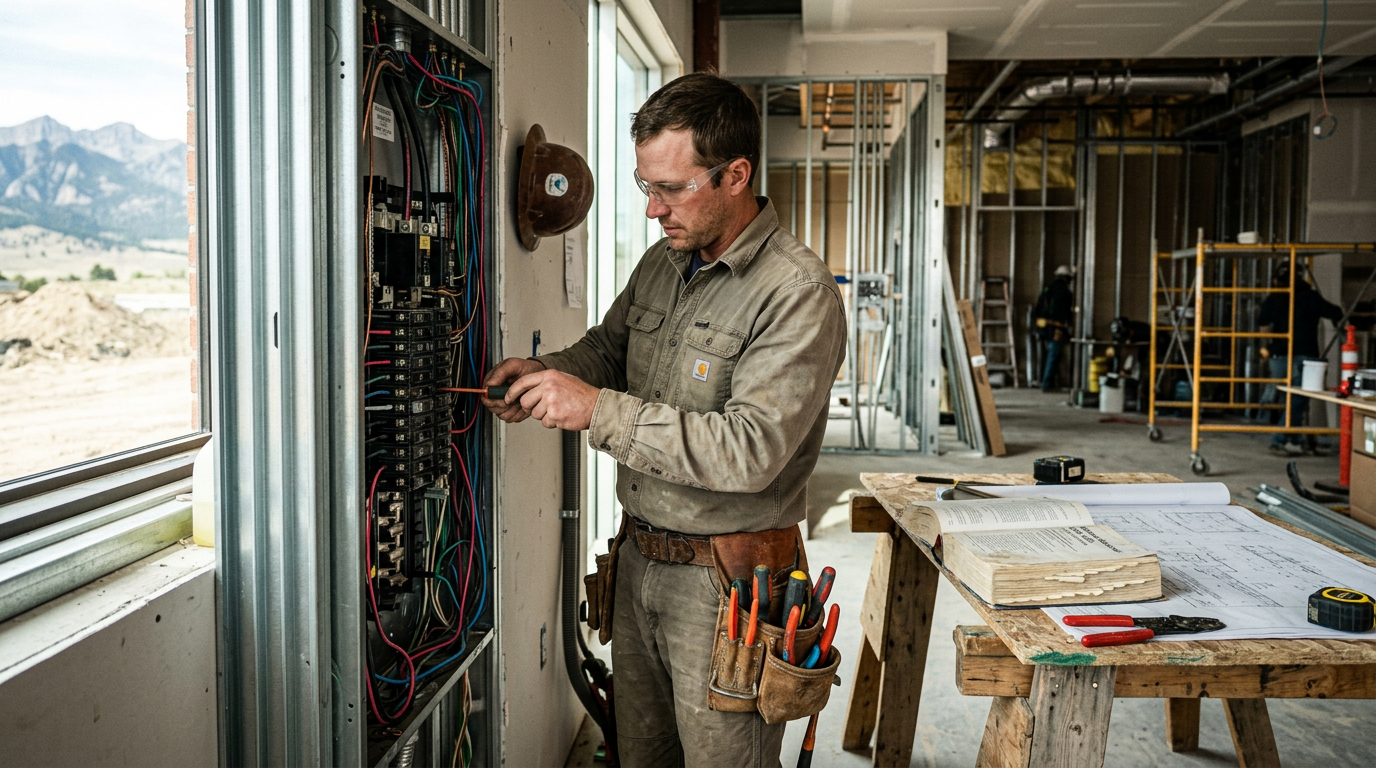
How to Get Your Journeyman Electrician License in Montana
How to Get Your Journeyman Electrician License in Montana
Montana’s job market for electricians is experiencing remarkable growth. Projections from the Montana Department of Labor & Industry forecast that the construction sector will be a leading contributor to job creation in the state through 2032. For those working in the trade, this boom presents a massive opportunity for career advancement and increased earning potential.
If you’re an apprentice looking to take the next step, securing your journeyman electrician license in Montana is the single most important milestone. It’s the credential that validates your experience, expands your work opportunities, and puts you on the path toward becoming a master electrician or even a business owner. Moving from a general electrician or apprentice to a licensed journeyman is a significant financial step up.
This guide explores the essential requirements set by the Montana State Electrical Board, from experience hours to the exam, and clarifies how this license fits into the broader landscape of electrical work in Big Sky Country. Whether you are a local apprentice or moving from another state, understanding the requirements for Substantial Equivalency (SE) and Licensure by Endorsement is essential for a smooth application.
1. Determine Your Application Path
Montana offers two primary paths to licensure based on your current professional status:
Path A: Licensure by Examination
This path is for applicants who do not currently hold an active, substantially equivalent license in another state. You must meet specific education and experience requirements to be eligible for the exam.
Path B: Licensure by Endorsement (Substantial Equivalency)
If you hold an active, unrestricted license in another state, you may be eligible to bypass the Montana exam if that state’s requirements are determined to be Substantial Equivalency (SE). Montana officially recognizes 13 states (including TX, AK, CO, and AR) as pre-vetted for this process.
2. Meet the Minimum Requirements
To qualify for a Journeyman license, you must fulfill one of the following criteria:
- Apprenticeship: Successful completion of an approved inside wireman apprenticeship program in the electrical trade.
- Trade Training: Completion of an appropriate training program conducted by a bona fide union or trade association.
- Practical Experience: 8,000 hours of legally obtained practical experience in wiring for, installing, and repairing electrical apparatus and equipment.
- Maintenance Field: 20,000 hours of work in the electrical maintenance field, with at least 8,000 of those hours being practical experience.
3. Prepare Your Application Package
All applicants must submit the following as part of their official filing. You can use the Official Journeyman Checklist to ensure your packet is complete.
- Application Fee: A non-refundable $190.00 fee.
- Application Form: The Journeyman Electrician Application PDF.
- License Verifications: Official verifications for every professional license you hold or have ever held, including expired ones.
- Experience Proof: An Experience Verification Affidavit completed by your employer(s). (This is not required if you provide an apprenticeship completion certificate).
- Personal History: Documentation regarding any past disciplinary actions or criminal convictions.
4. The Montana Journeyman Examination
If you are required to take the exam, it is administered by PSI. Once approved by the Board, you will receive an admission letter to schedule your test.
| Feature | Details |
|---|---|
| Format | Computer-based, Open Book |
| Questions | 60 Questions |
| Passing Score | 70% |
| Time Allowed | 180 Minutes (3 Hours) |
| Reference | 2020 National Electrical Code (NEC).
Montana Building Codes Amendments |
5. Temporary Practice Permits
While waiting for your exam results, you may apply for a Temporary Practice Permit. This allows you to work under a licensed electrical contractor for 90 days. Please note that if you fail the exam with a score of 65% or less, you are no longer eligible for a temporary permit.
Ready to get started? Visit the Montana State Electrical Board website for full licensing information and to begin your application process.
Montana Continuing Education Courses
Explore our board-approved continuing education courses for Montana professionals:
View CE Requirements
Montana – 8 hours NEC Code Updates (Part 1)
Montana – 8 hours NEC Code Updates (Part 2)
Montana – 16 hours NEC 2023 Code Changes

Disclaimer: The information provided in this educational content has been prepared with care to reflect current regulatory requirements for continuing education. However, licensing rules and regulations can vary by state and are subject to change. While we strive for accuracy, ExpertCE cannot guarantee that all details are complete or up to date at the time of reading. For the most current and authoritative information, always refer directly to your state’s official licensing board or regulatory agency.
NEC®, NFPA 70E®, NFPA 70®, and National Electrical Code® are registered trademarks of the National Fire Protection Association® (NFPA®)
You may also like

Delaware Electrical License Reciprocity with MD, PA & NJ

Alabama Electrical License Reciprocity: A 2025 Guide

 Login with Google